Can I See Penguins In Dunedin Without A Tour?
Yes, penguins can be seen around Dunedin without a tour at Pilots Beach and Allans Beach, but guided options at The OPERA and Pukekura add hides, platforms and guides. Here is how the two paths compare.
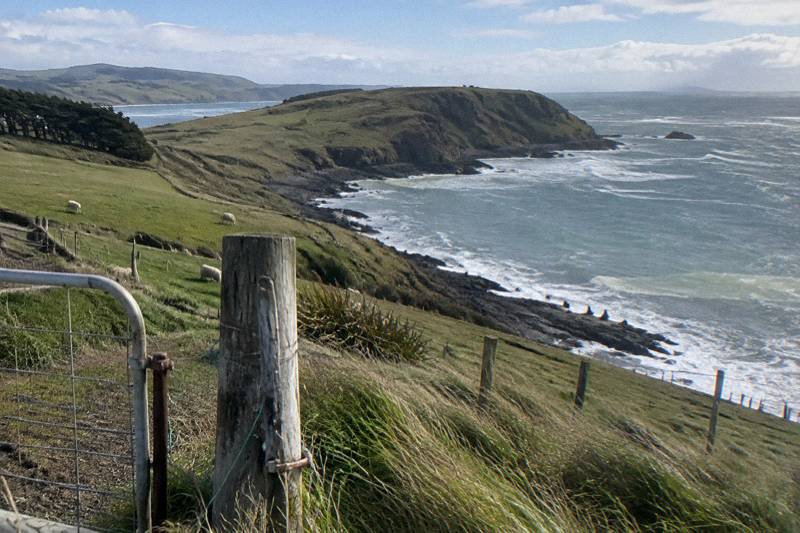
Yes, penguins can be seen around Dunedin without a tour. DOC says little penguins appear at dusk throughout the year at Pilots Beach on Taiaroa Head, and Allans Beach on the Otago Peninsula is described as having "the odd penguin". No sighting is ever promised: these are wild birds, the rules for watching them are strict, and guided options at The OPERA and Pukekura exist because independent viewing has real limits.
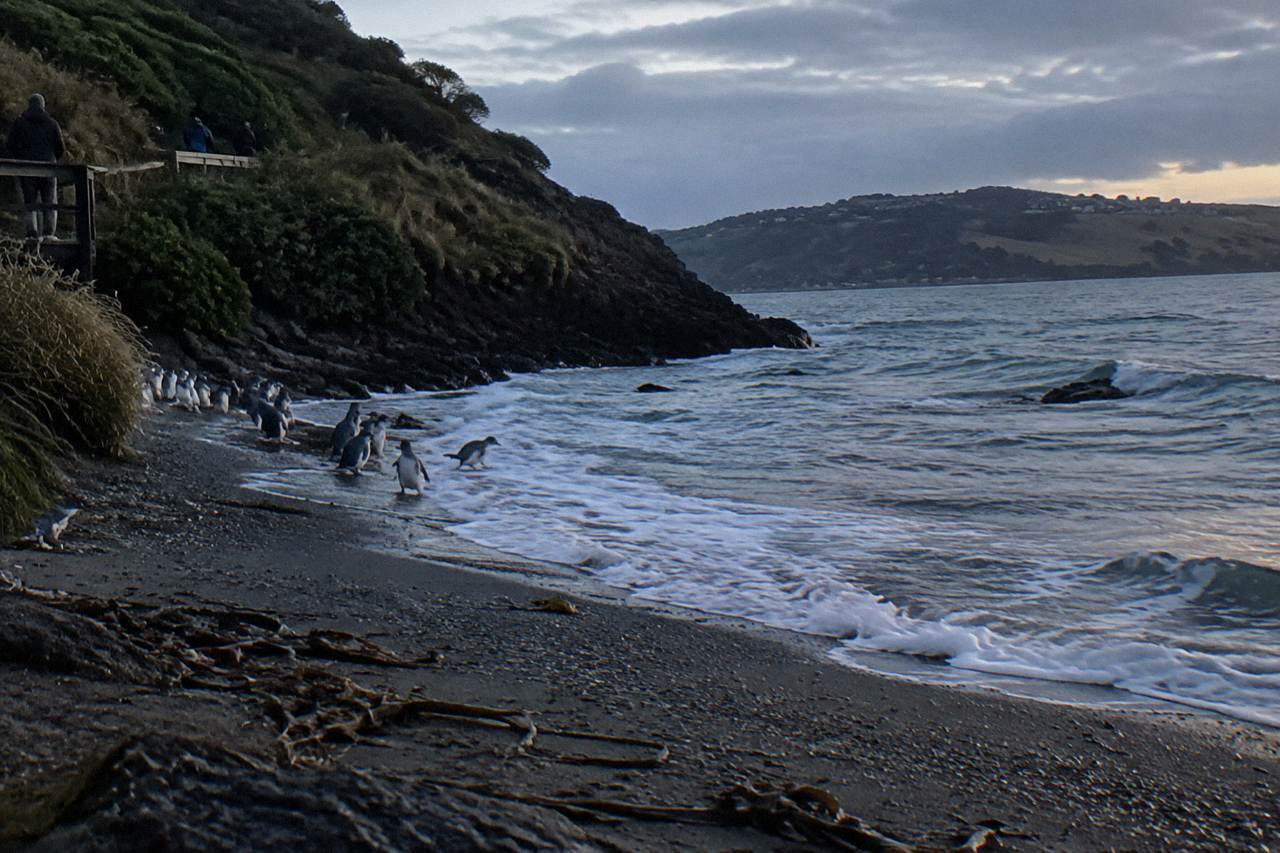
The honest answer has two halves. The first half is access: yes, you can stand on public beaches and headlands near Dunedin at the right time of day and penguins can appear. Pilots Beach, on the western side of Taiaroa Head at the tip of the Otago Peninsula, is the standout. DOC says around 600 little penguin pairs live on the headland and more than 350 of those at Pilots Beach itself, and that over summer more than 200 birds can be seen arriving at dusk. That is a remarkable number of birds for a place you can simply walk to.
The second half is what you give up. Standing on a beach is not the same as watching penguins well. The Pukekura Trust runs night-time viewing at Pilots Beach from a purpose-built platform with guides, and the operator, Blue Penguins Pukekura, says its 1.5-hour tour typically sees 50 to 300 penguins a night from September to February and 10 to 80 from March to August. Those are operator figures, not promises, but they show what a managed platform and knowledgeable guides are for. An independent visitor on the same beach sees the same sea, the same dusk, and far less of what is happening.
“Excellent communication and education about the penguins! Those little blue penguins are absolutely adorable!! Bonus seeing albatross fly over coupled with a clear night of star gazing made this adventure a night to remember. The milky way even made an appearance. Highly recommend!”
For hoiho, the yellow-eyed penguin, the gap between independent and guided viewing is wider still. Hoiho are Threatened, Nationally Endangered, and the rules around them are written for the bird's survival, not the visitor's photograph. The full picture of guided options is laid out in the guide to where to see penguins in Dunedin by tour, and this page focuses on the question you actually asked: what can you do on your own, and where does a tour start to earn its price.
Where Can Penguins Be Seen Around Dunedin Without Paying For A Guide?
Three public places stand out: Pilots Beach at Taiaroa Head, where DOC says little penguins arrive at dusk throughout the year; Allans Beach on the Otago Peninsula, described by DOC as having sea lions, fur seals and "the odd penguin"; and Sandfly Bay, where seals and sea lions haul out and part of the wildlife refuge closes from 1 November to 28 February. All are free to visit and all are self-drive.
Pilots Beach, also called Takihararu, sits just below the Royal Albatross Centre at the very end of Harington Point Road. This is the one place near Dunedin where penguin viewing is best known for it, and DOC's phrasing is careful: little penguins are seen "throughout the year" at dusk. Arrive late in the day, keep quiet, stay off the beach itself, and watch the water. The Pukekura Trust manages night-time viewing here, and respecting the managed arrangements matters as much as respecting the birds.
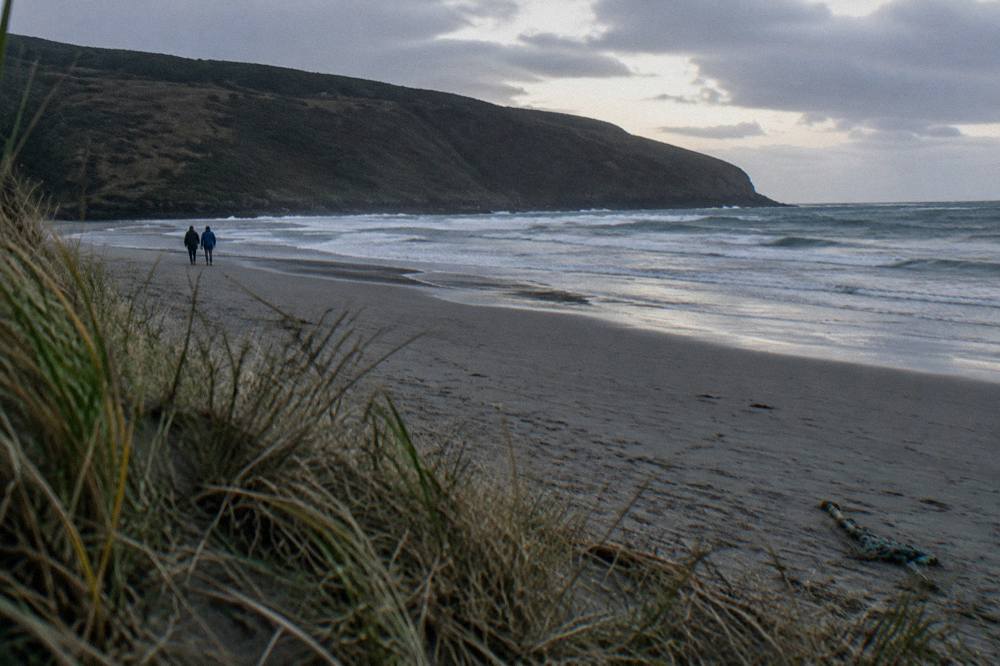
Allans Beach is a different proposition. DOC describes a 500 m return track from the gravel road off Hoopers Inlet, with sea lions, fur seals and "the odd penguin", dogs on a lead on the track and none at all on the beach. The beach is about 25 km from the city by either Portobello Road or Highcliff Road. The odds of a penguin here are lower than at Pilots Beach, but the setting is wild and open, and sea lions can lie on the road itself, so drive the last stretch slowly.
Sandfly Bay is the third. The DOC track is a 560 m return, about 15 minutes one way, down a steep sand dune past a viewing platform, with no dogs allowed. Fur seals and sea lions haul out on the rocks and the beach. Part of the Sandfly Bay Wildlife Refuge is closed from 1 November to 28 February inclusive to protect wildlife, so follow the signs to reach the beach. Access is via Highcliff Road then Seal Point Road. A penguin here is possible rather than likely; a seal or sea lion is the more dependable sighting.
There is one hard boundary that no amount of independent enthusiasm crosses. The nature reserve at Taiaroa Head cannot be entered. DOC is explicit that albatross nesting and courtship are seen from the Richdale Observatory on a Royal Albatross Centre tour, and the same logic protects the headland's penguin habitat. Walking off-track around the tip of the peninsula is not an alternative to a tour, it is a breach of the rules that keep the colony viable. If reading about the headland has sparked a wider interest, the Dunedin penguin tour guide covers the full guided landscape.
| Free place | What DOC says | Access notes |
|---|---|---|
| Pilots Beach, Taiaroa Head | Little penguins seen at dusk throughout the year; over 350 pairs at the beach | End of Harington Point Road; night viewing managed by the Pukekura Trust |
| Allans Beach | Sea lions, fur seals and "the odd penguin" | 500 m return track; about 25 km from the city; no dogs on the beach |
| Sandfly Bay | Fur seals and sea lions haul out on rocks and beach | 560 m return track, about 15 minutes one way; part closed 1 November to 28 February |
What Are The Rules For Watching Penguins On Your Own?
Keep at least 50 m from penguins, never approach, do not block their way in or out of the water, never use flash, and do not enter nesting areas or linger on beaches where hoiho come ashore. DOC asks people to report sick or dead birds on 0800 362 468. These are not guidelines for good photographs; they are the conditions under which viewing is allowed at all.
The 50 m distance comes from DOC and the Dunedin Wildlife Care Code, and it exists because penguins pay a real biological cost for disturbance. Hoiho moult in autumn and sit ashore for about 25 days, and DOC notes that disturbance lengthens the moult, which is dangerous for the bird. Dogs are especially dangerous to hoiho from February to April. A penguin that is forced to reconsider coming ashore, or that bolts from a moulting spot, is a penguin burning energy it cannot spare.
The rules extend to how you behave around the rest of the coast's wildlife. Seals and sea lions need at least 20 m on land, and you should never come between a fur seal and the sea. For anyone on the water, vessels travel no faster than idle within 300 m of marine mammals, and drones stay more than 150 m away, with a permanent drone restriction over Taiaroa Head. The penalties are serious: DOC lists up to two years' imprisonment or a fine up to NZD 250,000 for breaches.
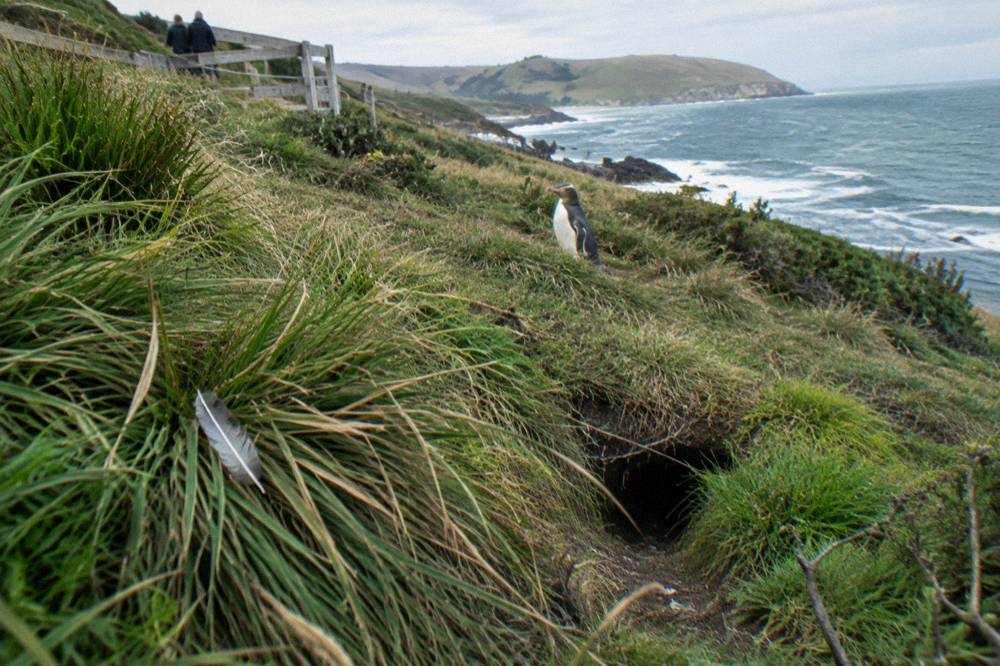
Why so strict for hoiho in particular? The numbers explain it. DOC records that the northern hoiho population fell from about 741 breeding pairs in 1999 to 265 in 2019, a 65 percent decline in 20 years. RNZ reported in October 2026 that fewer than 115 breeding pairs remain on mainland New Zealand and Rakiura. Hoiho are found only in New Zealand, and every disturbance on a mainland beach touches a population that small. The rules are on DOC's sharing our coasts guidance, which is the reference to read before any independent trip.
This is the point where the guided question stops being about convenience and starts being about the birds. The OPERA, the eco-reserve at 45 Pakihau Road on the Otago Peninsula formerly known as Penguin Place, runs a 90-minute guided journey through a private reserve using a trench and hide system, precisely so that visitors can see hoiho without ever breaking the 50 m rule. The operator says the tour gives "the best chance" of seeing hoiho and promises nothing, which is the honest way to word it. DOC's Taiaroa Head pages cover the equivalent protections at the headland itself.
What Does A Guided Penguin Tour Actually Add?
Guided tours add three things independent viewing cannot: legal access to private reserves and purpose-built hides, guides who know where the birds are and why, and, on some options, transport from the city. The OPERA's reserve visit runs 90 minutes from $42.00 per person and the Pukekura evening viewing from $34.04 per person. Neither promises a sighting, and both are built around the same rules.
The hides are the heart of it. A trench and hide system, like the one The OPERA uses, lets a group watch hoiho at a distance the birds tolerate, from positions that took years to establish, without a single visitor stepping onto a nesting area. A purpose-built viewing platform like the one at Pilots Beach does the same for little penguins: it puts dozens or hundreds of people above the beach rather than on it, which is the difference between watching the evening arrival and ruining it. Blue Penguins Pukekura also brings guides with conservation backgrounds and allows non-flash photography with no tripods, so the photography rules are handled on the spot. The full index of guides sits on Dunedin Wildlife Tours.
“Incredible experience that you can only have on the Otago Peninsula. It was THE highlight of our trip to Dunedin. Excellent value for money. Our driver/guide, Sian, was super knowledgeable about all kinds of birds and animals. She was excellent. I can’t say enough great things about this tour!”
The guides matter more than most visitors expect. Little penguins at Pilots Beach arrive in groups called rafts, and knowing where to look and when is a learned skill. At The OPERA, the guide is the person who can tell a hoiho resting before its evening climb from a log, and who can explain the rehabilitation centre visit that happens when penguins are in the reserve's care. The species background is genuinely useful too: the little penguin and the yellow-eyed penguin lead very different lives, and a guide stitches that into an hour and a half.
Transport is the quiet third benefit. Pilots Beach is at the end of Harington Point Road, and the standalone Pukekura evening visit is self-drive: no transport is provided, and the booking page is explicit that guests drive themselves to the reserve at 1245 Harington Point Road. The Pukekura Combo, 5 hours from $93.62 per person, picks up instead from the Dunedin i-SITE at 50 The Octagon, includes an air-conditioned vehicle, caps the group at 11 and carries a minimum age of 18. Whether driving the peninsula at night appeals is a real decision, not a detail.
How Much Do The Guided Penguin Options Cost?
The cheapest guided penguin experience covered here is the Pukekura standalone evening visit at $34.04 per person for 1.5 hours, rated 5.0 across 578 reviews. Two tours of The OPERA reserve sit at $42.00 and $42.56 per person. The Pukekura Combo with city pickup is $93.62 per person. All figures are USD from prices and per person; the highest per-person penguin option here is $93.62, and nothing compares with per-group pricing.
Those numbers need their context, because the review pools tell a story of their own. The Pukekura standalone visit, at 5.0 from 578 reviews, is the most reviewed penguin-viewing experience on the site and one of the strongest review profiles of any tour here. The Rehabilitation Centre and Reserve Walk at The OPERA, 4.6 across 301 reviews, is the next largest pool among the penguin options. The Small-Group Wildlife and Penguin Tour at The OPERA carries 4.7 across 47 reviews, and the Pukekura Combo 5.0 across 213.
| Tour | Duration | Price from (USD, per person) | Rating | Reviews | Group max |
|---|---|---|---|---|---|
| Pukekura Penguins Standalone Visit | 1 hour 30 minutes | $34.04 | 5.0 | 578 | 75 |
| Rehabilitation Centre and Reserve Walk | 1 hour 30 minutes | $42.00 | 4.6 | 301 | Check the booking page |
| Small-Group Wildlife and Penguin Tour | 1 hour 30 minutes | $42.56 | 4.7 | 47 | 15 |
| Pukekura Combo, 5 Hours | 5 hours | $93.62 | 5.0 | 213 | 11 |
The structure behind those prices is worth understanding. The OPERA, formerly Penguin Place, is one venue at 45 Pakihau Road on the Otago Peninsula, and the two OPERA tours on this site are different products at that one venue, not different places. The Rehabilitation Centre and Reserve Walk includes the 90-minute guided tour, access to the rehabilitation centre and a nature walk in the reserve, and the booking page recommends bringing comfortable shoes, outdoor clothing and binoculars. The Small-Group Wildlife and Penguin Tour, run by the Otago Peninsula Eco Restoration Alliance, caps numbers at 15 and provides binoculars and waterproof jackets. One is built around the reserve walk, the other around a smaller group with optics provided; the booking pages carry the full detail.
Cancellation terms matter at these price points. Every penguin-viewing tour covered here states a full refund when cancelled at least 24 hours before the start. That single fact lowers the risk of booking ahead for an evening event that depends on weather and daylight, and the reservation can be locked in before the trip while the decision is still reversible. Dunedin Wildlife Tours covers these options alongside the wider peninsula landscape, and the same 24-hour terms apply across the penguin category here.
Which Choice Suits A Short Visit Or A Cruise Day?
Independent viewing suits a self-drive day with flexibility: Pilots Beach costs nothing and needs only a car and the 50 m rules. A cruise passenger with fixed hours is better served by tours with pickup, such as the Pukekura Combo from the i-SITE or penguin tours that collect from Port Chalmers. The cruise season runs 21 October 2026 to 16 April 2027, and most ships dock at Port Chalmers, 14 km from the city.
“Rachel was very knowledgeable about all the wildlife and the location history. Great personality and welcoming to everyone. Hung around long enough to see two Royal Albatross in flight!”
The self-drive case is straightforward. If a hire car is already part of the trip and the evening is free, driving to Harington Point for dusk at Pilots Beach is the cheapest penguin experience on the peninsula, free, and genuinely good when the birds cooperate. The trade-offs are equally plain: no guide, no platform, no interpretive talk, and full personal responsibility for the viewing rules. The Royal Albatross Centre warns drivers to reach the tip via Portobello Road and Harington Point Road rather than State Highway 88 and Port Chalmers, which is the other side of the harbour with no road to the tip.
Cruise passengers face a different arithmetic. Port Chalmers is 14 km from the city and 15 to 20 minutes by shuttle, and the ship's hours are fixed. Penguin tours with pickup remove the navigation risk entirely. The Penguin Tour With Pickup option, 6 hours from $189.00 per person, includes hotel and Port Chalmers pickup and drop-off. The Pukekura Combo collects from the i-SITE at 50 The Octagon and can drop at central Dunedin accommodation afterwards, though its 18-and-over minimum age rules out families. For the full picture of ship-day planning, the Dunedin shore excursions wildlife guide works through the timing in detail.
Families should read the age lines carefully, because they vary. The Pukekura standalone evening visit publishes no minimum age and takes up to 75 people. The OPERA's Small-Group Wildlife and Penguin Tour publishes none either, with a 15-person cap. The Pukekura Combo's minimum age of 18 is the outlier. Children on any evening penguin trip need to manage a late night, quiet standing and cold sea air, and the honest planning answer for younger kids is often a shorter reserve visit such as The OPERA's 90-minute tours, taken in daylight.
One honest caveat applies to both paths: no penguin sighting is ever certain, on a tour or off. The Larnach Castle and Cruise tour, which shares the peninsula's waters, states plainly that wildlife viewing is not guaranteed, and that is the industry's own wording. The right frame is probability and quality of experience: a managed platform with guides, or a free beach with rules and patience. Neither is a promise, and any page that guarantees penguins should be read with suspicion.
“One of the best and highly recommended experience for wildlife lovers. The highlight of the trip was watching yellow eyed penguins, we were lucky and saw 3 of them. It was a great outing, thanks to Adrian.”
How Do You Choose Between Free Beaches And A Guided Reserve?
Choose free beaches if you have a car, flexibility and a tight budget, and accept lower odds and no infrastructure. Choose a guided reserve if hoiho are the goal, if you want hides and guides, or if transport from the city matters. The managed versions run from $34.04 to $93.62 per person, and the review counts behind them, 578 for Pukekura and 301 for The OPERA walk, are real evidence of what visitors make of the difference.
Budget is the sharpest lens. A free evening at Pilots Beach versus the $34.04 standalone Pukekura visit is a fair comparison, because both put you at the same beach at the same hour. The paid version adds the platform, the guides and the structure. Free costs nothing and asks more of you. Between the two OPERA tours at $42.00 and $42.56, the difference is a dollar and change and the choice is really between the reserve-walk framing and the small-group framing with binoculars provided; the higher-reviewed pool sits with the walk, at 301 reviews against 47.
Interests decide the rest. A photographer gains from the Pukekura platform's non-flash policy and elevated angle. A hoiho-focused visitor gains most from The OPERA, whose trench-and-hide system exists specifically for a bird that must never be approached within 50 m. A visitor who wants penguins plus albatross plus a fuller peninsula day is looking at combo territory, and the Otage Peninsula penguin tour guide lays out those layers. The decision is rarely free versus paid in the abstract; it is which of the two serves the evening you actually have.
Timing shapes the experience more than money does. Little penguins arrive at dusk, so any plan, guided or not, is an evening plan, and departure times for the guided tours vary by date, which the booking calendar shows for each one. The operator's seasonal figures, 50 to 300 birds a night from September to February and 10 to 80 from March to August, are a guide to expectations, attributed to Blue Penguins Pukekura rather than promised. Winter evenings bring fewer birds and earlier darkness; summer brings the rafts and a later night.
“Wonderful guide who took us to see some of the sights before dropping us at OPERA to see the Penguins. Good day.”
Whatever you choose, the birds' rules travel with you. The 50 m distance, no flash, no blocking the water's edge, dogs well away, sick birds reported to 0800 362 468: these apply on a free beach and inside a guided reserve alike. The difference a tour makes is that a guide enforces them kindly and explains them as you go, which is, in the end, a fair description of what the ticket buys.
Common Questions About Seeing Penguins In Dunedin
Can I See Penguins In Dunedin Without A Tour?
Yes. DOC says little penguins are seen at dusk throughout the year at Pilots Beach on Taiaroa Head, and Allans Beach has "the odd penguin" alongside sea lions and fur seals. Viewing is free and self-drive, no sighting is promised, and the 50 m rules apply everywhere.
Where Is The Best Free Place To See Penguins Near Dunedin?
Pilots Beach at Taiaroa Head, at the end of Harington Point Road. DOC says more than 350 little penguin pairs use the headland's beaches and that over summer more than 200 birds can be seen arriving at dusk. Arrive late, stay quiet and keep off the beach itself.
Can You See Yellow-Eyed Penguins Without A Tour?
Only from a distance, and rarely reliably. Hoiho come ashore at beaches like Allans Beach, but they are Threatened, Nationally Endangered, with fewer than 115 breeding pairs on the mainland and Rakiura reported in October 2026. The 50 m rule, no flash and no lingering on landing beaches make guided hides the practical way to watch them.
How Close Can You Get To Penguins In Dunedin?
At least 50 m, per DOC and the Dunedin Wildlife Care Code. Never approach, never block a penguin's way in or out of the water, no flash, and do not enter nesting areas. Seals and sea lions need 20 m on land. Reports of sick or dead birds go to 0800 362 468.
What Is The Cheapest Guided Penguin Tour In Dunedin?
The Pukekura Penguins Standalone Visit, from $34.04 per person for 1.5 hours, rated 5.0 across 578 reviews. It is self-drive to 1245 Harington Point Road, with no transport provided. The two tours of The OPERA reserve start at $42.00 and $42.56 per person.
Do Any Penguin Tours Include Pickup From Dunedin?
Yes. The Pukekura Combo, 5 hours from $93.62 per person, picks up from the Dunedin i-SITE at 50 The Octagon and can drop at central accommodation afterwards, with a minimum age of 18. The Penguin Tour With Pickup option includes hotel and Port Chalmers pickup and drop-off. The standalone Pukekura evening visit provides no transport.