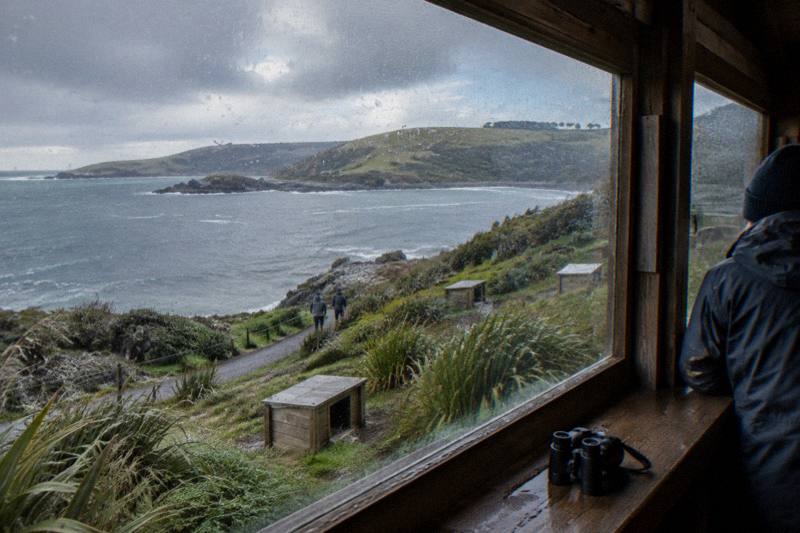
What Time Of Year Are Penguins Seen On A Dunedin Penguin Tour?
Penguin seasons on Dunedin tours: when little penguins and hoiho may be seen on the Otago Peninsula, how the breeding and moult cycles shape the calendar, and which tours run when.
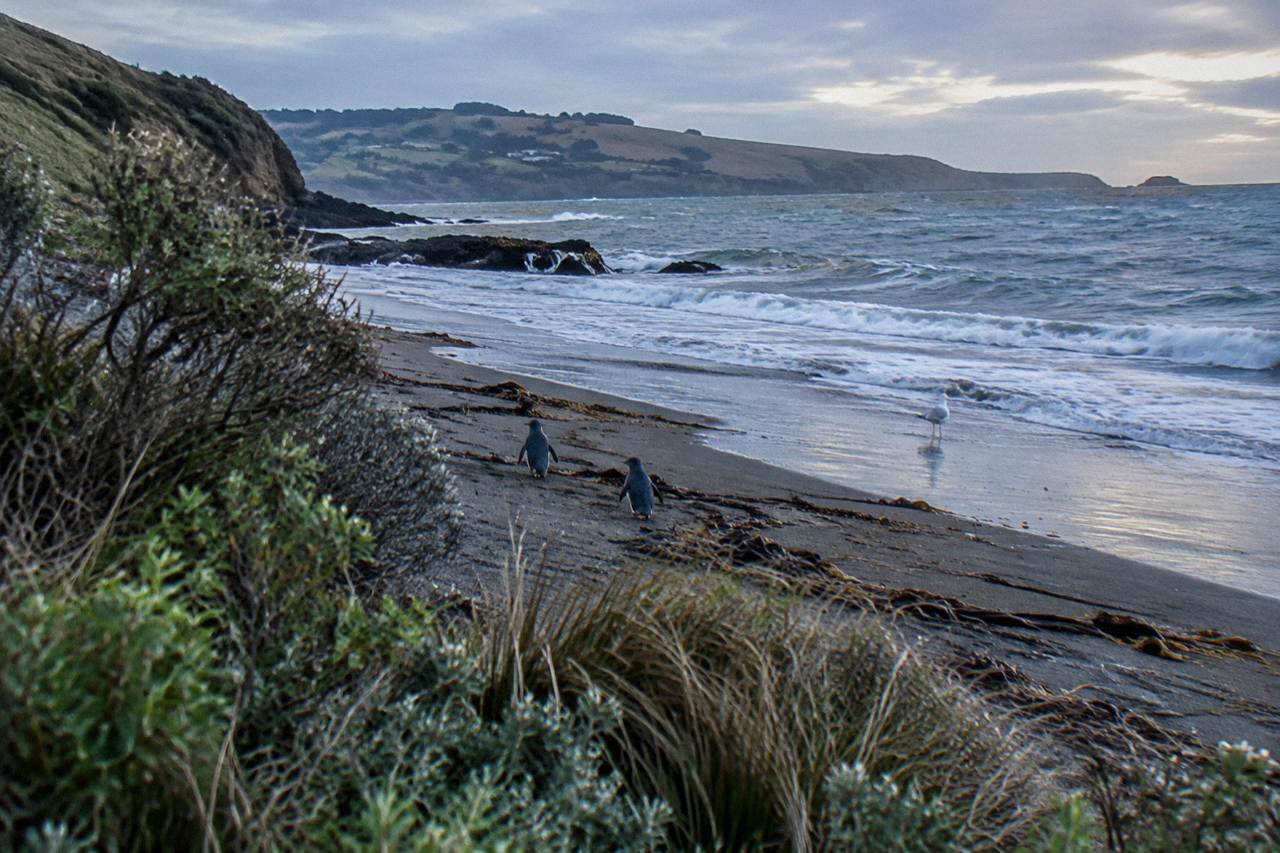
Penguins can be seen on Dunedin penguin tours at every point of the year, because the two species involved follow different cycles. Little penguins come ashore at dusk throughout the year, DOC says. Hoiho, the yellow-eyed penguin, pair in mid-August, raise chicks through spring and summer, and fledge them around February, then sit ashore to moult in autumn, when disturbance does the most harm.
That is the honest short answer, and it comes with an important qualifier. Penguins are wild animals and no tour on the Otago Peninsula promises a sighting. Operators describe what their season typically holds, guides know where to look, and the reserve at Pukekura has a purpose-built viewing platform for the little penguin return at dusk, but the birds decide. A reader picking a date for a penguin tour is therefore really picking a point in two overlapping calendars: the korora calendar, which runs all year at dusk, and the hoiho calendar, which moves through pairing, eggs, chicks, fledging and finally the moult.
The time of year matters in a second way that has nothing to do with the birds themselves. Tour dates are set by booking calendars, not by fixed timetables, and the evening penguin viewings in particular are timed to sunset, which shifts across the seasons. A December evening tour and a June evening tour start hours apart for the same reason: the penguins arrive when the light goes. Checking the calendar for your date shows both the available slots and the start time.
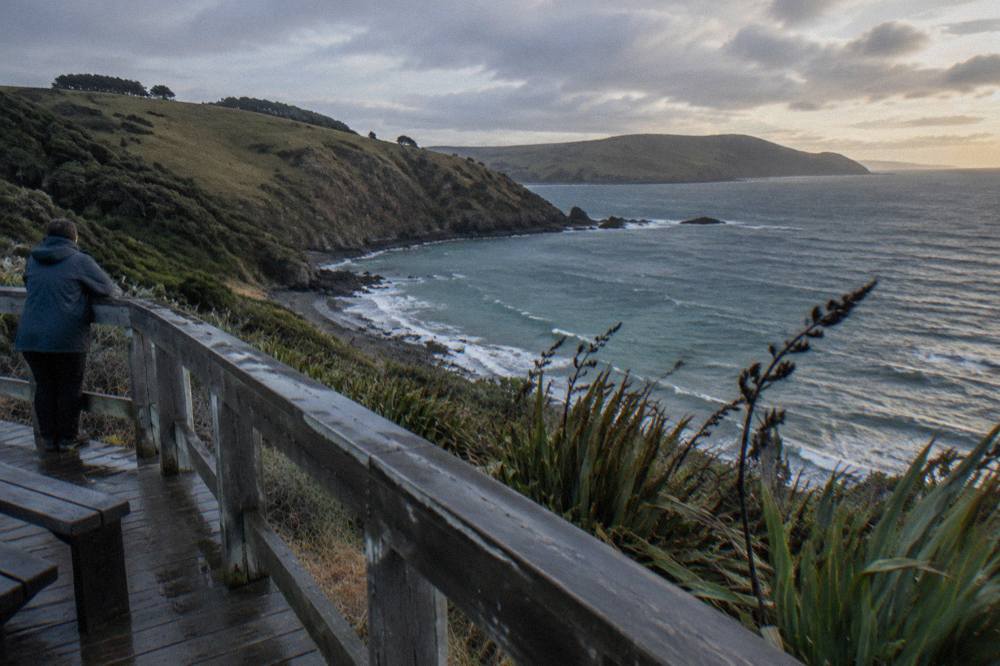
When Are Little Penguins Seen Around Dunedin?
Little penguins, korora, can be seen at dusk throughout the year at Pilots Beach on the western side of Taiaroa Head, DOC says, which makes them the one penguin whose season never closes. The Blue Penguins Pukekura operator describes typical numbers as 50 to 300 birds a night from September to February and 10 to 80 from March to August, and the birds arrive after dark in a steady stream from the sea.
Those two operator figures are the closest thing the region has to a penguin forecast, and they are worth reading carefully. They are typical counts, not promises, and the operator presents them as a description of what the platform usually holds rather than a guarantee for any night. The shape is what matters: spring and summer evenings tend to bring more birds ashore, in line with the breeding season, while autumn and winter nights are quieter but still productive. DOC notes around 600 pairs on the headland, with over 350 at Pilots Beach, and says that over summer more than 200 birds can be seen arriving.
The mechanism of the viewing never changes. The penguins spend daylight hours feeding at sea and return to shore at dusk in groups, a behaviour sometimes called rafting, where they gather in the water near the beach before coming ashore together. From the viewing platform at Pukekura, with guides who have conservation backgrounds, visitors watch that return under low light. Non-flash photography is welcome, and tripods are not.
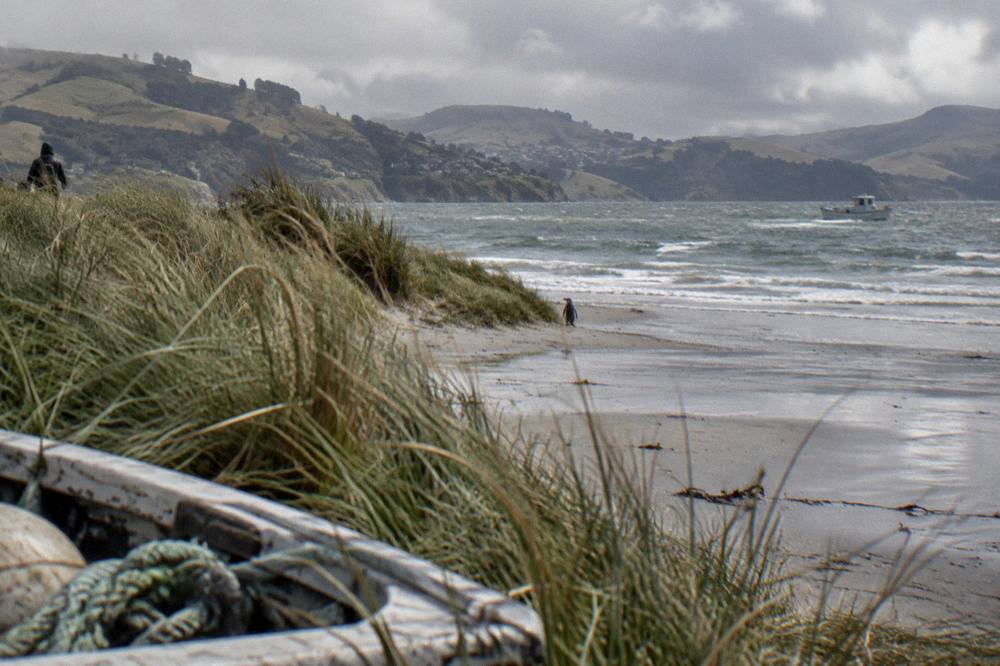
For visitors deciding how to book this, the region's own guide to the Pukekura penguin experience covers the standalone visit in detail. The standalone option is a 1.5-hour guided experience from $34.04 per person, rated 5.0 across 578 reviews, and it is self-drive: no transport is provided, and guests drive themselves to the reserve at 1245 Harington Point Road. There is also a 5-hour combo from The Octagon in Dunedin, from $93.62 per person, rated 5.0 across 213 reviews, with pickup from the Dunedin Visitor Centre and a minimum age of 18.
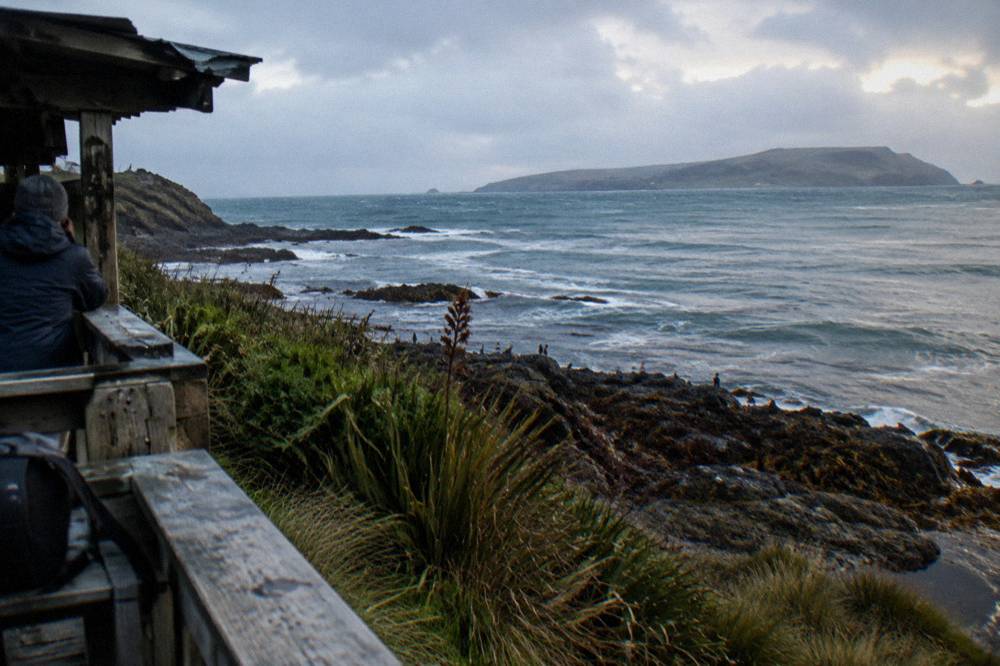
A question heading for anyone comparing: is the dusk timing worth the drive? Full refund applies when cancelled at least 24 hours before the start, so a calendar check costs nothing.
When Are Hoiho, The Yellow-Eyed Penguins, Seen On The Otago Peninsula?
Hoiho follow a 28-week breeding season, the Yellow-eyed Penguin Trust says: pairing from mid-August, eggs from mid-September to October, hatching in November and December, and chicks fledging around February. Guided reserve tours at The OPERA run on the dates set by the booking calendar, and the operator describes its trench-and-hide system as giving the best chance of seeing hoiho, while promising nothing.
The hoiho is the rarer and more fragile of the two species, and its calendar explains why tour operators are careful with their language. DOC lists the hoiho as Threatened, Nationally Endangered, found only in New Zealand. The northern population fell from about 741 breeding pairs in 1999 to 265 in 2019, a 65 percent decline in 20 years, and RNZ reported in October 2026 that fewer than 115 breeding pairs remain on mainland New Zealand and Rakiura. Those figures are attributed and dated because they change, and because they are the reason viewing happens through guided systems rather than free beach wandering.
“Wonderful guide who took us to see some of the sights before dropping us at OPERA to see the Penguins. Good day.”
During breeding, hoiho forage up to 25 km offshore, the Trust says, so a bird ashore in the middle of the day is likely a parent between fishing trips or a bird holding a territory. The guided tour at The OPERA moves visitors through a private eco-reserve using trenches and hides, which keeps people out of the birds' sightlines while still allowing close viewing. The reserve is also home to little penguins, fur seals, sea lions, and sea and forest birds, and its rehabilitation centre can be visited when penguins are in care.
Two tours covered here run at The OPERA itself. The Small-Group Wildlife and Penguin Tour is 1.5 hours, from $42.56 per person, rated 4.7 across 47 reviews, with a maximum of 15 guests, waterproof jackets and use of quality binoculars included. The Rehabilitation Centre and Reserve Walk is also 1.5 hours, from $42.00 per person, rated 4.6 across 301 reviews, and includes access to the rehabilitation centre, a nature walk in the reserve, and rain jackets.
Because both options start at The OPERA at 45 Pakihau Road, allow roughly 45 minutes of driving from central Dunedin, and check the booking calendar for the departure slots on your date.
How Does The Hoiho Moult In Autumn Affect Viewing?
In autumn, hoiho come ashore to moult and sit in one place for about 25 days, unable to fish and at their most vulnerable to disturbance. DOC warns that dogs are especially dangerous from February to April and that disturbance lengthens the moult, which is why autumn tours ask for particular care and why lingering on beaches where hoiho come ashore is discouraged.
The moult is the least understood part of the penguin year by visitors, and the most important. A moulting penguin cannot feed: it has replaced its feathers and must wait for the new plumage to become waterproof before returning to the sea. A bird interrupted during those weeks burns energy it cannot replace. That is the conservation logic behind the trench-and-hide system at The OPERA, and behind the care code that asks people to keep moving rather than settle near a bird on a beach.
For a visitor, the practical effect on a tour is modest but real. Autumn and early-winter tours may show moulting birds at closer rest than the breeding season allows, since the birds genuinely do not move much, but the ethics of that viewing depend entirely on the guided system. A licensed operator with hides and trenches can show a moulting bird without harm. An independent visitor approaching the same bird on a public beach causes exactly the disturbance the code prohibits. The guide to seeing penguins in Dunedin by tour breaks down which viewings are guided and which beaches are simply closed to dogs and left alone.
It is also the season when the two species diverge most clearly. The little penguin calendar keeps running at dusk, with the operator describing 10 to 80 birds a night from March to August. The hoiho calendar pauses: the breeding season that began with mid-August pairing has ended with February fledging, and the adults are ashore, quiet and fasting. A spring tour and an autumn tour at the same reserve can feel like different places.
What Changes Between Spring, Summer And Winter Penguin Tours?
Spring and summer bring the busiest penguin calendar: hoiho pairing, eggs and chicks, and the higher end of the little penguin counts, 50 to 300 a night as the operator describes for September to February. Autumn brings the hoiho moult and quieter korora nights. Winter is the low season for numbers, yet little penguins still come ashore at dusk throughout the year, DOC says, and winter tours are the least crowded.
This is where a reader picking a date should match the season to the reason for the trip. Visitors who want the fullest evening spectacle at Pukekura lean toward the September to February window the operator describes, accepting that it is also the busiest time for Dunedin generally. Visitors who value a quiet platform and a short drive lean toward the shoulder or winter months, accepting smaller nightly counts. Neither choice is wrong, and no month is the best month, because the birds do not run to a schedule that rewards one date over another.
| Period | Hoiho stage (Yellow-eyed Penguin Trust) | Little penguin viewing (operator describes) | What a tour may show |
|---|---|---|---|
| August to September | Pairing from mid-August, eggs from mid-September | Season builds toward spring counts | Adults holding territories, evening rafting at dusk |
| October to December | Incubation, hatching in November and December | 50 to 300 birds a night, September to February | Adults on nests, feeding changes, busy dusk returns |
| January to February | Chicks fledge around February | High counts continue | Fledging activity, strong evening returns |
| March to April | Adults moult ashore about 25 days | 10 to 80 birds a night, March to August | Moulting birds at rest, quieter platforms |
| May to July | Winter, no breeding | Lower counts, dusk viewing continues | Smaller korora groups, fewest other visitors |
One planning point that surprises cruise passengers: the Dunedin cruise ship season runs from 21 October 2026 to 16 April 2027, so almost everyone arriving by ship lands inside the September-to-February or early-moult windows. Shore visitors with an evening free can still reach a dusk viewing, but the calendar sets the start time, and self-drive distances from the cruise terminal are longer than from the city. The shore excursion overview for Dunedin wildlife covers those trade-offs.
Which Dunedin Penguin Tours Run At Which Time Of Day?
The region's penguin tours split into two shapes: short daytime reserve tours, 1.5 hours, at The OPERA or on the peninsula, and evening tours built around the dusk little penguin return, including a 4.5-hour option from The Octagon with entry included. Departure times vary by date and the booking calendar shows the slots, because the birds, not the operator, set the evening schedule.
The daytime options are the two 1.5-hour tours at The OPERA described above, plus combination tours that pair a reserve visit with peninsula scenery. The evening options centre on Pukekura: the standalone 1.5-hour viewing, the 5-hour combo from The Octagon, and Fantail's evening tour from The Octagon, which is 4.5 hours and includes the 1.5-hour guided evening viewing of the little penguin return at sunset, from $161.71 per person. That evening tour is a new option with 4 reviews, too few a pool for any rating claim, and it appears on two booking pages with separate review counts, so compare them by name when choosing.
There is also a 4.5-hour afternoon-to-evening tour from The Octagon that combines free time at the Royal Albatross Centre, where the guided albatross tour is not included, with the 1.5-hour Pukekura penguin experience, from $164.00 per person, rated 5.0 across 20 reviews. That one suits visitors who want two headland attractions in a single afternoon without driving themselves.
| Tour | Duration | From price (USD, per person) | Reviews | Runs |
|---|---|---|---|---|
| Pukekura Penguins Standalone Visit | 1 hour 30 minutes | $34.04 | 5.0 from 578 | Evening, self-drive to Harington Point |
| Pukekura Combo, 5 Hours | 5 hours | $93.62 | 5.0 from 213 | Afternoon into evening, from The Octagon |
| Small-Group Wildlife and Penguin Tour | 1 hour 30 minutes | $42.56 | 4.7 from 47 | Daytime, at The OPERA |
| Rehabilitation Centre and Reserve Walk | 1 hour 30 minutes | $42.00 | 4.6 from 301 | Daytime, at The OPERA |
| Sunset Penguins, Entry Included | 4 hours 30 minutes | $161.71 | 4 reviews, new option | Evening, from The Octagon |
| Albatross Centre Free Time, Penguins | 4 hours 30 minutes | $164.00 | 5.0 from 20 | Afternoon into evening, from The Octagon |
Free cancellation, a full refund when cancelled at least 24 hours before the start, applies to 25 of the 26 tours here, which matters for evening bookings, since a date chosen months ahead may need to move.
Does The Time Of Year Change Which Tour To Book?
Yes, in two ways: the season changes what each tour may show, and it changes the practical shape of the day. Summer visitors with one evening usually book a dusk viewing at Pukekura; visitors with a full day often combine The OPERA's daytime reserve walk with an evening tour; winter visitors benefit most from the shorter, self-drive options that keep the evening commitment small.
Budget and reviews also shift with the season, indirectly. The cheapest per-person penguin tour covered here is the Pukekura standalone visit at $34.04, and the most expensive per person among the penguin-focused evening tours is the 4.5-hour sunset option at $161.71. The median per-person from-price across the site's tours is $107.81, which gives a sense of where a penguin evening sits relative to the full peninsula days. Price alone rarely decides it, though. Duration does: a 1.5-hour platform viewing in June is a very different commitment from a 4.5-hour sunset tour in December.
The strongest pattern in the review pools is consistency. The standalone Pukekura visit holds 5.0 across 578 reviews, and the 5-hour combo holds 5.0 across 213, both spanning seasons rather than one lucky month. The OPERA's Rehabilitation Centre and Reserve Walk, 4.6 across 301 reviews, runs on dates set by its booking calendar. What varies across the year is the show, not the quality of the seat.
For readers still choosing between a boat and a beach, the comparison of a penguin tour against a wildlife cruise works through that exact decision, since harbour cruises describe blue penguins as sometimes seen rather than the centrepiece.
What Should Visitors Know About Penguin Viewing Rules In Dunedin?
DOC asks people to keep at least 50 m from penguins, never to approach or block their way in or out of the water, to avoid flash photography, and to stay out of nesting areas and off beaches where hoiho come ashore. Guided tours exist largely because these rules are hard to follow without trenches, hides and trained guides.
The full code is published by DOC for sharing the coast, and the penalties for harassing protected wildlife are real, up to two years' imprisonment or a fine up to NZD 250,000 for marine mammal offences. For penguins specifically, the rule set is behavioural rather than numeric in most cases: the 50 m distance, no lingering, no dogs off lead near beaches, and reporting sick or dead birds to the DOC hotline, 0800 362 468. The Trust's own pages on hoiho biology and threats explain why disturbance is listed alongside dogs, fisheries and disease as a driver of the decline.
Guided tours fold those rules into the product. The hides at The OPERA, the platform at Pukekura, the non-flash photography policy, the bans on tripods, and the guides who time each group's movement all exist to keep the viewing inside the code. That is also why this site, Dunedin Wildlife Tours, describes tours by what their guides and systems make possible rather than by what the birds might do on any night.
Species background is worth a few minutes before a visit: the little penguin is the one behind the dusk spectacle, while the yellow-eyed penguin is the rare mainland breeder whose breeding and moult calendar sets the other half of the year.
The three penguin tours below are the ones most often booked for the questions this page covers, and each states a full refund when cancelled at least 24 hours before the start.
Common Questions About Penguin Seasons In Dunedin
What Time Of Year Are Penguins Seen On A Dunedin Penguin Tour?
DOC says little penguins are seen throughout the year at dusk, but no tour can promise a sighting. DOC says little penguins come ashore at dusk throughout the year at Pilots Beach, and the Pukekura operator describes typical counts of 50 to 300 birds a night from September to February and 10 to 80 from March to August. Hoiho follow a breeding season from mid-August pairing to around-February fledging, then moult ashore in autumn.
Are Penguins Seen In Winter On Dunedin Tours?
Yes, little penguins can be. DOC describes them as seen throughout the year at dusk, and the Pukekura operator describes 10 to 80 birds a night from March to August. Winter counts are smaller than spring and summer counts, and the birds are never promised on any night.
When Do Hoiho Chicks Hatch On The Otago Peninsula?
The Yellow-eyed Penguin Trust describes a 28-week breeding season with pairing from mid-August, eggs from mid-September to October, hatching in November and December, and chicks fledging around February.
Why Are Dogs A Problem For Penguins In Autumn?
Hoiho moult in autumn and sit ashore for about 25 days, unable to feed. DOC warns that dogs are especially dangerous from February to April and that disturbance lengthens the moult, which costs the bird energy it cannot replace.
Do Penguin Tours Run All Year In Dunedin?
Booking calendars set the dates and start times for each guided penguin tour, so check the booking page for the days each tour runs. Evening tours are timed to dusk, so start times shift with the season; check the calendar for your date before planning the drive.
Can A Dunedin Penguin Tour Promise A Sighting?
No. Penguins are wild animals, so sightings can never be guaranteed. The OPERA operator describes its tour as the best chance of seeing hoiho, and the Pukekura operator describes typical nightly counts, but both leave the outcome to the birds.