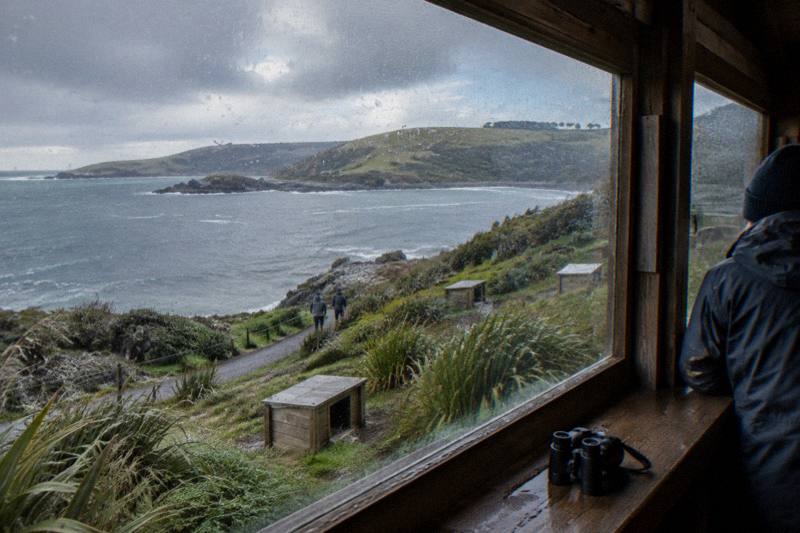
Can You Take Photos On A Dunedin Penguin Tour?
Photography rules on Dunedin penguin tours: flash bans, tripods, drones, the 50 metre distance rule, and which tours welcome cameras.
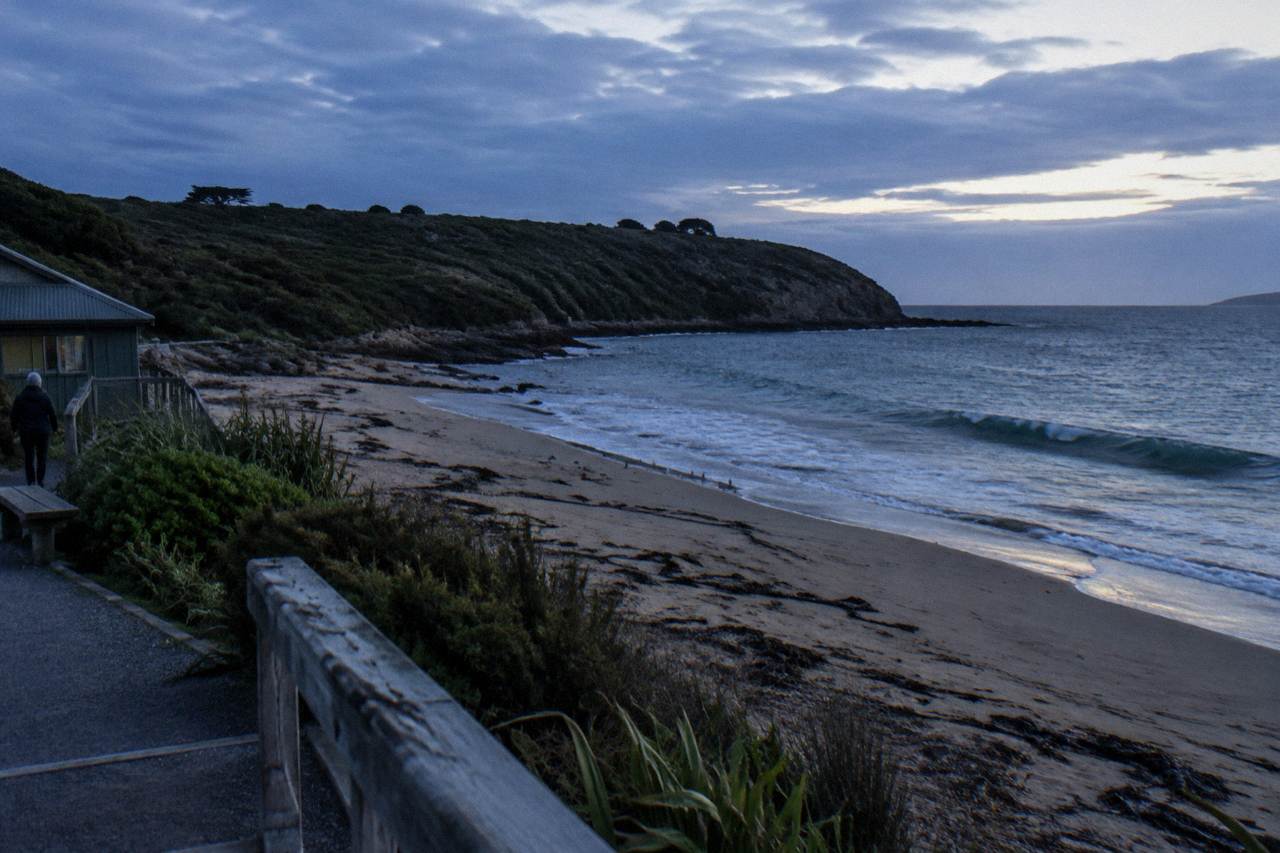
Yes, you can take photos on a Dunedin penguin tour, and on most of them cameras are explicitly expected. The conditions are consistent across the peninsula: no flash near penguins at any time, no tripods at the Blue Penguins Pukekura platform, and the Department of Conservation asks everyone to keep at least 50 metres from penguins. The tours covered here welcome photography within those rules.
Photography is not an afterthought on these trips, it is part of the design. The Blue Penguins Pukekura experience at Harington Point runs from a purpose-built viewing platform overlooking the beach, and the operator says non-flash photography is welcome and no tripods are allowed. The rehabilitation centre tour at The OPERA puts "camera" in its own suggested bring list on the booking page. Small-group tours that hand out binoculars are, by their nature, built around watching rather than shooting, but nothing in their terms excludes a camera.
The rules exist because penguins are sensitive to light and to proximity. DOC's guidance, set out in its sharing our coasts advice, asks people to keep at least 50 m from penguins, never to approach, never to block their way in or out of the water, and never to use flash. A flash at dusk, exactly when little penguins come ashore, blinds a bird adapted to near-darkness. That single rule shapes almost every practical decision a photographer makes on these tours.
For readers comparing the penguin tours side by side, three of the most relevant options are below.
“Excellent communication and education about the penguins! Those little blue penguins are absolutely adorable!! Bonus seeing albatross fly over coupled with a clear night of star gazing made this adventure a night to remember. The milky way even made an appearance. Highly recommend!”
The three trips above cover the price range a photographer is likely weighing. The Pukekura standalone visit is the cheapest per person on this site at from $34.04 for a 90-minute viewing, while The OPERA's two 90-minute guided tours run from $42.56 and $42.00 per person respectively. The guide to Blue Penguins Pukekura tours works through those options in more detail.
Where Are Photos Allowed On A Dunedin Penguin Tour?
Photos are allowed at every venue covered here, but the exact spot matters. At Pukekura, photography happens from the viewing platform overlooking Pilots Beach, not from the beach itself. At The OPERA, photography happens from the trench and hide system that carries groups through the private reserve. Wild beaches on the peninsula carry the 50 m rule for anyone photographing independently.
The Pukekura setup deserves explanation, because it is the one purpose-built photography position on the peninsula. The operator runs a 1.5-hour tour from a raised platform looking down over the beach where little penguins come ashore at dusk, with guides from conservation backgrounds on hand. The operator says typically 50 to 300 penguins a night arrive from September to February and 10 to 80 from March to August, and those are operator descriptions rather than promises. No transport is provided, so visitors drive themselves to the reserve at Pukekura, Harington Point.
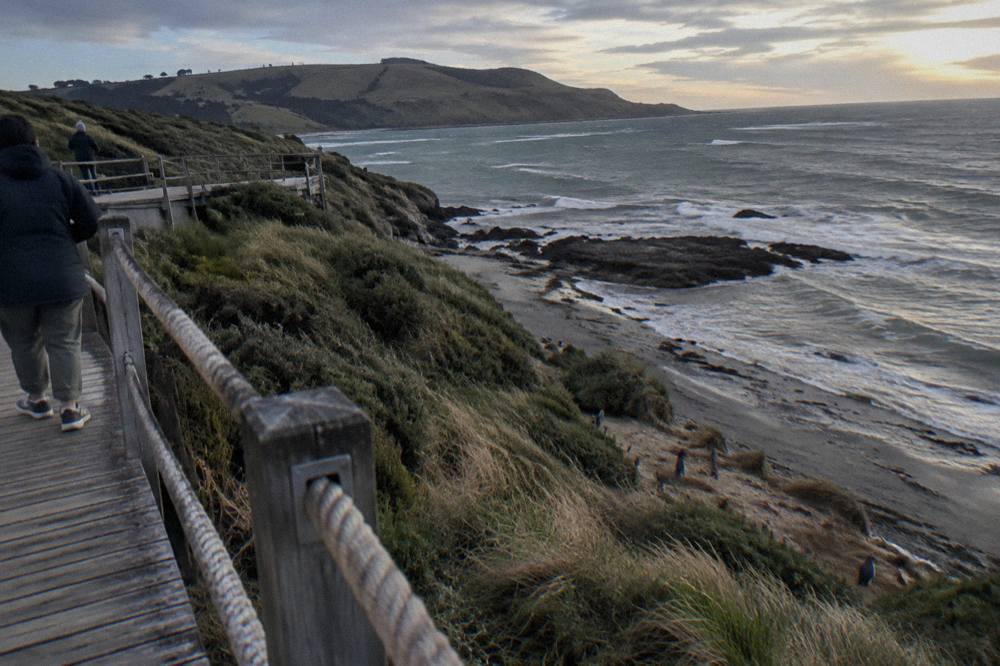
The OPERA, formerly known as Penguin Place, at 45 Pakihau Road on the Otago Peninsula, takes a different approach: a 90-minute guided journey through a private eco-reserve using a trench and hide system, with hoiho, little penguins, fur seals, sea lions and forest birds all possible. The operator describes the tour as giving "the best chance" of seeing hoiho and promises nothing. Photography from the hides is quiet, static and close to eye level, which is a different discipline from shooting down from a platform.
Wild-beach photography is the third situation, and the strictest. DOC's rules for hoiho viewing, restated by the Yellow-eyed Penguin Trust, ask people not to linger on beaches where hoiho come ashore and not to enter nesting areas. A long lens from a distance beats walking toward a bird every time, both for the photo and for the penguin.
| Venue | Where photography happens | Tripods | Flash | Distance rule |
|---|---|---|---|---|
| Blue Penguins Pukekura, Harington Point | Purpose-built platform overlooking the beach | Not allowed | Not allowed | Set by the guided viewing setup |
| The OPERA, Pakihau Road | Trench and hide system in a private reserve | Not stated by the operator | Not allowed under DOC rules | Managed by the guided route |
| Wild peninsula beaches (Allans Beach, Sandfly Bay) | Public tracks and viewing points | Not restricted by signage | Not allowed | At least 50 m from penguins |
What Are The Rules For Photographing Hoiho On The Otago Peninsula?
Hoiho, the yellow-eyed penguin, are Threatened and Nationally Endangered, and the photography rules around them are the strictest on the peninsula: at least 50 metres of distance, no flash, no blocking their path to the water, and no lingering on beaches where they come ashore. Guided tours manage this for you, independent photographers must manage it themselves.
The numbers behind the rules explain the caution. RNZ reported in October 2026 that fewer than 115 breeding pairs remain on mainland New Zealand and Rakiura, down from about 265 northern-population pairs in 2019 and about 741 in 1999, a 65 percent decline in 20 years. DOC lists the threats as dogs, human disturbance, climate change, fisheries, predation and disease. Every one of those photographer habits that feels harmless, approaching for a closer frame, staying to watch a bird leave the water, adds to the disturbance column.
Hoiho also moult in autumn and sit ashore for about 25 days while they do it, and DOC notes that disturbance lengthens the moult. A bird that is frightened off its moult site burns energy it cannot replace quickly. This is why the hides at The OPERA and the guided routes of the touring operators exist: they let people see hoiho without ever being close enough to matter.
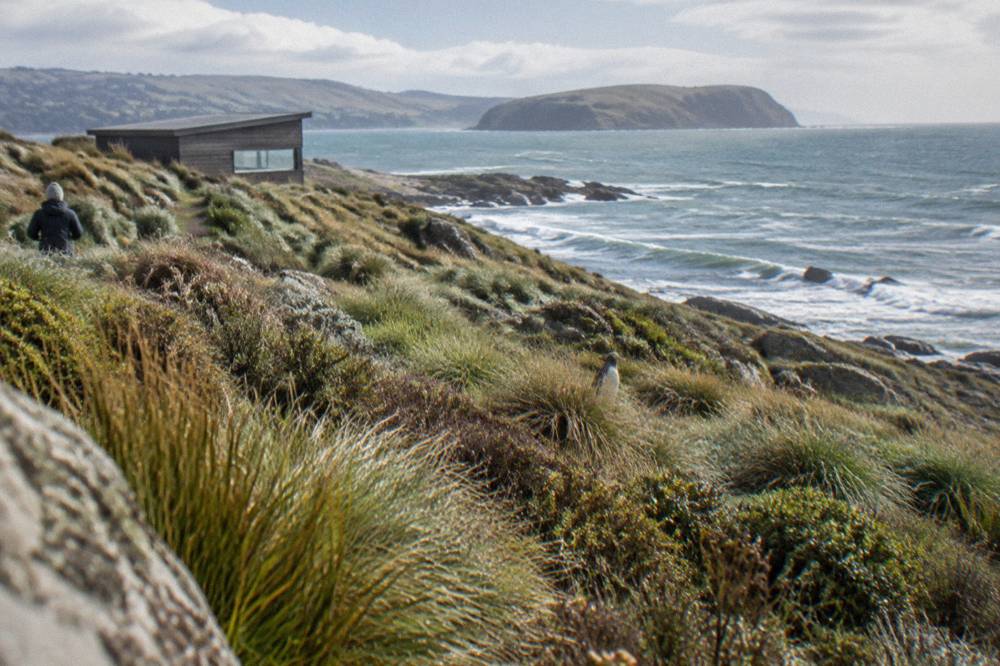
For photographers who want hoiho on a guided trip, the two tours that include The OPERA visit in their itinerary, at 90 minutes each from Pakihau Road, are the direct route. A camera is on the bring list for the rehabilitation centre and reserve walk, from $42.00 per person, rated 4.6 across 301 reviews, and binoculars are handed out on the small-group wildlife and penguin tour, from $42.56, rated 4.7 across 47 reviews. The operator's own page on the wildlife and penguin tour describes the trench and hide system in its own words.
The rules do not bend for a good photo, and the penalties elsewhere in the marine wildlife framework run as high as two years' imprisonment or a fine up to NZD 250,000 for disturbing protected marine mammals. Nobody is going to be prosecuted for a poorly framed penguin picture, but the direction of travel is clear: the animal's space wins.
Do You Want a Guided View of Hoiho and Korora Together?
Can You Use A Drone Or A Flash Near Penguins In Dunedin?
No to both, in practice. Flash is ruled out near penguins everywhere by DOC guidance, and drones are permanently restricted over Taiaroa Head, with aircraft and drones required to stay more than 150 metres away from marine mammals elsewhere. No tour covered here permits drone photography, and several specifically exclude flash behaviour by design.
Taiaroa Head carries a permanent drone restriction, which matters because several penguin experiences sit on the same headland. Pukekura, where the blue penguin viewing happens, is on the western side of Taiaroa Head at Pilots Beach, and the headland is also home to the northern royal albatross colony, the only mainland breeding colony of albatross in the Southern Hemisphere, plus a fur seal breeding site. DOC's aircraft rules ask drones to stay more than 150 m away, and vessels to travel no faster than idle within 300 m. A drone circling a penguin beach is not a grey area.
Flash is the more common temptation, because dusk viewing is dim by definition. Little penguins come ashore at dusk throughout the year at Pilots Beach, and the human eye is already struggling when the first birds arrive. The rule is still absolute: no flash. Modern cameras handle low light better than most people expect, and a dark, atmospheric frame of penguins coming up the sand tells a truer story than a washed-out flash shot ever could.
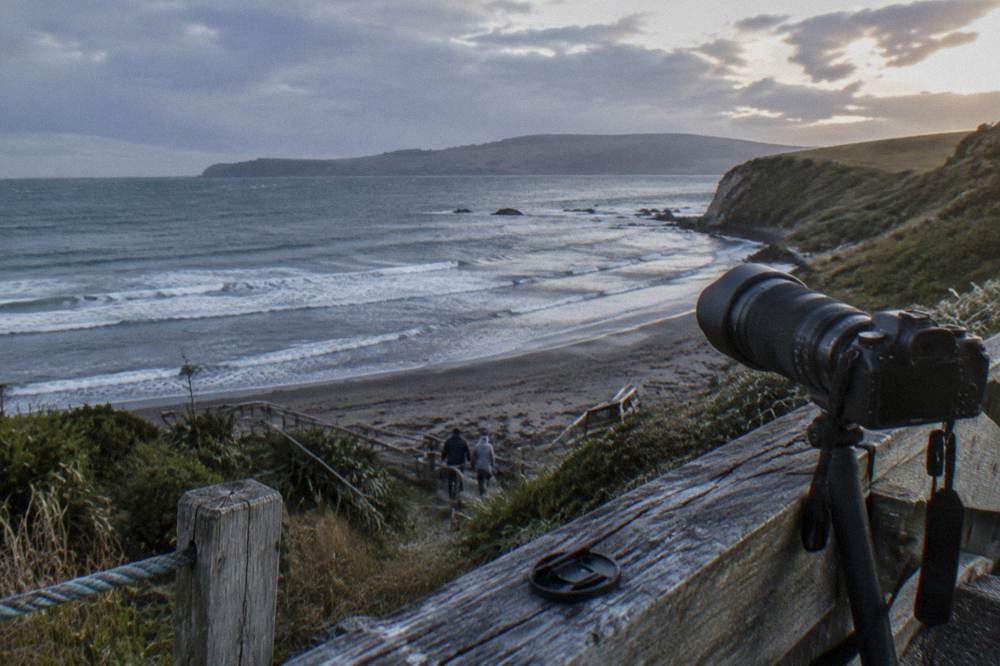
Selfie behaviour deserves a mention too. DOC asks people never to block a penguin's way in or out of the water, which rules out standing at the waterline for a proximity shot. The DOC Taiaroa Head page sets out the wider protection framework for the headland, including why the nature reserve itself cannot be entered.
What Camera Gear Suits A Penguin Tour At Pukekura?
The honest answer is a camera that performs well in low light and a lens you can hand-hold, because tripods are not allowed at the Pukekura platform and the penguins arrive at dusk. No specific settings can be promised, since light and bird numbers vary nightly, but the constraints themselves are fixed: dim light, no tripod, no flash, and a fixed shooting position.
Those four constraints define the kit. A fast lens helps, image stabilisation helps, and a body that stays usable at high sensitivity helps. Photographers who shoot birds regularly will recognise the situation: it is closer to photographing a dusk roost than a safari. The platform gives a stable standing position, so a monopod-style bracing technique or a rail rest is the substitute for a tripod nobody is allowed to bring.
The wider evening options are worth comparing, because two of them bundle transport. The Fantail sunset penguins evening tour runs 4.5 hours from The Octagon with the evening viewing entry included, from $161.71 per person, and as a newer option it carries only 4 reviews so far, too few for a rating claim. The Pukekura combo version runs 5 hours from the Dunedin i-SITE at 50 The Octagon, from $93.62, rated 5.0 across 213 reviews, with a minimum age of 18 and a maximum of 11 guests.
Daylight tours are a different photographic problem. The OPERA's small-group wildlife and penguin tour, 90 minutes from Pakihau Road with a maximum of 15 guests, includes use of high-quality binoculars, which points at the real strength of the trip: watching rather than shooting. Seals and sea lions in daylight are far more forgiving subjects than penguins at dusk, and the reserve's forest birds hold still occasionally.
How Dark Is It Really At A Blue Penguin Viewing?
It is darker than most visitors expect, and the reason is built into the biology: little penguins come ashore at dusk throughout the year at Pilots Beach, and by the time the main groups arrive the light is low. No weather numbers or sunset times can be promised for a given date, but the shape of the experience is consistent.
The viewing platform overlooks the beach rather than sitting on it, and the operator's guides, who come from conservation backgrounds, manage the group so the arriving birds are not disturbed. DOC says around 600 penguin pairs live on the headland, with over 350 at Pilots Beach, and over summer more than 200 birds can be seen arriving on a night. Those are agency figures for the population, not nightly guarantees, and the operator's own wording is "typically" a range.
Photographically, the first arrivals tend to come while there is still shape and colour in the sky, and later groups land in near-darkness. A lens that can work at the edge of light will deliver something on the front half of the evening and record the atmosphere of the back half. Anyone whose camera struggles after sunset will still come away with the experience itself, which is why the tour rates 5.0 across 578 reviews.
“Incredible experience that you can only have on the Otago Peninsula. It was THE highlight of our trip to Dunedin. Excellent value for money. Our driver/guide, Sian, was super knowledgeable about all kinds of birds and animals. She was excellent. I can’t say enough great things about this tour!”
Dress matters as much as gear. The platform is outdoors on a headland, and the operator's advice on warm clothing applies to photographers doubly, because a stationary photographer gets colder than a walking one. The guide to what to wear on a Dunedin wildlife tour covers the layers question in detail.
Which Dunedin Penguin Tours Suit Photographers Best?
It depends on the subject. For blue penguins at dusk, the Pukekura standalone visit is the direct choice, from $34.04 per person. For hoiho, seals and sea lions in daylight from hides, The OPERA's two 90-minute tours, from $42.56 and $42.00, are the fit. For a full evening with city transport, the Fantail sunset tour from $161.71 bundles both.
The comparison table below keeps the tour figures straight. Prices are USD per person, "from" prices, and 25 of the 26 tours here include a full refund when cancelled at least 24 hours before the start.
| Tour | Duration | From (per person) | Rating and reviews | Starts | Group max |
|---|---|---|---|---|---|
| Pukekura Penguins Standalone Visit | 1 hour 30 minutes | $34.04 | 5.0, 578 reviews | Pukekura, Harington Point | 75 |
| Pukekura Combo, 5 Hours | 5 hours | $93.62 | 5.0, 213 reviews | The Octagon, Dunedin | 11 |
| Small-Group Wildlife and Penguin Tour | 1 hour 30 minutes | $42.56 | 4.7, 47 reviews | The OPERA, Pakihau Road | 15 |
| Rehabilitation Centre and Reserve Walk | 1 hour 30 minutes | $42.00 | 4.6, 301 reviews | The OPERA, Pakihau Road | Check the booking page |
| Sunset Penguins, Entry Included | 4 hours 30 minutes | $161.71 | 4 reviews, a newer option | The Octagon, Dunedin | 10 |
| Albatross Centre Free Time, Penguins | 4 hours 30 minutes | $164.00 | 5.0, 20 reviews | The Octagon, Dunedin | Check the booking page |
A note on the last row: the 4.5-hour tour that pairs free time at the albatross centre with the 1.5-hour Pukekura penguin experience states that the albatross guided tour is not included, so photographers hoping for the observatory view of nesting albatross should read that itinerary carefully. The Dunedin penguin tour guide compares these options against the wider penguin-viewing category.
The group maximum column matters for photographers more than it first appears. A 75-person platform and an 11-person vehicle are very different working environments. On the small Pukekura combo, with its 18-and-over minimum age, the platform visit is the same shared space, but the drive out is a quiet small-group run with room to talk light and lenses with the guide.
Where Do Tours Mention Cameras In Their Booking Details?
Only a few tours mention cameras explicitly, and The OPERA's rehabilitation centre tour is the clearest, listing camera alongside comfortable shoes and outdoor clothing in its bring list. Everywhere else, cameras are simply permitted by default, and the practical limits come from the venue rules: no flash, no tripods at Pukekura, and the distance rules on any wild beach.
Reading a booking page with a photographer's eye means checking three things: what the itinerary actually includes, what the operator hands out, and what the cancellation terms say. Binoculars are stated as provided on a handful of the tours covered here, including the Pukekura-area trips above and several peninsula and cruise tours, and a tour that hands out binoculars is a tour built around watching. That is not a handicap, it is a hint about pace.
Cancellation matters for evening photography in particular, because dusk trips are the ones weather can move. Every penguin-viewing tour in the table above states a full refund when cancelled at least 24 hours before the start, so the risk of booking ahead is low. The overview of Dunedin wildlife tour options places the penguin category in the context of harbour cruises and peninsula day tours for anyone still deciding between formats.
One planning note for self-drive photographers: the one-hour Monarch cruise leaves Wellers Rock Wharf at Otakou, about 45 to 60 minutes' drive from central Dunedin, so a peninsula evening can pair a harbour cruise with the Pukekura viewing on the same headland road. Dolphins, blue penguins and sea lions are described by the operator as sometimes seen from the water. The site's Dunedin Wildlife Tours pages carry the full comparison of both formats.
Before choosing, the same three picks that opened this article are worth a second look, now with the photography rules in mind: the platform, the hide system, or the guided reserve walk.
The pattern across all three is the same, and it is the one point worth carrying out of this article: bring the camera, leave the flash and tripod behind, and let the tour's design do the getting-close for you. That is the whole trick of wildlife photography on the Otago Peninsula, and it is the part a good guide handles for you.
Common Questions About Photos On A Dunedin Penguin Tour
Can You Take Photos On A Dunedin Penguin Tour?
Yes. Cameras are welcome on the penguin tours covered here, with no flash near penguins at any time and no tripods at the Blue Penguins Pukekura platform. The 50 m distance rule applies to any independent photography on wild beaches.
Can You Use Flash When Photographing Penguins?
No. DOC guidance rules out flash near penguins everywhere, and it is especially harmful at dusk when little penguins come ashore, because the birds are adapted to near-darkness.
Are Tripods Allowed At Blue Penguins Pukekura?
No. The operator states that non-flash photography is welcome from the purpose-built viewing platform but tripods are not allowed. Hand-holding or bracing on the platform rail is the substitute.
Can You Fly A Drone Over Penguins In Dunedin?
No. Taiaroa Head, where the Pukekura penguin viewing happens, carries a permanent drone restriction, and DOC requires drones and aircraft to stay more than 150 m from marine mammals elsewhere. No tour covered here permits drone photography.
How Close Can You Get To Penguins For A Photo?
DOC asks everyone to keep at least 50 m from penguins, never to approach, and never to block their way in or out of the water. Guided venues such as the Pukekura platform and The OPERA's hides manage distance for you by design.
What Camera Gear Works Best For A Dusk Penguin Viewing?
A camera and lens you can hand-hold in low light, since tripods and flash are both off the table at the platform. No specific settings can be promised, because light and penguin numbers vary nightly and the operator describes arrivals only as typical ranges.