What To Wear On A Dunedin Wildlife Tour?
What to wear on a Dunedin wildlife tour: layers, footwear and weather advice for the Otago Peninsula, plus what your tour already provides.
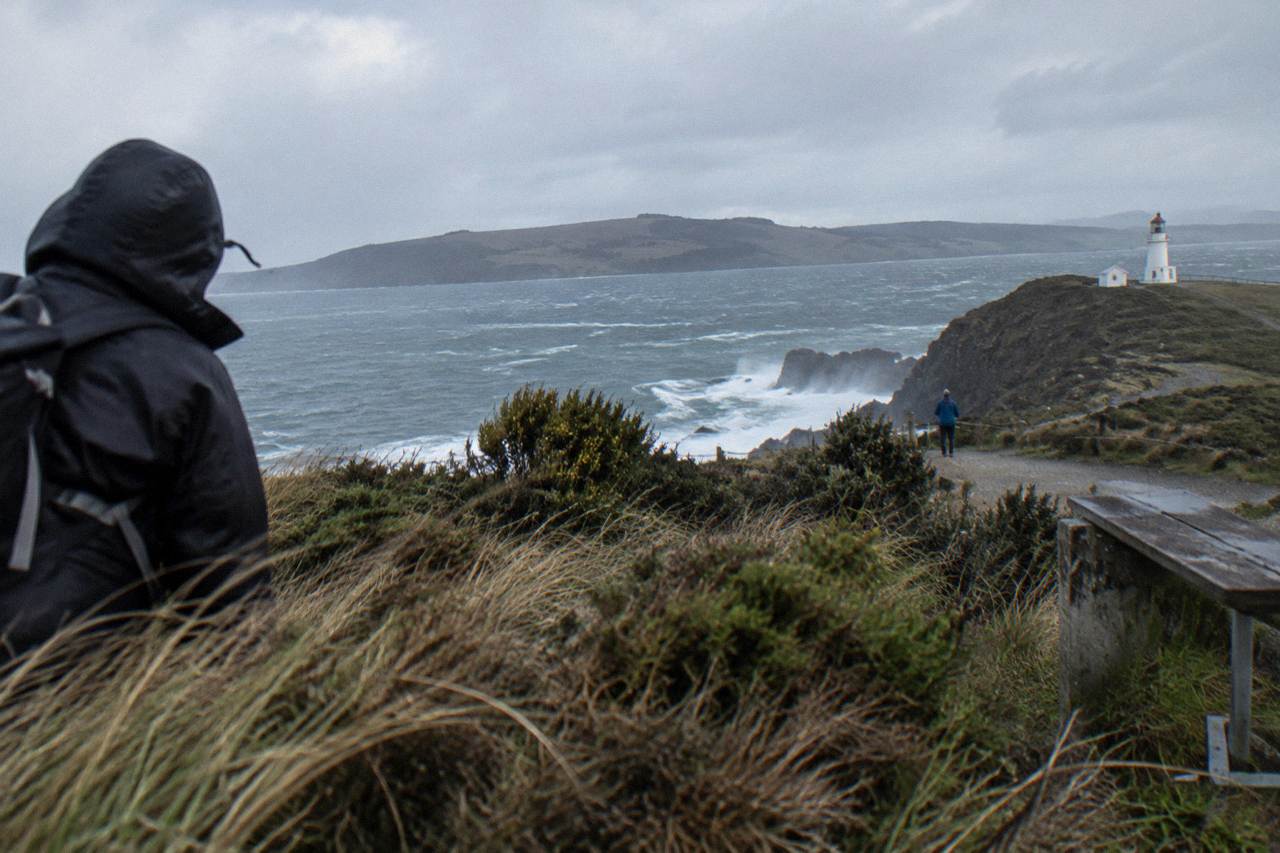
Dress in layers you can shed or add within an hour, wear closed shoes with grip, and take a waterproof outer layer even on a bright morning. Several tours covered here hand out wind and rain proof jackets and binoculars on board, which shapes what you need to carry yourself, and the terrain on some peninsula tours includes sand, hills and steps.
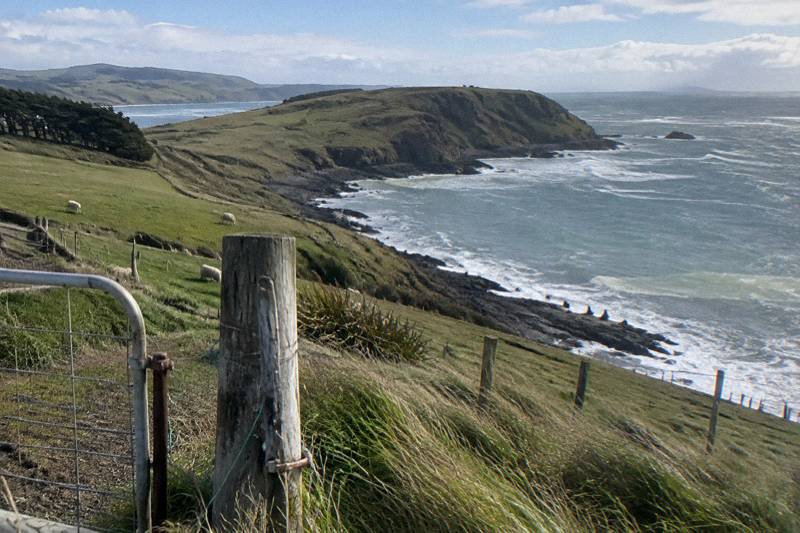
The honest answer starts with what the peninsula does rather than what a packing list says. Dunedin sits at the southern end of a long harbour, and the Otago Peninsula runs out into the Southern Ocean beyond Taiaroa Head, so the difference between the sheltered water near Portobello and the exposed headland at Harington Point can feel like two different days. A tour that starts in calm conditions at The Octagon can finish in a wind on a clifftop an hour later. Layers solve that problem better than any single clever garment.
The second half of the answer is that you may need less than you think. On several of these tours the operator supplies the specialist kit. The Clearwater Small Group, Max 10 tour, a 4 hour peninsula trip from The Octagon rated 4.9 across 709 reviews, includes complimentary wind and rain proof jackets and high quality binoculars. The Monarch one hour wildlife cruise from Wellers Rock Wharf provides warm waterproof jackets, binoculars and even onboard Wi-Fi. When the boat or the van carries the warm layer, your own bag gets lighter.
That said, no operator supplies shoes, and very few supply anything for your hands, head or legs. The gap between a comfortable day and a cold one usually sits in exactly those places. This article works through the wardrobe piece by piece, using only what the tours themselves state, so you can build an outfit around what is already on the vehicle.
Why Layers Win On The Otago Peninsula?
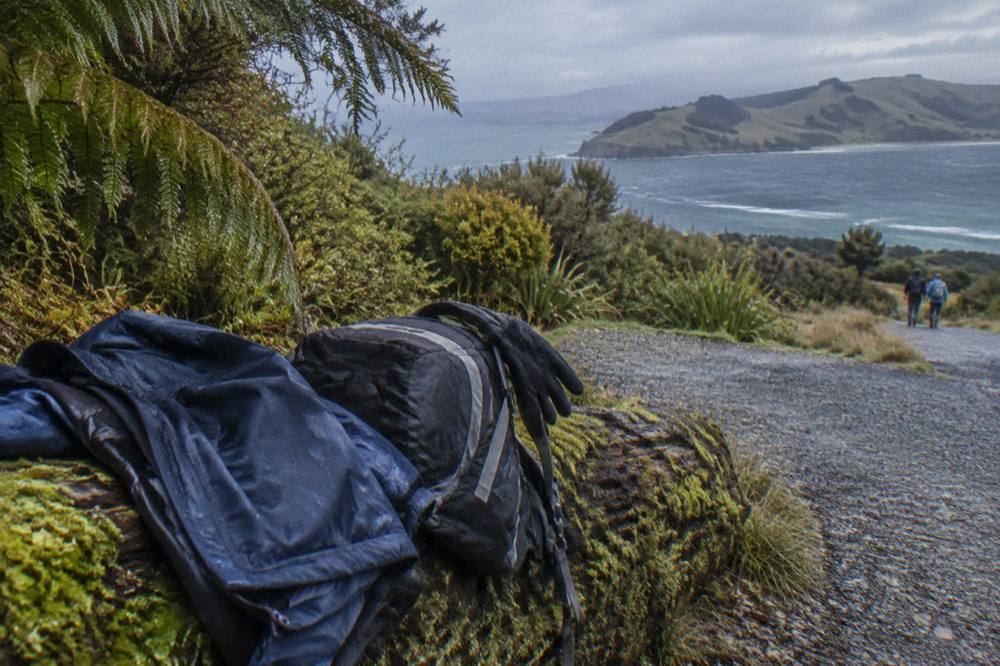
Layering works because a single Dunedin day can move through calm harbour air, exposed headland wind and shaded forest reserve in the space of one tour. A base layer, a warm mid layer and a shell you can open or close lets you match each of those changes, and it keeps weight out of your bag. Operators here plan around the same reality, which is why jackets are handed out rather than assumed.
Think of a six hour peninsula day as three climates. The drive out along the harbour is sheltered and can be mild even when the headland is not. The wildlife stops, whether a beach, a hide or a headland lookout, put you in open wind for stretches of 20 minutes or more. Then there is the vehicle, warm and dry, where a thick jacket becomes something to carry. Three light layers beat one heavy coat across that sequence because you adjust at each step rather than endure.
The shell matters most. A windproof outer layer does more on the peninsula than a thick jumper, because wind strips heat faster than cold air alone. If your tour does not provide a jacket, and several do not, a packable rain shell that also blocks wind is the single most useful item in your bag. Check the forecast for the day on the MetService Dunedin page the evening before, then trust the wind more than the number: a cool windy morning on Taiaroa Head feels colder than a mild still one.
Legs and accessories are where people get caught. Long trousers beat shorts on every peninsula tour, partly for warmth and partly because you may sit on grass, sand or a wooden bench at a hide. A warm hat and gloves take almost no space and change a headland stop completely. Sunglasses help too, because low southern light off the water is harsh even on cold days, and sea spray travels.
One thing layers cannot fix: footwear. That is the next section, and it is the one piece of kit where the wrong choice genuinely limits what you can comfortably do, especially on the tours that walk over natural terrain.
What Footwear Do You Need For Peninsula Tracks?
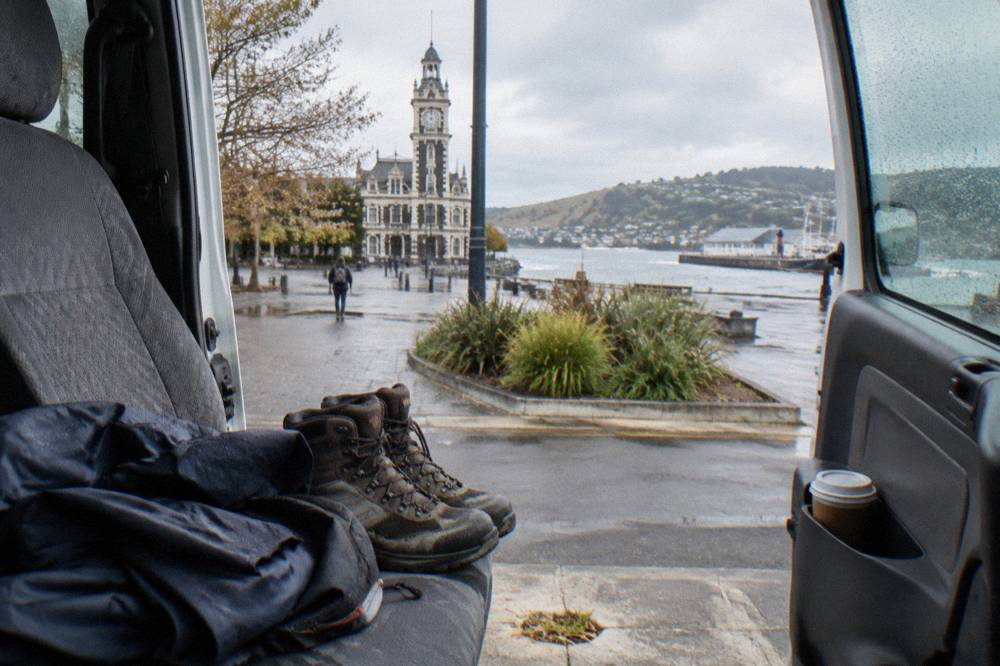
Wear closed walking shoes or light boots with a sole that grips, because the peninsula tours that leave the vehicle cover natural terrain: sand, grass slopes, uneven ground and steps. The Clearwater Small Group tour states about 1.5 km of walking over uneven natural terrain, sand, hills and steps, and The OPERA booking page asks for comfortable shoes. Sneakers with a decent tread are fine; smooth-soled shoes are not.
The terrain on the wildlife stops is the reason. Sand is hard work and holds water after rain. Grass slopes on coastal farms can be slick even without recent rain, and steps cut into dunes or tracks are shallow and worn. None of this is mountaineering, but it punishes anything with a flat, hard sole, and a wet sock from a tidal flat is miserable for the remaining hours of a tour.
If your plan leans toward the walking-heavy end of the scale, treat shoes as the main purchase. The Clearwater family farm tours, including the Farm Beach Access, 4WD trip from $131.00 per person, run onto private coastal beach and conservation reserves where the surface is exactly as described above. The 4 hour format means a wet or twisted foot stays with you all afternoon. A shoe with a lugged sole and some water resistance earns its place in the suitcase.
Boat tours relax the requirement but do not remove it. On the Monarch cruises decks can be damp from spray. The same rule applies on the Port To Port cruises from Port Chalmers, which carry up to 14 passengers and provide binoculars, and jackets on the two-hour trip, rather than footwear. Anything you can walk a wet pontoon ramp in is the right call.
Public tracks you might add yourself tell the same story. DOC describes the Sandfly Bay track as a 560 m return over a steep sand dune, and the Allans Beach track as 500 m return, with sea lions sometimes lying on the gravel road itself. Sturdy shoes serve both, and they serve the towns you will walk through afterwards, from Portobello to central Dunedin.
What Do The Tours Already Provide?
Several tours provide the expensive and bulky kit for you: waterproof or windproof jackets on at least six tours covered here, and binoculars on at least nine. Some also hand out water and snacks or provide refreshments. What follows is a summary of what the operators themselves state, tour by tour, so you can pack around what is already on board.
| Tour | Duration and start point | Kit provided | Rating and reviews |
|---|---|---|---|
| Clearwater Small Group, Max 10 | 4 hours, The Octagon | Wind and rain proof jackets, binoculars, water and cookies | 4.9 across 709 reviews |
| Farm Beach Access, 4WD | 4 hours, The Octagon | Binoculars, wind and waterproof jackets | 4.9 across 168 reviews |
| Monarch One Hour Cruise | 1 hour, Wellers Rock Wharf | Warm waterproof jackets, binoculars, Wi-Fi | 4.6 across 257 reviews |
| Wildlife Tour Plus Cruise Combo | 6 hours 30 minutes | Binoculars, warm waterproof jackets | 4.8 across 68 reviews |
| Port To Port Albatross Cruise | 1 hour 30 minutes, Port Chalmers | Binoculars for adults, wildlife ID sheet | 4.8 across 209 reviews |
| Rehabilitation Centre and Reserve Walk | 1 hour 30 minutes, The OPERA | Rain jackets | 4.6 across 301 reviews |
| Shore Excursion Cruise With Pickup | 2 hours 30 minutes, Port Chalmers | Jackets, binoculars, hot drink and biscuit | 4.5 across 17 reviews |
Read that table as a packing shortcut. If your day is built around one of those tours, the waterproof layer is already handled, which frees your bag for the things nobody supplies: hat, gloves, sunscreen, your own drink bottle and comfortable shoes. Two cautions keep the table honest. Where jackets or binoculars are not mentioned, assume nothing and bring your own. And a couple of tours ask you to bring specific items rather than providing them: the Coastal Adventures Harbour Cruise from Back Beach, Port Chalmers, from $73.76 per person, asks guests to bring a warm jacket and their own drink bottle, and The OPERA booking page lists comfortable shoes, a camera, outdoor clothing and binoculars among what to bring for its reserve tours.
Refreshments follow the same patchwork. The Clearwater small group tour carries complimentary water and cookies, the Monarch shore excursion cruise includes a hot drink and a biscuit, and the private up to 4 people tour provides bottled water and a snack. Most tours state nothing about food, and several state plainly that lunch is not included, so a packed lunch or snacks are worth adding for any trip over four hours.
What Should You Bring Yourself?
Bring the personal layer nobody else can supply: a warm hat, gloves, sunglasses, sunscreen, a drink bottle, any medication, and a small daypack to hold what you shed. For longer tours add food, since most trips over four hours state that lunch and snacks are not included. A sealed bag or dry pocket protects a phone on boats and beaches.
The hat and gloves point deserves repeating because it is the most skipped. On a headland or an open boat, your core may be warm under a provided jacket while your hands go numb, which matters if you want to use a camera or binoculars. A thin beanie and a cheap pair of gloves weigh less than a phone. Southern light also deserves respect: the sun angle off the water is strong even at cool temperatures, so sunscreen and sunglasses belong in the bag year round, in any weather you expect.
Water and food are practical planning. Water is provided on some tours, as the table above shows, but a filled bottle covers the ones where it is not stated, and taps are not always available at peninsula stops. For food, the pattern across the tours covered here is clear: snacks and lunch are commonly listed as not included, from the Clearwater tours, which allow a packed lunch on board, to the Fantail and Monarch day trips that name lunch as an exclusion. A sandwich and a muesli bar solve a five to seven hour day.
The daypack itself should be small. Most tours have limited space, boats have even less, and you will carry it at every stop. Something around 20 litres holds your layers, food, water and camera without becoming luggage. Leave anything you would mourn: good jewellery, large tripods (not welcome at the penguin viewing platform, where photography is non flash and tripods are not permitted) and single use items that become rubbish on a reserve.
One clothing choice to actively avoid: dark, stiff new jeans on a walking tour. Denim holds water, dries slowly and restricts stride on sand and steps. Walking trousers, leggings or anything quick drying serves the peninsula better. If it is all you have, it will still work, but expect the damp to stay with you.
What About Cameras And Binoculars?
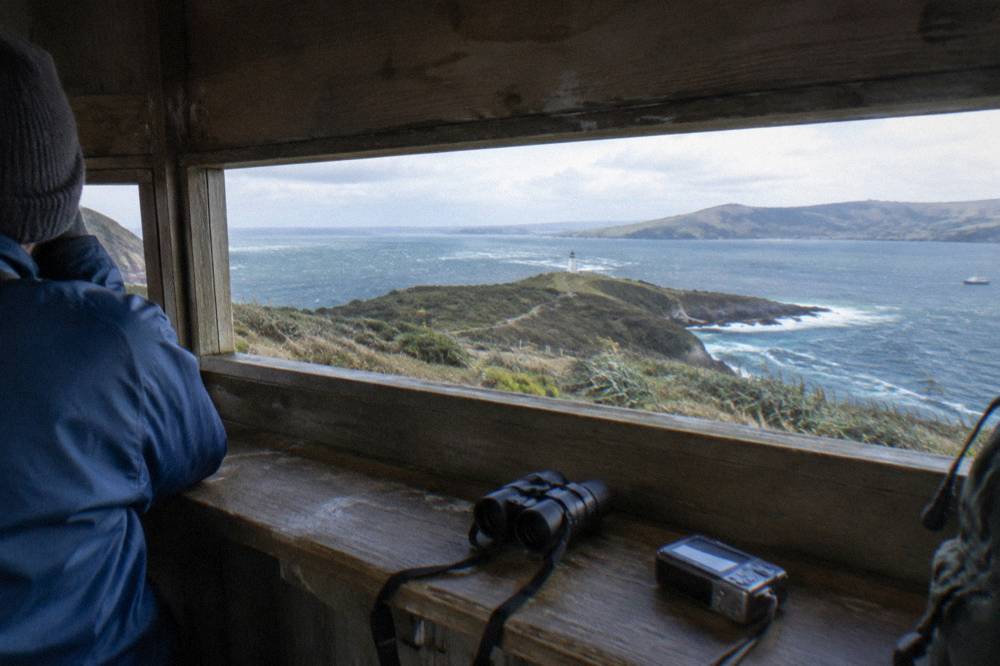
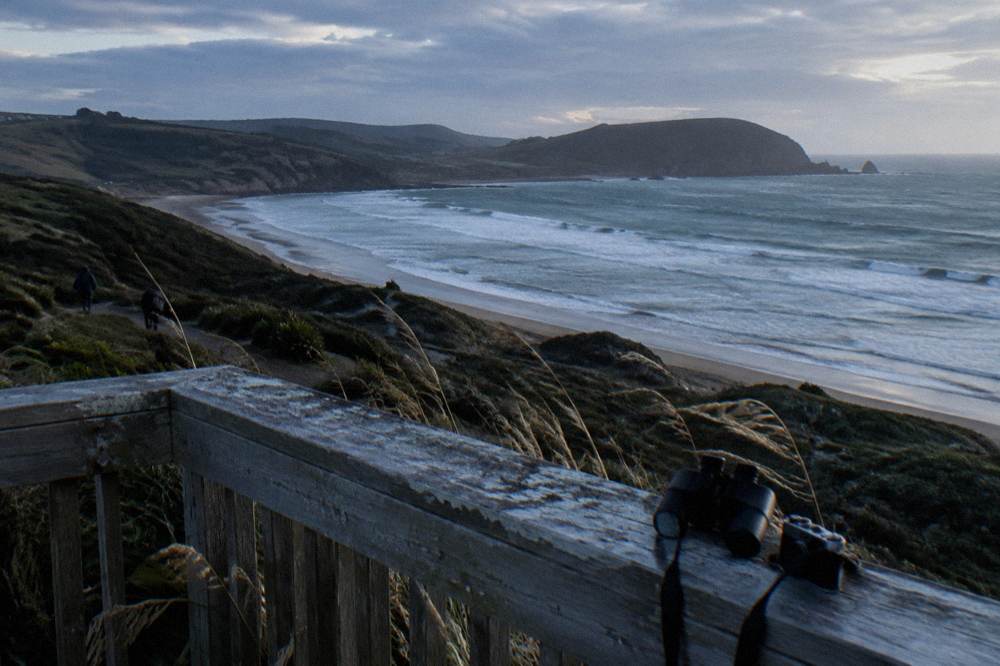
Bring your camera, but plan for low light and distance: much of what you may see is far away, moving, or seen at dusk, so a modest zoom beats a phone. Binoculars are provided on several tours, so check before carrying your own, and flash is never appropriate around penguins, as DOC's wildlife viewing rules make explicit.
The photography conditions on these tours are unusual in two ways. First, the subjects are typically at range: albatross over a headland, seals on rocks below a track, penguins coming ashore at the far end of a beach. Second, the penguin experiences run into dusk by design, which is exactly when cheap cameras struggle. A camera with some optical zoom and decent low light performance gives you more than the newest phone at fiddly distances.
The no flash rule is a wildlife protection rule, not etiquette. DOC's guidance on sharing the coast with wildlife is blunt about penguins: keep at least 50 m away, never block their path to the water, no flash, and do not linger on beaches where hoiho come ashore. At the Blue Penguins Pukekura viewing platform the operator welcomes non flash photography and bans tripods. Set your camera before the tour, in daylight, rather than fumbling with menus at dusk. The guide on taking photos on a penguin tour photo etiquette page covers the settings in more detail.
Binoculars are the item most worth leaving at home, because the tours that really benefit from them, the Clearwater farm tours, the Monarch cruises and the Port To Port cruises, all state that quality binoculars are provided. Carrying your own pair makes sense mainly for birds you want to study at length, or if you are on a tour that does not state them. If you do bring your own, a compact pair survives boats and vans better than a full size one.
Electricity and storage are the quiet failures. Cold batteries drain fast, so carry a spare or a power bank, and empty your memory card the night before, because an albatross gliding past a headland will use more frames than you expect. A dry bag or even a zip lock bag protects electronics from spray on any cruise, including the calm looking ones, because spray is a function of speed and wind, not drama.
What If The Weather Turns During The Tour?
Many tours run in light rain, but some need good weather, so the weather terms on each live booking page are worth checking; the warm kit many operators provide helps. What changes is your comfort, not usually the departure: rain proof layers, a hat that survives weather, and dry shoes for afterwards. If conditions become unsafe on a cruise, the operator makes the call, and the cancellation page for these tours explains what happens next.
The vehicle based tours simply spend more time in the vehicle between stops, and the reserves and hides at The OPERA use a trench and hide system that gives some shelter by design. Boat trips hand out jackets, because the wildlife does not leave with the sunshine: seals and sea lions haul out in rain, and albatross are built for wind, gliding over the headland on windy days, as DOC notes for visitors watching from the headland areas.
Your own additions are modest. A hat with a brim that does not act as a sail, a dry layer in the daypack for afterwards, and a plastic bag for wet gear on the way home. If you are on an evening penguin tour, remember the viewing platform is outdoors and dusk plus drizzle is the coldest combination of the day, so the layers you shed at midday need to come back with you. The article on weather cancellations on a Dunedin wildlife cruise covers the operator side of a bad forecast.
Cancellation policy is worth knowing before you dress for anything. Twenty five of the 26 tours covered by Dunedin Wildlife Tours state a full refund when cancelled at least 24 hours before the start, so a genuinely grim forecast gives you options. The exception is the Iconic full day wildlife tour, which its booking terms state is non refundable, so check the cancellation terms before booking that one.
Does The Outfit Change By Tour Type?
Yes, and mostly by length and ground. A one hour harbour cruise needs only warmth and grip; a four hour farm tour adds real walking shoes and food; a full day with a Centre tour or a castle stop adds layers for a slow afternoon and stops in between. Build the outfit from the tour's duration and its stated terrain, not from the destination alone.
On the short cruises, like the Monarch one hour trip from $42.56 per person or the geology commentary version from $39.00, you are never far from the car and the cabin, and jackets are provided. Warmth and grip are the whole brief. Add a dry bag if you plan to photograph from the open deck.
On the half day peninsula tours, the walking and the food question join in. The Clearwater tours cover about 1.5 km of terrain including sand and steps, over four hours, with no food stops, so shoes, snacks and water define the day. The Monarch Wildlife Tour Plus Cruise Combo, from $130.51 per person, adds a one hour boat leg, so you get both worlds and should dress for the colder of them.
On the full days, five to seven hours, the afternoon is the test. Trips like the Iconic full day wildlife tour from $224.13 per person, the Fantail City Highlights Plus Albatross from $190.08, and the Larnach Castle and Cruise combinations from $99.30 and $110.65 all include slower blocks: castle grounds, free time at the Royal Albatross Centre, or a long drive back. Comfortable standing around clothes matter as much as the wildlife layers. The Albatross Centre tour pages explain what those guided visits involve, and the what to expect on a Dunedin wildlife tour guide sets out the fuller picture.
Evening tours invert the list. The little blue penguin tours run at dusk and into dark, when it can be cold even in summer, and you stand still for the viewing period, which chills people faster than walking. Double every warmth item, bring less food, and choose shoes that handle a dark grass or gravel path back to the car.
Common Questions About What To Wear On A Dunedin Wildlife Tour
What To Wear On A Dunedin Wildlife Tour?
Wear layers you can adjust, closed shoes with grip, long trousers and a waterproof shell. Add a warm hat and gloves for headlands and boats, sunglasses and sunscreen for southern light off the water, and check whether your tour provides jackets and binoculars before packing your own.
Do The Tours Provide Waterproof Jackets?
Several do. The Clearwater farm tours, the Monarch One-Hour Cruise, the Wildlife Tour Plus Cruise Combo and The OPERA reserve walk all state that wind or rain proof jackets are provided. Check your tour's inclusions before booking, and bring your own shell for the tours that do not state one.
What Shoes Should I Wear?
Closed walking shoes or light boots with a grippy sole. The Clearwater Small Group tour states about 1.5 km of walking over uneven natural terrain, sand, hills and steps, and The OPERA asks for comfortable shoes. Sneakers with a decent tread are fine; sandals and smooth soles are not.
Should I Bring My Own Binoculars?
Usually not. Binoculars are stated as provided on eleven of the 26 tours covered here, including the Clearwater tours, the Monarch cruises and the Port To Port cruises. Bring your own only if your tour does not state them or if you want to study birds for long stretches.
Can I Wear Shorts?
You can, but long trousers serve you better on the peninsula. They protect against wind, wet grass, sand and seats at hides, and they stay comfortable through the temperature swings of a half or full day tour. Quick drying fabrics work best.
What Should I Bring On An Evening Penguin Tour?
Double the warmth. Penguin viewing happens outdoors at dusk and you stand still while watching, so a hat, gloves and an extra layer matter more than on a daytime tour. Keep photography flash free and leave tripods at home, as the viewing platform does not permit them.