When Is The Best Time To See Albatross On A Dunedin Wildlife Tour?
There is no single best month for albatross at Taiaroa Head. This guide walks through the breeding cycle, which Dunedin tours include the observatory, and how to pick a date.
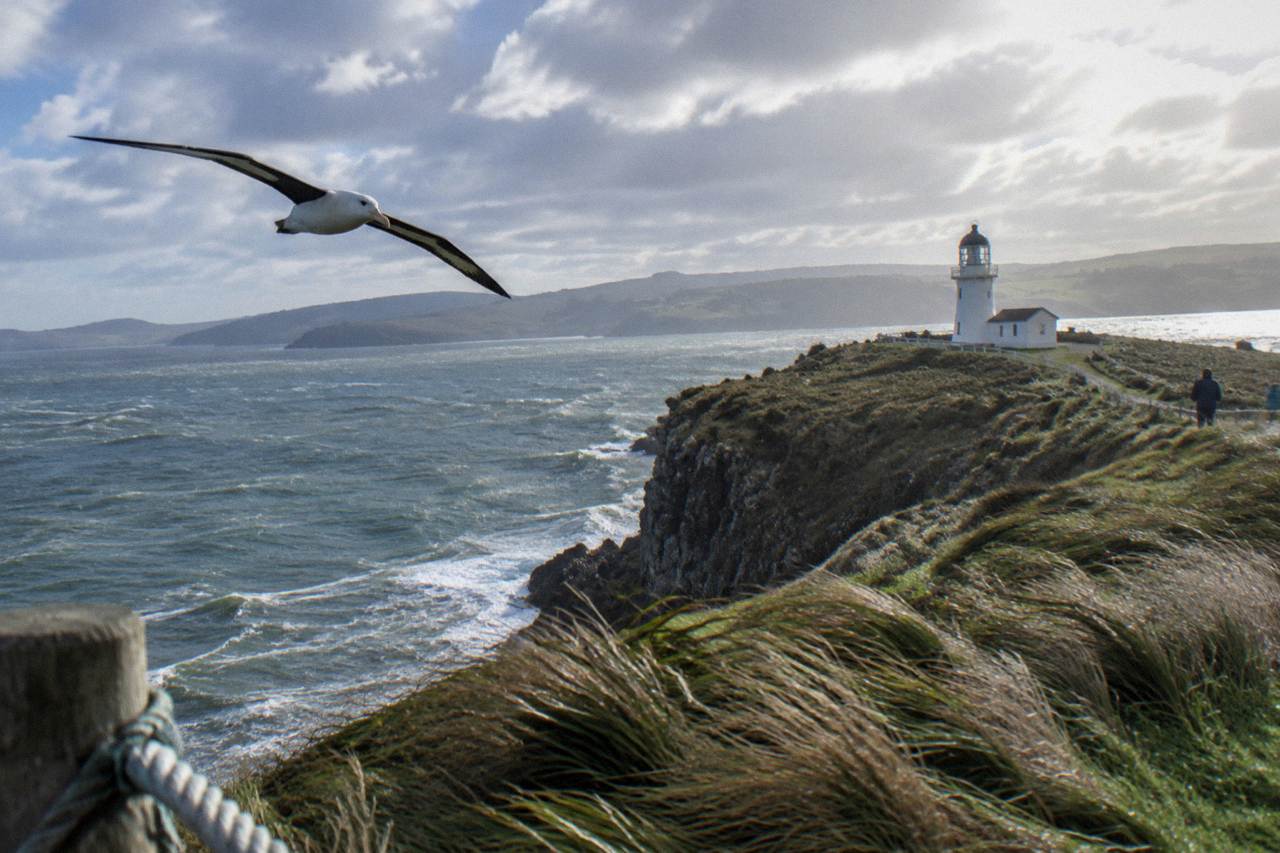
Taiaroa Head, on the tip of the Otago Peninsula, hosts the only mainland breeding colony of albatross in the Southern Hemisphere. DOC calls viewing the birds there "almost a year round event" because the breeding cycle runs for about eleven months, which means the question of timing is less about picking a month and more about deciding which stage of the cycle you want to watch. This guide walks through what changes across the year, which tours actually include the observatory where nesting birds are seen, and how to pick a date with honest expectations.
There is no single best month, and any page that promises one is overselling. DOC describes albatross viewing at Taiaroa Head as "almost a year round event" because the breeding cycle spans about eleven months. Adults return in September, eggs are laid across the first three weeks of November, chicks hatch from late January to early February, and fledging happens around September, so the birds are present and visible in some form in nearly every month.
The reason there is no tidy answer is that the colony is never empty. Northern royal albatross raise a single chick once every two years, so at most points in the calendar there are birds on eggs, chicks at the nest, juveniles waiting to fledge, or non-breeding birds performing courtship displays over the headland. A visitor in May watches a downy chick alone on its nest; a visitor in October watches sky-calling adults rebuilding nests. Different experiences, same colony.
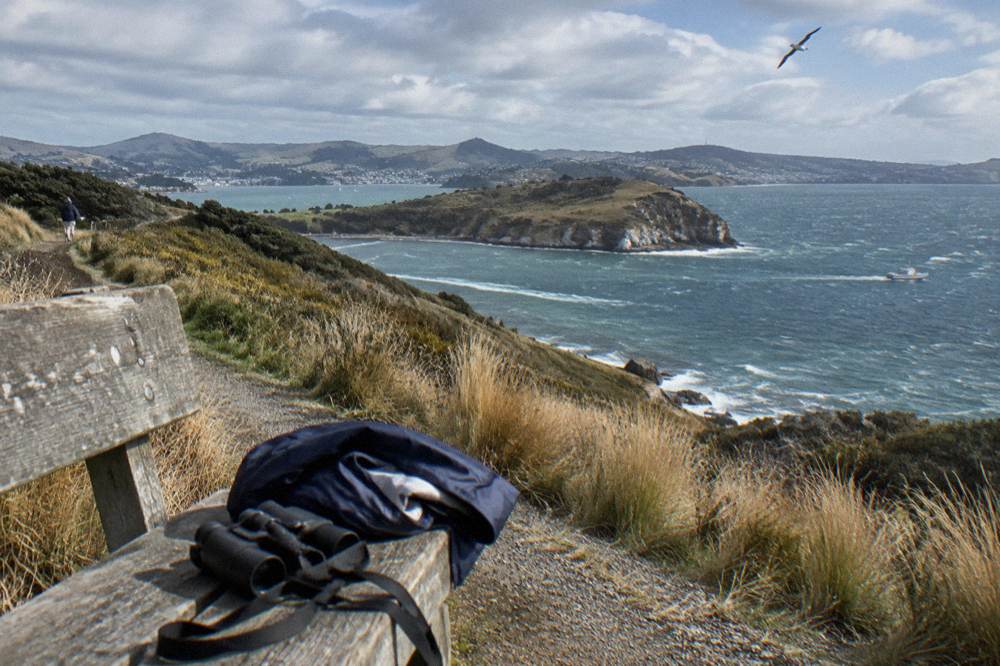
What does change is access and context. The nature reserve itself cannot be entered; nesting and courtship are seen from the Richdale Observatory, and DOC is explicit that a visit to the observatory is required to see that activity. That means the timing question is partly a tour question: only some of the Dunedin wildlife tours covered here include the Royal Albatross Centre guided tour that gets you into the observatory, while harbour cruises pass the headland from the water. Those two experiences answer the timing question differently, and this guide covers both.
Weather is the other honest variable. On windy days albatross can be seen gliding over the headland even from around the visitor centre, DOC notes. No tour promises sightings, and the booking pages for the tours here say so plainly where relevant. The Dunedin Wildlife Tours pages on individual operators spell out exactly what each trip includes.
What The Albatross Year Looks Like At Taiaroa Head
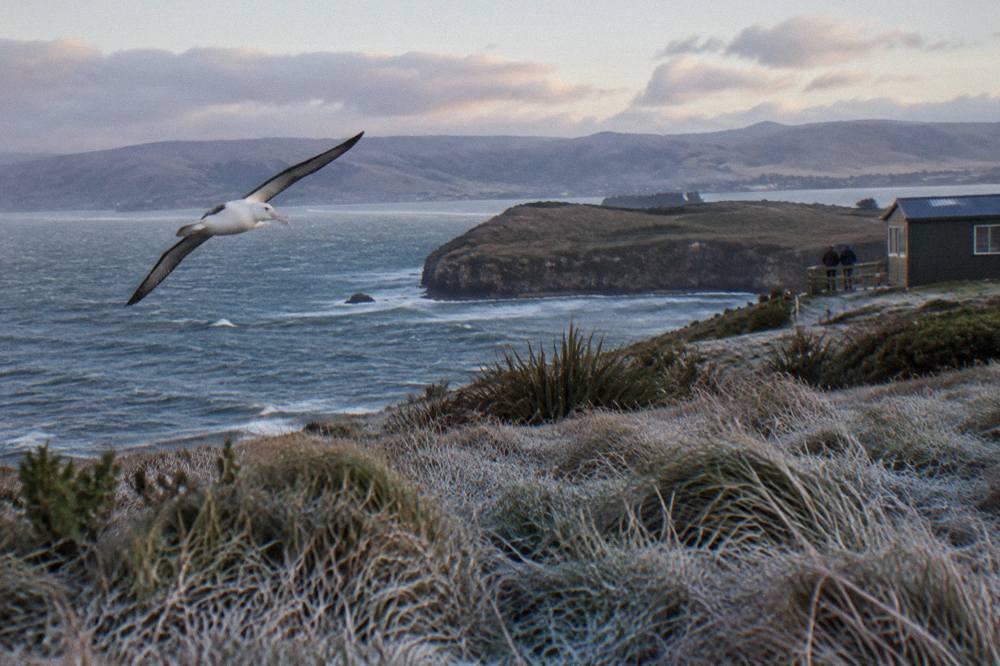
The Centre's cycle runs like this: adults return in September, nest-building occupies October, a single egg is laid in the first three weeks of November, incubation lasts about 80 days, chicks hatch from late January to early February, and the chick takes about eight months to fledge, with first flight around September. Pairs raise a chick once every two years, so the stages overlap across the colony as a whole.
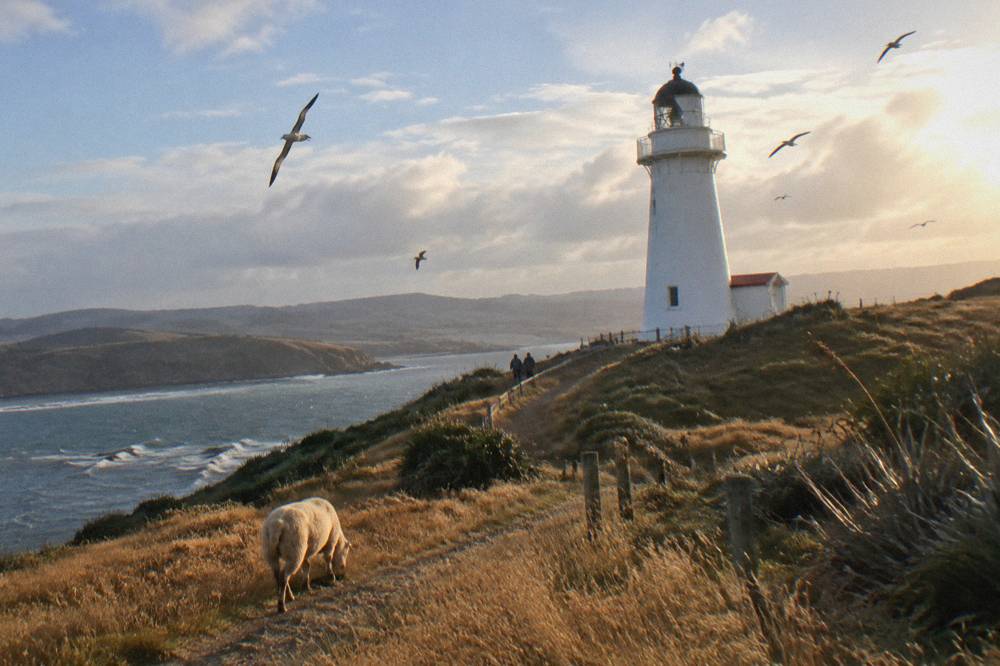
Reading that as a visitor: spring is courtship and nest-building, with adult birds displaying over the headland. Early summer is eggs, which means long stretches of a stationary bird on the nest, visible from the observatory but quiet. Late summer and autumn are the chick months, when a growing downy chick sits at the nest while parents forage at sea. Winter is the long wait, the chick alone at the nest site while it builds flight feathers. Then spring again, and the near-adult juvenile finally leaves.
The numbers behind the spectacle are small and worth knowing. DOC says about 200 toroa, northern royal albatross, live at Taiaroa Head and about half make landfall each year, while the Royal Albatross Centre says approximately 250 albatross with an estimated 70 breeding pairs, which is about 1% of the world population; the other 99% breed on the Chatham Islands. DOC puts the world population at about 17,000 mature individuals, and the species is classed by the Centre as Threatened, Nationally Vulnerable. More on the species is at the northern royal albatross overview.
| Stage of the cycle | When it happens | What a visitor can watch |
|---|---|---|
| Adults return to the colony | September | Courtship flights and displays over the headland |
| Nest-building | October | Adults rebuilding nests, sky-calling displays |
| Egg laid | First three weeks of November | An adult incubating on the nest, from the observatory |
| Incubation | About 80 days | Adults trading shifts on the nest |
| Chicks hatch | Late January to early February | Newly hatched chicks under a brooding parent |
| Chick rearing | February to winter | A downy chick at the nest, parents foraging at sea |
| Fledging | Around September, after about eight months | Near-adult juveniles exercising wings and leaving |
When Do Albatross Eggs Hatch At Taiaroa Head?
Chicks hatch from late January to early February, after an incubation of about 80 days, DOC says roughly 79. The current season is already under way: DOC reports the first egg of the 2026-27 season was laid on 2 November 2026 by adult female "L", who returned to the colony on 13 October, with four more eggs following within days, and rangers check fertility 10 to 12 days after laying.
That November egg is a useful anchor for planning. If you book an observatory tour between late January and early February, you are arriving at hatch time, with the season's youngest chicks appearing at the nests. Book in March or April and those same chicks are larger, grey and downy, sitting alone for long stretches while both parents feed at sea. Neither is better; they are different films.
The long arc of the colony can be tracked from anywhere, which helps set expectations before you travel. Royal Cam, a 24-hour live camera at the colony run with the Cornell Lab of Ornithology and now in its tenth year, shows the nesting season as it unfolds. Recent seasons have ended strong: the Centre records 38 chicks fledged in 2024-25, and DOC says the 2025-26 season finished with a record-equal 38. Egg counts for the new season stop at what DOC has announced, the first egg on 2 November and five eggs in total within days, and no hatch figures exist yet for 2026-27.
Planning around a hatch-date window still leaves the practical question of how you get to the observatory. The Centre is at 1259 Harington Point Road at the very end of the peninsula road, reached via Portobello Road to Portobello then Harington Point Road, and the Centre warns against routing via State Highway 88 and Port Chalmers, which is the other side of the harbour with no road to the tip. A tour that includes the Centre guided tour removes that navigation entirely. Official details on access and the reserve are on the DOC Taiaroa Head page.
Which Dunedin Tours Include The Albatross Observatory?
Three tours covered here include the Royal Albatross Centre guided tour: City Highlights Plus Albatross (6 hours, from $190.08 per person), Albatross Centre Tour With Pickup (6 hours, from $178.00 per person) and the Iconic Full-Day Wildlife Tour (7 hours, from $224.13 per person). Other tours skip the observatory.
The distinction matters more than most visitors expect. Free time at the Centre means you can stand at the visitor centre, where DOC says albatross can be seen gliding over the headland on windy days, but you cannot see the nesting birds. Albatross tours are the only way to see the nesting birds, as the Centre itself puts it. Three tours state this explicitly: Albatross Centre Free Time, Penguins and the Skyline small-group tour exclude the Centre's guided tour, and the private tour lists it as an optional extra to be booked in advance.
The featured City Highlights Plus Albatross tour, run by Fantail Tours, pairs the observatory visit with Dunedin city sightseeing over 6 hours at from $190.08 per person, rated 4.8 across 55 reviews, with a full refund when cancelled at least 24 hours before the start. The Albatross Centre Tour With Pickup, 4.7 across 39 reviews, includes central Dunedin pickup and drop-off when organised at booking, plus bottled water. The Iconic Full-Day Wildlife Tour, from Port Chalmers and 4.8 across 37 reviews, bundles the Centre tour with entry to The OPERA reserve, but note its booking terms mark it non-refundable, so check the cancellation terms before booking.
| Tour | Duration | From (USD) | Centre guided tour | Rating and reviews |
|---|---|---|---|---|
| City Highlights Plus Albatross | 6 hours | $190.08 per person | Included | 4.8, 55 reviews |
| Albatross Centre Tour With Pickup | 6 hours | $178.00 per person | Included | 4.7, 39 reviews |
| Iconic Full-Day Wildlife Tour | 7 hours | $224.13 per person | Included | 4.8, 37 reviews |
| Albatross Centre Free Time, Penguins | 4.5 hours | $164.00 per person | Not included | 5.0, 20 reviews |
| Private Tour, Up to 4 People | 7 hours | $510.67 per group | Optional extra, book in advance | New option, 13 reviews |
Can You See Albatross From A Dunedin Wildlife Cruise?
Yes, from the water but at a distance. Harbour cruises pass Taiaroa Head and its fur seal colony, and albatross can be seen gliding above the headland or out over the open sea the boat briefly enters, but no cruise enters the reserve or stops at the observatory. Operators use careful wording, blue penguins, dolphins and sea lions are described as sometimes seen, and no cruise promises an albatross at any time of year.
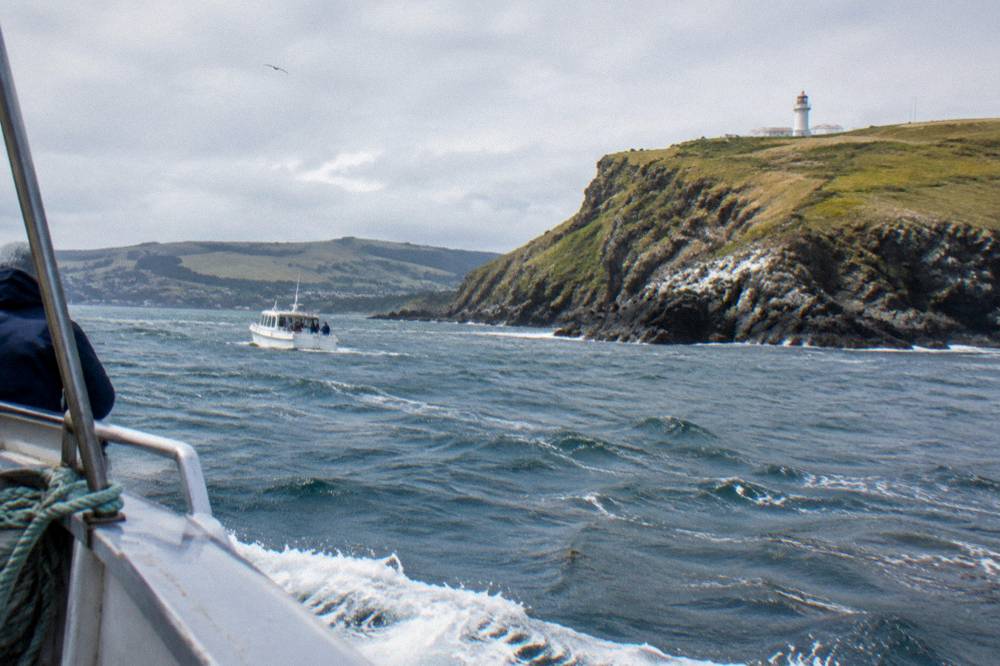
The Monarch one-hour cruise leaves Wellers Rock Wharf at Otakou, 813 Harington Point Road, and the operator suggests allowing 45 to 60 minutes to drive from central Dunedin, with free parking at the wharf. It passes Aramoana and Taiaroa Head, taking in the lighthouse and the fur seal colony, and goes a short way out to sea. The cruise page covered here shows from $42.56 per person at 4.6 across 257 reviews, with binoculars and warm jackets provided; a second booking page for the same cruise carries its own separate review pool.
For a fuller water-and-headland day, the Wildlife Tour Plus Cruise Combo from Monarch, 6 hours 30 minutes at from $130.51 per person and 4.8 across 68 reviews, combines a guided peninsula drive with the one-hour cruise. Port To Port runs small-boat cruises from Port Chalmers, a 90-minute version at from $107.81 per person rated 4.8 across 209 reviews and a 2-hour version at the same from-price rated 4.8 across 140 reviews, both capped at 14 passengers with binoculars provided. These suit a reader who wants albatross as part of a wider harbour wildlife picture rather than the focused nesting view.
What Else Changes With The Seasons On The Otago Peninsula
Timing a Dunedin wildlife trip around albatross also affects everything else you might see. Little penguins come ashore at dusk at Pilots Beach throughout the year, DOC says, with around 600 pairs on the headland. Blue Penguins Pukekura reports typically 50 to 300 penguins a night from September to February and 10 to 80 from March to August. Fur seals and sea lions haul out at Taiaroa Head year round, with Pilots Beach often the best place, DOC says.
Hoiho, the yellow-eyed penguin, are the species where timing pressure is real, though no tour here promises them. DOC classes hoiho Threatened, Nationally Endangered, found only in New Zealand; the northern population fell from about 741 breeding pairs in 1999 to 265 in 2019, a 65% decline, and RNZ reported in October 2026 that fewer than 115 breeding pairs remain on mainland New Zealand and Rakiura. The OPERA reserve, whose tour the operator says offers "the best chance" of seeing hoiho and promises nothing, runs its 90-minute guided journey with a trench and hide system at 45 Pakihau Road on the Otago Peninsula. Background on the species is at the Yellow-eyed Penguin Trust's hoiho page.
Two practical seasonal notes for self-drivers. Part of the Sandfly Bay Wildlife Refuge closes from 1 November to 28 February inclusive to protect wildlife, and the Sandfly Bay track is closed 8am to 4:30pm on 17 and 18 November 2026 for track construction. And the rules that keep this wildlife watchable apply year round: stay at least 50 m from penguins, at least 20 m from seals and sea lions on land, and vessels idle within 300 m. Those distance rules are on DOC's sharing-the-coast guidance.
The wider season framing is simple. Dunedin's cruise ship season runs 21 October 2026 to 16 April 2027, with most ships docking at Port Chalmers, 14 km from the city and 15 to 20 minutes by shuttle. Shore visitors are therefore mostly spring-to-autumn travellers, which lines up with courtship, incubation and chick-rearing stages rather than the winter chick wait.
How To Pick A Date For Your Dunedin Albatross Tour
Pick the stage, not the month. Choose September or October for courtship flights, November to January for incubation and early eggs, late January to February for hatching, and autumn through winter for a growing chick at the nest. Then match the tour to it: observatory-included tours for nesting views, cruises for gliding birds over open water. Check the booking calendar for your date, and book the Centre-included tours ahead in peak visitor periods.
A worked example helps. A traveller with one port day in February takes the Iconic Wildlife Tour with Yellow Eyed Penguins & Royal Albatross, 7 hours at from $224.13 per person rated 4.8 across 37 reviews, with cruise port pickup, or the City Highlights and Albatross tour, 6 hours at from $190.08 rated 4.8 across 55 reviews. The Pukekura evening visit, from $34.04 rated 5.0 across 578 reviews, needs a car, so it suits a city-based traveller instead.
Budget framing, using only the figures on this site's tour pages: the cheapest per-person tour covered here is the Pukekura penguins standalone visit at from $34.04, the highest per-person from-price is the Iconic Full-Day Wildlife Tour at $224.13, and the median per-person from-price across the tours is $107.81. The Royal Albatross Centre also sells its own tickets directly, and its operator site lists its own NZD prices for those buying at the door; the tours here bundle it with transport. For more on picking between them, see the tour options comparison and the guide to albatross tours from Dunedin.
Weather deserves the last word in any timing decision. Wind brings the gliders over the headland, and the MetService Dunedin forecast is the practical check before a cruise or a self-drive to Harington Point, at the MetService Dunedin page. Whatever the forecast, the colony's stage is fixed by the cycle, and that is the one thing a date can bank on.
Common Questions About Albatross Timing On Tours Around Dunedin
When Is The Best Time To See Albatross On A Dunedin Wildlife Tour?
There is no single best month. DOC calls albatross viewing at Taiaroa Head "almost a year round event" because the breeding cycle runs about eleven months. Adults return in September, eggs are laid in the first three weeks of November, chicks hatch late January to early February, and fledging happens around September.
Can You See Nesting Albatross Without The Guided Tour?
No. The nature reserve cannot be entered, and DOC says a visit to the Richdale Observatory, reached on a Royal Albatross Centre guided tour, is required to see the nesting and courtship activity. From the visitor centre itself, albatross can sometimes be seen gliding over the headland on windy days.
Which Dunedin Tours Include The Royal Albatross Centre Guided Tour?
Three tours covered here: City Highlights Plus Albatross (from $190.08 per person), Albatross Centre Tour With Pickup (from $178.00 per person) and the Iconic Full-Day Wildlife Tour (from $224.13 per person). Other tours either pass the headland by vehicle or boat, or give free time at the Centre without the guided observatory tour.
Do Harbour Cruises See Albatross?
They can. Cruises pass Taiaroa Head and go a short way out to sea, where albatross can be seen gliding, but no cruise enters the reserve or stops at the observatory, and no operator promises a sighting. Blue penguins, dolphins and sea lions are described by the operator as sometimes seen.
What Happened In The 2026-27 Albatross Season So Far?
DOC reports the first egg was laid on 2 November 2026 by adult female "L", who returned to the colony on 13 October, with four more eggs following within days. Rangers check fertility 10 to 12 days after laying. No hatch or fledgling figures exist yet for this season.
Does The Time Of Year Change The Penguins On The Same Trip?
It can. Blue Penguins Pukekura reports typically 50 to 300 penguins a night from September to February and 10 to 80 from March to August, and DOC says little penguins come ashore at dusk at Pilots Beach throughout the year. Hoiho viewing is never promised by any tour; The OPERA's operator offers "the best chance" and promises nothing.