Orokonui Ecosanctuary Guided Tour: A Fenced Reserve Walk Near Dunedin
Orokonui Ecosanctuary is a 307-hectare fenced conservation sanctuary near Dunedin that visitors explore on its own booking, not on any of the guided peninsula wildlife tours covered here. This page sets out the sanctuary facts and then points to the tours that do cover the Otago Peninsula's wild species.
Short answer
Orokonui Ecosanctuary is a 307-hectare fenced sanctuary near Dunedin, open Thursday to Monday from 9:30am to 4:30pm, closed Tuesday and Wednesday. Self-guided entry is NZD 27 for an adult and the 1.5-hour guided tour is NZD 65, booked through the sanctuary. No wildlife tour sold on this site visits Orokonui; peninsula tours cover albatross, penguins and seals instead.
Orokonui Ecosanctuary is a fenced, 307-hectare biodiversity sanctuary in the hills near Dunedin, and it works differently from every wildlife trip sold on this site. It is booked directly with the sanctuary, visited on foot, and built around a predator-exclusion fence rather than a coastline. No tour listed on Dunedin Wildlife Tours goes there. That distinction matters for planning, because a lot of visitors assume the sanctuary and the Otago Peninsula wildlife tours are interchangeable, and they are not.
This page does two jobs. First it lays out what the sanctuary itself offers, using only the sanctuary's own published details: opening days, hours and prices as printed on the sanctuary site in New Zealand dollars. Second, it explains what the guided peninsula wildlife tours actually cover, with their prices and durations as shown on their booking pages, so a reader who wants albatross, penguins, fur seals and sea lions in the wild can pick the right product. The two experiences sit well together in one Dunedin stay, and many visitors do both.
What Is Orokonui Ecosanctuary Near Dunedin?
Orokonui Ecosanctuary is a 307-hectare biodiversity sanctuary near Dunedin, protected by a predator-exclusion fence, where native forest and its birdlife are the draw rather than a coastline. It is open Thursday to Monday, 9:30am to 4:30pm, and closed Tuesday and Wednesday. Visitors walk it on their own or take a 1.5-hour guided tour booked in advance. It is entirely separate from the wildlife tours sold on this site.
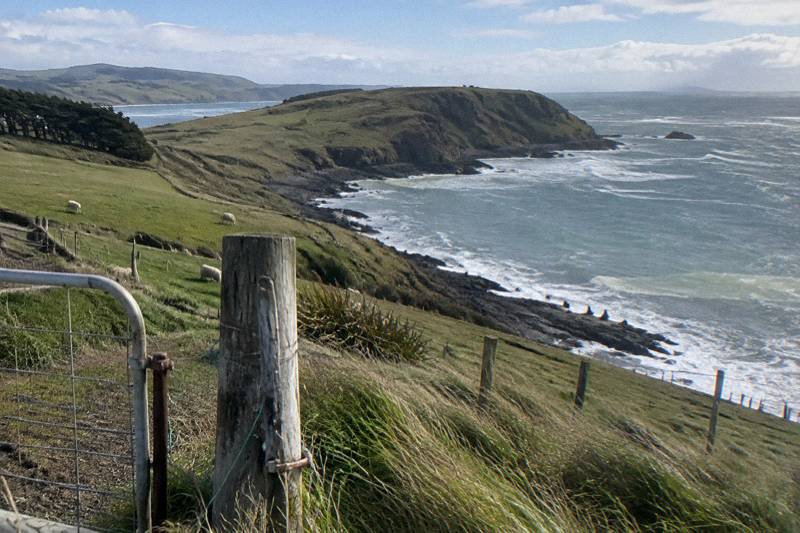
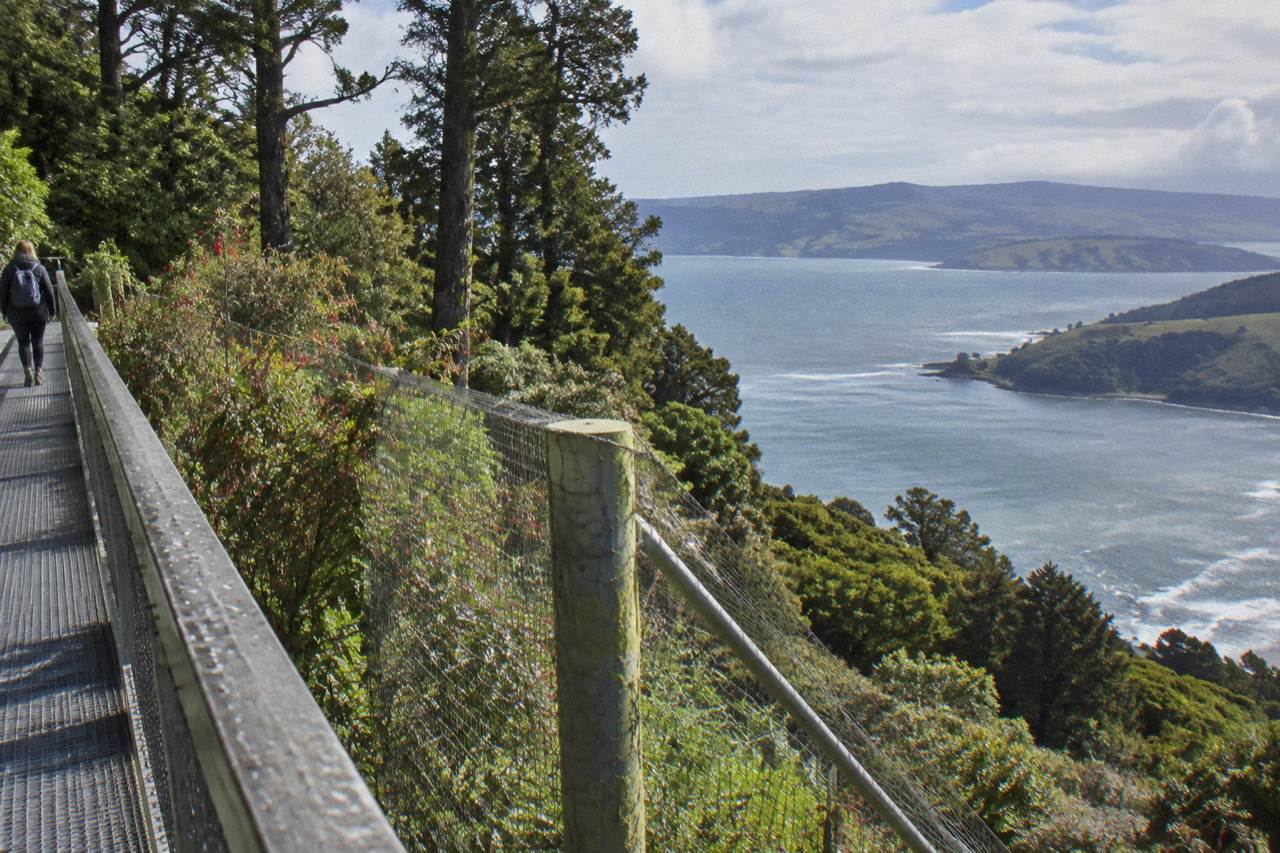
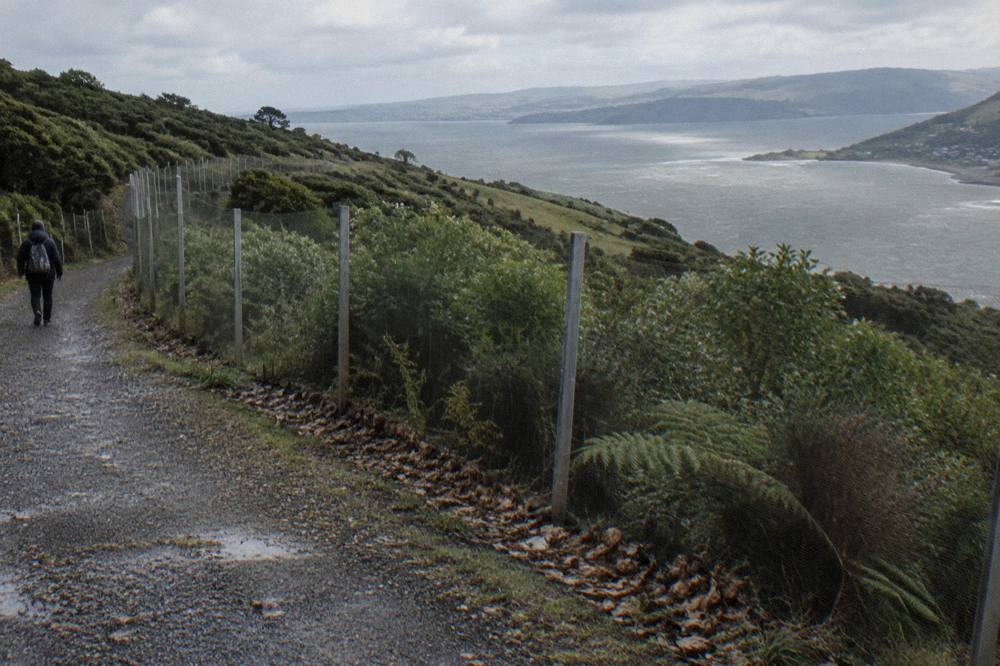
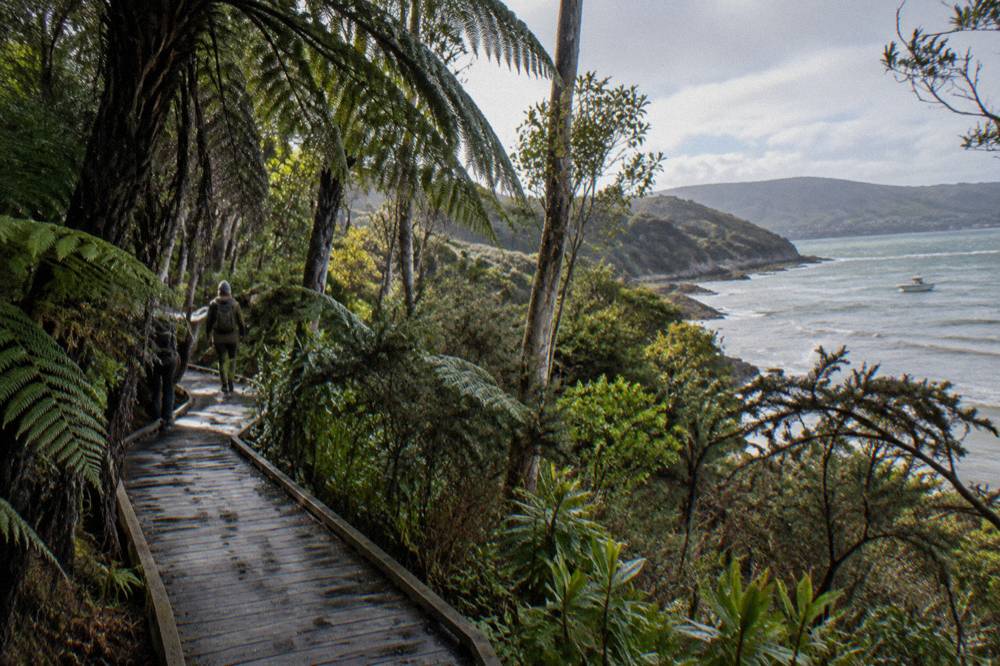
The sanctuary's whole premise is the fence. By excluding introduced predators from a large block of regenerating native forest, the sanctuary gives forest species a place to recover, and visitors walk through that recovering habitat on a network of tracks. The sanctuary site describes a mostly flat walk from the Visitor Centre to the cloud-forest viewing platform about 500 metres away, which sets the tone: this is a bush walk with interpretation, not a boat trip or a penguin-colony visit at dusk.
Practical visiting facts are straightforward. Open days are Thursday to Monday, closed Tuesday and Wednesday, with the Horopito Cafe open 10am to 3pm. Self-guided walking needs no booking at all: you arrive, pay at the gate and walk. The guided tour does need a booking, and from November public tours run at 10:30am on open days with groups of up to 10 people; the guided price includes day entry to the sanctuary. Tours run rain or shine unless the weather is unsafe, and the sanctuary asks for 24 hours notice to cancel.
What you will not find at Orokonui is the coastal megafauna the Otago Peninsula is famous for. There is no albatross colony, no evening little penguin arrival, no fur seal haul-out. Those belong to Taiaroa Head and the peninsula beaches, and they are what the guided tours covered on this site are built around. A reader deciding between the two should think of Orokonui as the forest chapter and the peninsula as the coastal chapter of the same story. The Otago Peninsula itself is where the royal albatross, hoiho and seal species live, as an encyclopedic overview of the peninsula confirms.
How Much Does An Orokonui Ecosanctuary Visit Cost?
Entry prices are set by the sanctuary and printed on its own site in New Zealand dollars: self-guided entry is NZD 27 per adult, NZD 13 per child and NZD 65 for a family of two adults and three children, with a 10% concession discount. The 1.5-hour guided tour is NZD 65 per adult, NZD 32.50 per child and NZD 162.50 per family, and includes day entry. Book the guided tour with the sanctuary directly.
Those prices are sanctuary prices, not tour prices, and they are the only figures on this page quoted in New Zealand dollars. The wildlife tours sold on this site are priced in US dollars on their booking pages, and the two price lists should never be compared line for line. Here is the sanctuary's own price table exactly as it publishes it.
| Orokonui option | Duration | Adult | Child | Family (2 adults, 3 children) |
|---|---|---|---|---|
| Self-guided entry, no booking needed | Walk at your pace | NZD 27 | NZD 13 | NZD 65 |
| Guided tour, booked in advance | 1.5 hours | NZD 65 | NZD 32.50 | NZD 162.50 |
Two notes on the table. A 10% concession discount applies to self-guided entry, and the guided tour price already includes your day entry, so you do not pay both. Night tours at the sanctuary are currently closed and run seasonally around April and September, so a visitor hoping for an after-dark sanctuary experience should check with the sanctuary before counting on one.
For readers whose real interest is guided wildlife with a booking page on this site, the price structure is different and the comparison is easier. Here are the three peninsula wildlife tours this page features throughout, with their own from-prices per person in US dollars, exactly as their booking pages show them.
| Guided peninsula tour | Duration | From price (USD, per person) | Rating and reviews | Starts |
|---|---|---|---|---|
| Clearwater Small Group, Max 10 | 4 hours | $133.34 | 4.9 across 709 reviews | The Octagon, Dunedin |
| Scenery and OPERA Conservation | 6 hours | $187.25 | 4.4 across 84 reviews | See booking page |
| Farm Beach Access, 4WD | 4 hours | $131.00 | 4.9 across 168 reviews | The Octagon, Dunedin |
The Clearwater small-group tour is the most reviewed trip of the 26 covered on this site, rated 4.9 across 709 reviews, from $133.34 per person. It runs to a maximum of 10 guests, provides binoculars and wind and rain proof jackets, carries complimentary water and cookies, and states a full refund when cancelled at least 24 hours before the start. Minimum age is 5, and the trip involves about 1.5 km of walking over uneven natural terrain, sand, hills and steps, so it suits reasonably mobile visitors. A separate page, the Clearwater peninsula tour guide, covers that operator in detail.
Can You Take A Guided Tour At Orokonui Ecosanctuary?
Yes, the sanctuary runs its own 1.5-hour guided tour, booked directly with Orokonui, from NZD 65 per adult with day entry included. From November, public tours leave at 10:30am on open days, capped at 10 people. This sanctuary tour is not sold on this site, and no wildlife tour listed here visits Orokonui.
The sanctuary's guided product is a genuine guided walk rather than a transport tour. You make your own way there, join the guide, and walk the sanctuary tracks with interpretation, including the stretch from the Visitor Centre to the cloud-forest viewing platform about 500 metres away, which the sanctuary describes as mostly flat. Groups are small, up to 10 people, and the sanctuary runs its tours rain or shine unless conditions are unsafe. Cancellation needs 24 hours notice.
That format is the honest point of difference. A sanctuary guided walk is about habitat, forest birds and the fence, led by a sanctuary guide, on foot, at a set time on open days. The guided wildlife tours covered here are about wild coastal species: they drive the peninsula, board boats, visit private reserves and stand at dusk on headlands. Someone who wants both can do both, on different days or even the same day with planning, since the sanctuary closes by mid afternoon and the penguin experiences run after dark. The same guided versus self guided choice comes up at free viewing spots too, and the comparison of Sandfly Bay with a guided Otago Peninsula wildlife tour lays out what each option delivers.
If the draw is guided wildlife rather than a sanctuary walk, the mid-range option worth a look is the Monarch one-hour cruise. It leaves Wellers Rock Wharf at Otakou, allows 45 to 60 minutes to drive from central Dunedin, and is rated 4.6 across 257 reviews, from $42.56 per person. The operator provides jackets, binoculars and live commentary, and describes blue penguins, dolphins and sea lions as sometimes seen on the passage past Taiaroa Head. No transport to the wharf is included on that page. The Monarch wildlife cruise guide covers the full range of that operator's departures.
How Does An Orokonui Visit Differ From An Otago Peninsula Wildlife Tour?
Orokonui is a fenced forest sanctuary you walk through, visited on the sanctuary's own booking, focused on habitat and forest species, open Thursday to Monday. Peninsula wildlife tours are guided trips by vehicle and boat, booked through the pages on this site, focused on albatross, penguins, fur seals and sea lions in the wild, with from-prices of $34.04 to $224.13 per person across the range.
The clearest way to see the difference is side by side.
| Orokonui Ecosanctuary visit | Guided peninsula wildlife tour | |
|---|---|---|
| Setting | Fenced 307-hectare forest sanctuary | Open coastline, harbour and headlands |
| Booking | Direct with the sanctuary | Booking pages on this site |
| Format | Walk on tracks, self-guided or guided | Guided vehicle tour, some with a boat leg |
| Signature species | Forest and bush habitat behind the fence | Albatross, penguins, fur seals, sea lions |
| Hours | 9:30am to 4:30pm, Thursday to Monday | Vary by date; penguin experiences run after dark |
| Price basis | NZD, on the sanctuary site | USD from-prices, per person |
Neither is a substitute for the other. The sanctuary offers certainty of habitat and a quiet walk; the wild peninsula offers the species that cannot be fenced. DOC describes Taiaroa Head as the only mainland breeding colony of albatross in the Southern Hemisphere, with around 10,000 seabirds on the headland and about 200 to 250 northern royal albatross between DOC's and the Centre's figures, and nesting can only be seen from the Richdale Observatory on a Royal Albatross Centre tour, as the DOC Taiaroa Head page explains. Nothing at Orokonui replicates that.
The tours also reach places a sanctuary cannot: private beaches, working farms and the water itself. The Farm Beach Access, 4WD trip, for instance, includes access to a private coastal beach and conservation reserves at the Clearwater family farm, travelled in full-time 4WD vehicles, rated 4.9 across 168 reviews and from $131.00 per person. It starts at 50 The Octagon, provides binoculars and jackets, and states that transport to and from that central pick-up point is not included. That is a wild-coast product with no sanctuary equivalent.
Which Guided Wildlife Tours Near Dunedin Suit Sanctuary Visitors?
Visitors who enjoy Orokonui's guided format usually suit small-group peninsula tours best: the Clearwater Small Group trip at 10 guests maximum, the Farm Beach Access trip at 10, or the Monarch cruise-and-tour combo at 20, from $130.51 to $133.34 per person. All three state a full refund when cancelled at least 24 hours before the start.
The reasoning is about pace and interpretation, not species alone. Sanctuary visitors tend to want a guide who explains what they are looking at, a small group, and time on foot. Here is how the closer-in options compare on the facts that matter for that choice.
| Tour | Group max | Duration | Binoculars | Guided walking element |
|---|---|---|---|---|
| Clearwater Small Group, Max 10 | 10 | 4 hours | Provided | About 1.5 km over uneven terrain, sand, hills and steps |
| Farm Beach Access, 4WD | 10 | 4 hours | Provided | Private coastal beach and conservation reserves at the family farm |
| Wildlife Tour Plus Cruise Combo | 20 | 6 hours 30 minutes | Provided | Guided peninsula tour by vehicle plus a 1-hour Monarch cruise |
| Small-Group Shore Excursion | 15 | 3 hours 30 minutes | See booking page | Live commentary, guide, air-conditioned minivan |
The Wildlife Tour Plus Cruise Combo is the one that bundles land and water: a guided Otago Peninsula tour by air-conditioned vehicle with live commentary, a one-hour Monarch wildlife cruise, and an OPERA visit included, rated 4.8 across 68 reviews and from $130.51 per person. The Otago Peninsula wildlife tour guide walks through what that category includes across the range.
For penguin-focused visitors, the peninsula offers two very different experiences that a sanctuary walk cannot. The Pukekura standalone visit at Harington Point is a 1.5-hour evening viewing from a purpose-built platform, self-drive, rated 5.0 across 578 reviews and the cheapest per-person trip on this site at from $34.04. The OPERA, formerly known as Penguin Place, is one venue at 45 Pakihau Road on the Otago Peninsula, running a 90-minute guided journey through a private eco-reserve using a trench and hide system, with a rehabilitation centre visit when penguins are in care. The operator describes its tour as the best chance of seeing hoiho and promises nothing, which is exactly the right expectation to carry. The where to see penguins guide compares every option, and the yellow-eyed penguin tour guide covers the species story in depth.
Hoiho deserve that caution. RNZ reported in October 2026 that fewer than 115 breeding pairs remain on mainland New Zealand and Rakiura, against about 741 breeding pairs in the northern population in 1999 and 265 in 2019, a 65% decline in 20 years in DOC's figures. A Yellow-eyed Penguin Trust profile of hoiho notes a 28-week breeding season from mid-August pairing to chicks fledging around February. Against that backdrop, a guided reserve with hides and distance rules is not a tourist nicety; it is how the species gets watched at all.
How Do You Plan A Day Around Orokonui And The Otago Peninsula?
A practical split is the sanctuary in the morning, since it closes at 4:30pm and guided tours leave at 10:30am on open days, then a peninsula tour or cruise afterwards, or a penguin experience after dark. Remember the sanctuary is closed Tuesday and Wednesday, and peninsula tour departure times vary by date, so check each booking calendar for your own day.
Sequencing works in your favour. Sanctuary hours are daytime hours; the penguin experiences run at dusk; and the cruises and vehicle tours sit between. A visitor staying two or three nights in Dunedin can comfortably fit a sanctuary morning, a peninsula afternoon and an evening penguin viewing without doubling up. The one trap is the calendar: open days at the sanctuary and departure slots for tours both shift, so build the itinerary from the dates, not from a fixed template.
Getting around is the second constraint. Orokonui is reached on its own roads, and this page prints no drive time because none is verified. On the peninsula side, two routes lead to Portobello, Portobello Road or Highcliff Road, and the Royal Albatross Centre warns drivers not to route via State Highway 88 and Port Chalmers, which is the other side of the harbour with no road to the peninsula tip. Allans Beach is about 25 km from the city by either peninsula road, and sea lions can lie on the road itself, so drive the last stretches slowly. For weather planning, the MetService Dunedin forecast is the local reference, and sanctuary tours run rain or shine unless the weather is unsafe.
For cruise passengers the arithmetic is tighter. The Dunedin cruise ship season runs 21 October 2026 to 16 April 2027, most ships dock at Port Chalmers, and Port Chalmers is 14 km from the city, 15 to 20 minutes by shuttle. Several tours covered here start at the Port Chalmers cruise terminal specifically, including the Penguin Tour With Pickup, rated 4.8 across 74 reviews and from $189.00 per person, which includes hotel and port pickup and drop-off, and the Iconic Full-Day Wildlife Tour, from $224.13 per person, which includes entry to The OPERA, a Royal Albatross Centre guided tour and port pickup and drop-off, but is stated non-refundable, so check the cancellation terms. A sanctuary visit is rarely realistic on a port day; a peninsula tour is.
What Rules Apply Around Sanctuary And Peninsula Wildlife?
The universal rules are distance and patience: keep at least 50 m from penguins and 20 m from seals and sea lions on land, never block an animal's path to the water, and report sick or dead birds to the DOC hotline on 0800 362 468. Vessel rules within 300 m of marine mammals mean idle speed only, and drones must stay more than 150 m away, with a permanent drone restriction at Taiaroa Head.
Sanctuaries and reserves exist because wild animals need space, and the rules are enforced: DOC notes penalties of up to two years' imprisonment or a fine up to NZD 250,000 for harming protected marine mammals. The DOC guide to sharing the coast sets out the full code, including keeping dogs leashed and well away, never touching seals, which can be aggressive and carry diseases, and not lingering on beaches where hoiho come ashore. Hoiho moult in autumn and sit ashore about 25 days, and disturbance lengthens the moult, so February to April calls for particular care, especially around dogs.
Some peninsula locations add their own seasonal closures. Part of the Sandfly Bay Wildlife Refuge is closed 1 November to 28 February inclusive to protect wildlife, with signs marking the route to the beach, and the track there was closed for construction on 17 and 18 November 2026. Guided tours handle this knowledge for you: their operators hold permits, know the local rules and carry the jackets and binoculars you would otherwise need to bring. That is a quiet argument for the guided product that a fence at Orokonui makes in its own way too, by making the rules physical.
Photography follows the same logic. Blue Penguins Pukekura welcomes non-flash photography from its viewing platform and rules out tripods, and no flash is the standing rule around penguins everywhere. Guest feedback on the booking page for the Rehabilitation Centre and Reserve Walk at The OPERA, rated 4.6 across 301 reviews and from $42.00 per person, often singles out the trench and hide system precisely because it lets people watch without pressing in. Wild is watched at a distance, and the good tours are built to make that distance feel like the point.
Which Choice Suits Which Traveller Around Dunedin?
Choose Orokonui for a quiet forest walk, a fixed low price and a cafe morning, closed Tuesdays and Wednesdays. Choose a guided peninsula tour for albatross, penguins, seals and sea lions in the wild, from $34.04 for a standalone evening penguin viewing to $224.13 for a full-day tour with entries included. Most wildlife-focused visitors get more from the peninsula trips, and many do both.
Budget is the honest sorter. At the sanctuary, a family of five walks in for NZD 65 self-guided, which is hard to beat for a slow morning. On the tour side, the median per-person from-price across the 26 trips covered on this site is $107.81, and the range runs from the Pukekura evening at $34.04 up to the Iconic full day at $224.13. Time in port, mobility, children and interest in birds versus marine mammals all push the decision one way or the other. The Dunedin wildlife tour options compared guide sets out the full field by category.
Mobility deserves a note. The sanctuary walk to the cloud-forest viewing platform is mostly flat over about 500 m, which suits visitors who cannot manage the Clearwater trip's 1.5 km of uneven natural terrain, sand, hills and steps, or the steep dune at Sandfly Bay. On the water, Monarch has a ramp for collapsible wheelchairs only, worth knowing before booking. Families with children under 5 should note the Clearwater small-group tour's minimum age of 5, while the Pukekura evening viewing states no minimum age on its page; check the booking page for each trip's rules rather than assuming.
Whatever the mix, book the pieces separately and check each one's terms. Twenty-five of the 26 tours covered here state a full refund when cancelled at least 24 hours before the start; the Iconic full-day tour is the exception and its terms should be read before paying. Sanctuary bookings follow the sanctuary's own 24-hour cancellation notice. Departure times everywhere vary by date, so the booking calendars, and the sanctuary's open-day schedule, are the final word for your dates.
Common Questions About Orokonui Ecosanctuary Visits
Can You Book An Orokonui Ecosanctuary Guided Tour Through This Site?
No. Orokonui is visited on its own booking, and no wildlife tour listed on this site goes there. This page gives the sanctuary facts and points to the guided peninsula wildlife tours that cover the Otago Peninsula's wild species.
How Much Does Orokonui Ecosanctuary Cost To Visit?
Self-guided entry is NZD 27 per adult, NZD 13 per child and NZD 65 for a family of two adults and three children, with a 10% concession discount. The 1.5-hour guided tour is NZD 65 per adult, NZD 32.50 per child and NZD 162.50 per family, and includes day entry.
When Is Orokonui Ecosanctuary Open?
Thursday to Monday, 9:30am to 4:30pm, and closed Tuesday and Wednesday. The Horopito Cafe is open 10am to 3pm. From November, public guided tours leave at 10:30am on open days.
Do Any Dunedin Wildlife Tours Visit Orokonui?
No tour covered on this site visits Orokonui. The tours here work the Otago Peninsula and Otago Harbour, covering royal albatross at Taiaroa Head, penguins at Pukekura and The OPERA, and fur seals and sea lions along the coast.
What Is The Best Wildlife Alternative To Orokonui Near Dunedin?
The Clearwater Small Group, Max 10 tour is the most reviewed option on this site, rated 4.9 across 709 reviews, from $133.34 per person, with binoculars and jackets provided. For a lower-budget evening, the Pukekura penguin viewing starts at $34.04 per person, self-drive.
Is Orokonui Or An Otago Peninsula Tour Better For Seeing Penguins?
Orokonui is a forest sanctuary and does not offer coastal penguin viewing. For penguins, the peninsula products are the ones: the Pukekura evening viewing for little penguins at dusk, and The OPERA's guided reserve walk for the best chance of hoiho, as the operator words it, with nothing promised.