Sandfly Bay And A Guided Wildlife Tour: Self-Guided Viewing Versus A Tour
Sandfly Bay is one of the few places near Dunedin where fur seals and New Zealand sea lions haul out on a public beach you can walk to for free. The catch is a steep dune, closure rules and viewing distances, which is exactly where a guided tour changes the maths.
Short answer
Sandfly Bay is a free, self-guided DOC reserve reached by a 560 m return track, about 15 minutes each way, via Highcliff Road and Seal Point Road. Guided alternatives from The Octagon run from $131.00 to $187.25 per person, last 4 to 6 hours and can reach private beaches and reserves self-guided visitors cannot enter.
Sandfly Bay sits on the ocean side of the Otago Peninsula, roughly 25 km of driving from central Dunedin by either Portobello Road or Highcliff Road, and it costs nothing to visit. What it offers is rare: a public beach where the Department of Conservation says fur seals and New Zealand sea lions haul out on the rocks and sand, reached by a short but steep track over a sand dune. The same headland country, viewed from private land nearby, is what several guided wildlife tours on the peninsula sell, at prices from $131.00 per person. This guide sets out what Sandfly Bay itself involves, what the rules are, and where a guided tour earns its price. For a different wildlife option closer to the city, the guide to the Orokonui Ecosanctuary guided tour explains what a fenced reserve walk involves and how it compares with wild coast tours.
What Wildlife Can You See At Sandfly Bay Near Dunedin?
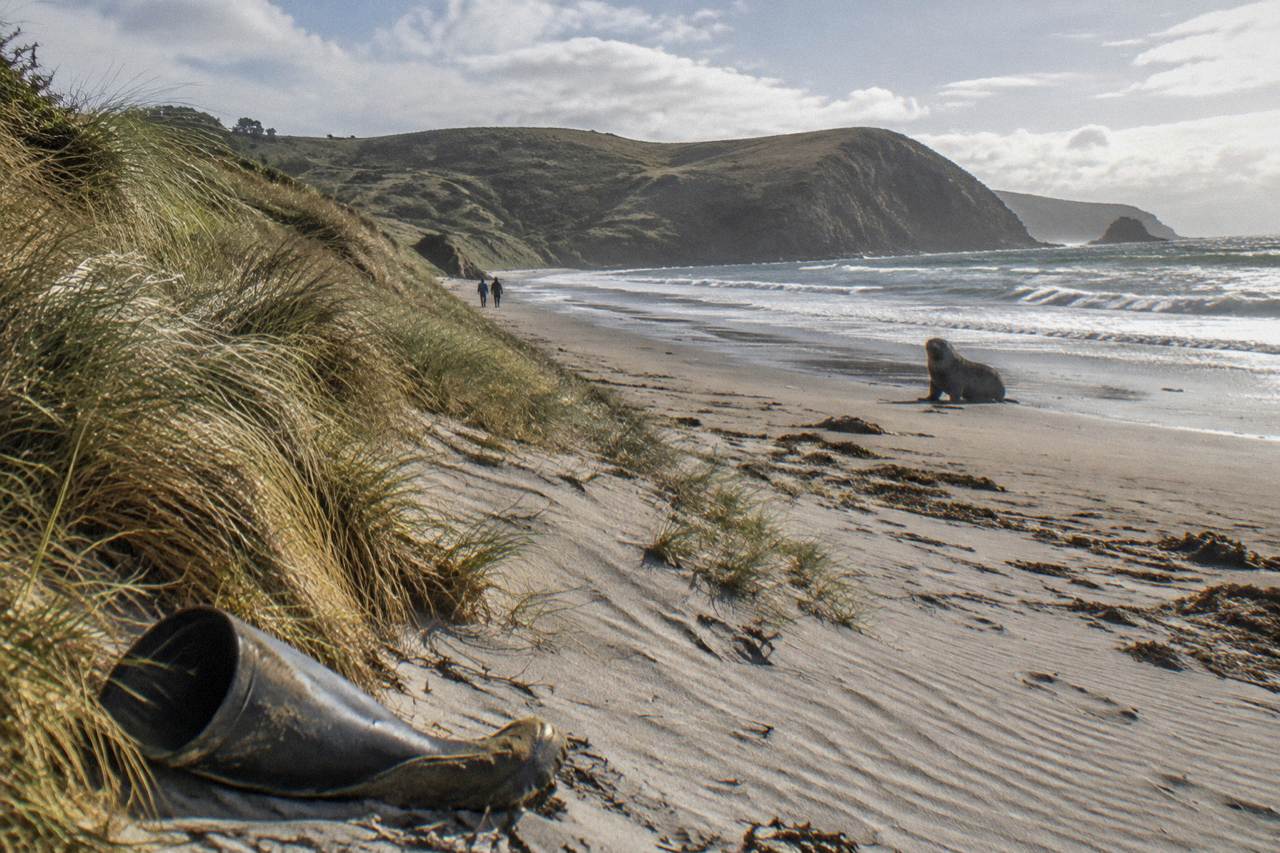
Sandfly Bay is a DOC Wildlife Refuge where fur seals and New Zealand sea lions haul out on the rocks and the beach, and DOC notes the odd penguin can appear there too. Sightings depend entirely on the day: wildlife is wild, nothing is guaranteed, and the animals choose when and where to come ashore.
DOC describes Sandfly Bay as a place where fur seals and sea lions haul out on rocks and beach, and the nearby Allans Beach track, on the other side of Hoopers Inlet, is described in similar terms, with sea lions, fur seals and "the odd penguin". That phrasing matters. Nobody can promise you a sea lion on any given afternoon, on any beach or on any boat. What Sandfly Bay offers instead is habitat: a wild, exposed coast where the animals rest between feeding trips, and where the sand dune gives a natural vantage point above the beach.
The New Zealand sea lion is one of the rarest sea lion species in the world, and Otago Peninsula is one of the places it has recolonised. DOC's guidance on sharing the coast, published at Sharing our coasts with seals and sea lions, sets out why distance matters: the animals can be aggressive and carry diseases, and on land you should keep at least 20 m away if you can. A platform on the dune at Sandfly Bay is there precisely so visitors can watch without walking down among the animals.
Birdlife adds another layer. The headland at Taiaroa Head, further out the peninsula, holds around 10,000 seabirds by DOC's count, including the only mainland breeding colony of albatross in the Southern Hemisphere. Sandfly Bay itself is quieter, but oystercatchers, gulls and shags work the shoreline, and the broader peninsula drives and cruises are what most visitors combine with a beach stop. For the wider picture of which animals appear on which style of trip, see which animals a Dunedin wildlife tour covers.
How Hard Is The Sandfly Bay Track And How Do You Get There?
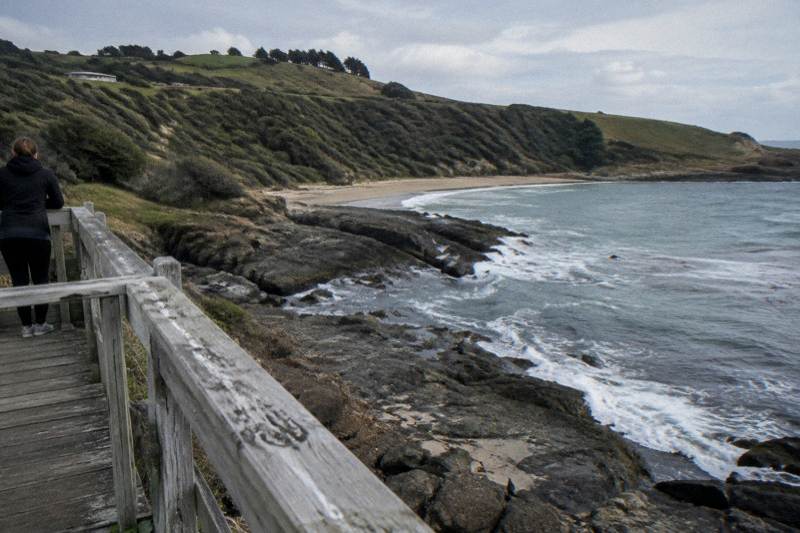
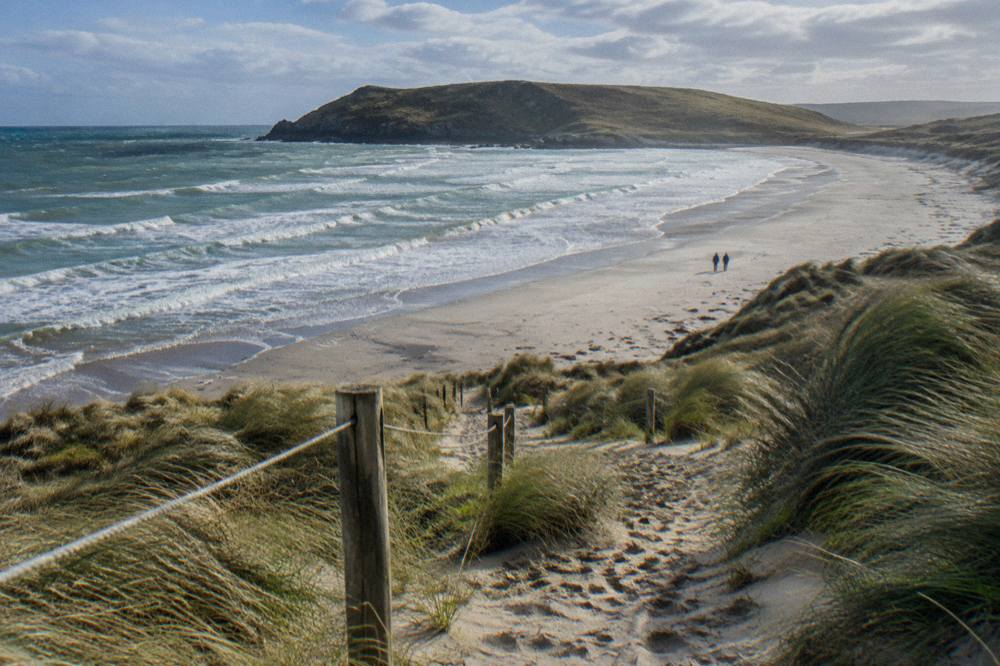
The Sandfly Bay track is a 560 m return walk, about 15 minutes one way, over a steep sand dune past a viewing platform. Access is by Highcliff Road then Seal Point Road, and dogs are prohibited, which is standard for a wildlife refuge protecting animals resting on the sand.
DOC's track notes are blunt about the terrain: the route descends a steep sand dune, and what goes down must come back up. Fifteen minutes each way is the official estimate for a reasonably fit walker, but anyone with knee trouble or small children should expect the climb back to take longer, and loose sand makes the descent its own minor adventure. Sturdy shoes beat sandals by a wide margin. There is no shop, no toilet at the beach and no shade, so water and warm layers belong in the pack regardless of the season.
The drive out is part of the planning. Highcliff Road climbs the ridge of the peninsula and gives long views down both sides, then Seal Point Road drops toward the coast on a gravel surface in its final stretch. Allow more time than a city errand of the same distance would need, and keep an eye on the road itself: DOC warns that on nearby Allans Beach Road sea lions can lie on the road, and the same caution applies to quiet peninsula roads generally.
Two dated practicalities are worth knowing before you set out. Part of the Sandfly Bay Wildlife Refuge is closed from 1 November to 28 February inclusive to protect wildlife, with signs marking the route to the beach, and the track is closed from 8am to 4:30pm on 17 and 18 November 2026 for track construction. Check the DOC pages before you travel, because works schedules can shift.
| Sandfly Bay fact | Detail |
|---|---|
| Track length | 560 m return, about 15 minutes one way |
| Terrain | Steep sand dune, past a viewing platform |
| Dogs | Not allowed |
| Haul-out species | Fur seals and New Zealand sea lions, on rocks and beach |
| Seasonal closure | Part of the refuge closed 1 November to 28 February inclusive |
| Track works | Closed 8am to 4:30pm on 17 and 18 November 2026 |
| Road access | Highcliff Road then Seal Point Road |
The comparison worth making is honesty about effort. Self-guided Sandfly Bay costs nothing in dollars but demands a car, a gravel road, a dune climb and the discipline to keep 20 m back from animals that weigh more than the visitors watching them. A guided tour trades money for someone else handling the driving, the spotting and the interpretation, with access to private land that the public track network never touches. The Clearwater Wildlife Tour of the Otago Peninsula covers the best-known of those options in detail.
Which Guided Wildlife Tours Visit Beaches And Reserves Near Sandfly Bay?
Guided peninsula tours reach private coastal habitat the public cannot enter, and one shore-excursion itinerary, the Skyline small-group tour, names a Sandfly Bay track stop outright. The Clearwater tours visit private farm beaches and conservation reserves, and Fantail's Scenery and OPERA Conservation tour includes entry to The OPERA reserve, at from $131.00 to $187.25 per person.
The clearest Sandfly Bay connection on a guided trip is the Skyline Dunedin day trip, a 7-hour small-group shore excursion from Port Chalmers whose itinerary includes a Sandfly Bay track visit, alongside Larnach Castle garden entry. It carries only 14 reviews, too few a pool to support a star claim, so judge it on the itinerary rather than the rating. The Centre's own guided albatross tour is stated as not included on that trip.
The Clearwater family of tours is the other strong thread. Two booking pages sell the small-group Clearwater experience: one, Clearwater Small Group, Max 10, rated 4.9 across 709 reviews, from $133.34 per person, and the other, Farm Beach Access, 4WD, rated 4.9 across 168 reviews, from $131.00. These are twin booking pages for the same underlying experience with separate review pools, so compare them by name when you choose which to open, and never add the review counts together. Both start at 50 The Octagon in central Dunedin and both cap the group at 10, with access to a private coastal beach and conservation reserves at the Clearwater family farm.
Fantail's Scenery and OPERA Conservation tour takes a different route to wildlife: a 6-hour trip from $187.25 per person, rated 4.4 across 84 reviews, with entry to The OPERA, the eco-restoration reserve at 45 Pakihau Road formerly known as Penguin Place. The OPERA describes its tour as a 90-minute guided journey through a private reserve using a trench and hide system, and says it offers "the best chance" of seeing hoiho, the yellow-eyed penguin, while promising nothing. Snacks and lunch are not included.
For readers weighing a full day of it, the Otago Peninsula wildlife tour options compared sets all four categories side by side, including harbour cruises and full-day combos that pair a boat leg with a land tour.
Clearwater Small Group Or Farm Beach Access: Which Clearwater Page Fits?
The two Clearwater pages sell the same 4-hour, 10-person experience with separate review pools and slightly different from-prices: $133.34 per person on the 709-review page, $131.00 on the 168-review page. Both include binoculars, waterproof jackets and private farm beach access, and neither includes food.
On the surface the difference is a couple of dollars and which page you trust more. The 709-review page, Clearwater Small Group, Max 10, states complimentary water and cookies on board, a minimum age of 5 and about 1.5 km of walking over uneven natural terrain, sand, hills and steps. That walking note deserves attention: it is a genuine fitness question, and the tour is not suitable for children under 5. The 168-review page, Farm Beach Access, 4WD, states full-time 4WD vehicles and the same core inclusions of binoculars, jackets, guides and farm access, but says nothing about refreshments or a minimum age, so check those details on the page you book.
Both state a full refund when cancelled at least 24 hours before the start, which makes either page a low-commitment addition to a Dunedin itinerary. Neither states a boat leg and neither includes The OPERA, so if a reserve visit with penguin hides is what you are after, the Fantail OPERA trip in the next section is the one to read.
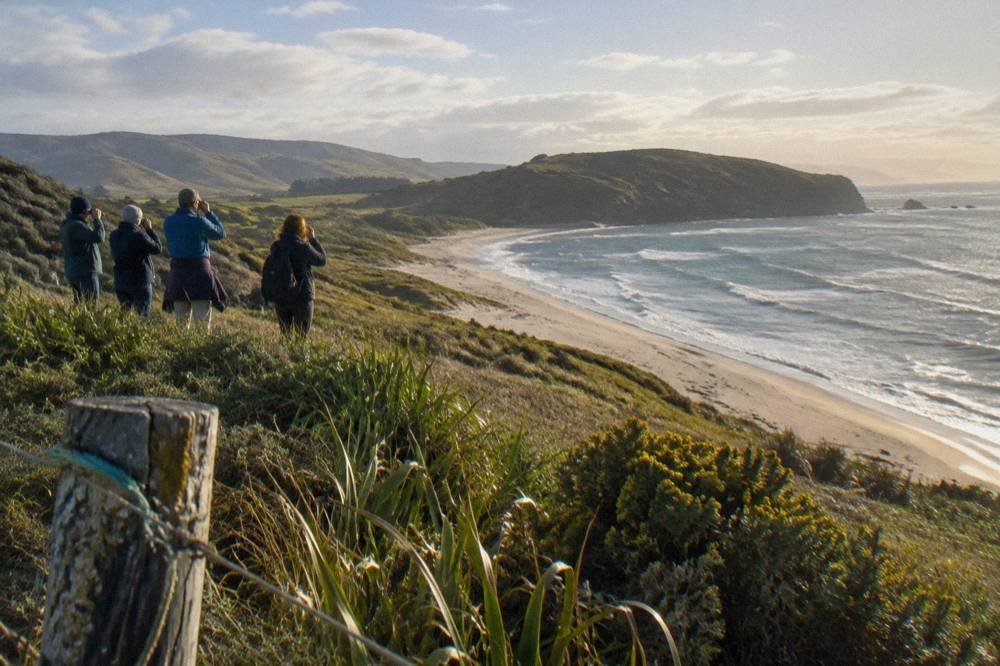
The deeper point for a Sandfly Bay reader is habitat. The public beach is free but the animals are wherever they are; the Clearwater farm beach is private coastline where the operator can take a small group to places the general public never reaches. Guided access does not create sightings, but it does change where you can stand while waiting for them. The Dunedin Wildlife Tours Dunedin Wildlife Tours hub page collects every peninsula trip in one place for comparison.
What Does The Scenery And OPERA Conservation Tour Add?
The Scenery and OPERA Conservation tour is a 6-hour Fantail trip from $187.25 per person, rated 4.4 across 84 reviews, with The OPERA reserve entry included. It pairs peninsula scenery driving with a guided reserve experience built around trenches and hides, where the operator says visitors have the best chance of seeing hoiho, with nothing promised.
The OPERA, at 45 Pakihau Road on the Otago Peninsula, runs a 90-minute guided journey through a private eco-reserve using a trench and hide system designed to let people watch wildlife without disturbing it. Hoiho, little penguins, fur seals, sea lions and sea and forest birds are the reserve's cast, and a rehabilitation centre visit happens when penguins are in the operator's care. The system matters for anyone who has read the 50 m penguin rule on public beaches: the hides are the legal, ethical way to get a closer look, on private land, under supervision. If sea lions are the animal you most hope to see, the guide to Dunedin and Otago Peninsula tours that look for them covers where they haul out and how the DOC distance rules shape a guided trip.
For context on why hoiho viewing is so tightly managed, DOC classes the yellow-eyed penguin as Threatened, Nationally Endangered, found only in New Zealand. RNZ reported in October 2026 that fewer than 115 breeding pairs remain on mainland New Zealand and Rakiura, down from about 265 breeding pairs in the northern population in 2019, which itself was a 65% decline from 1999. With numbers like those, every disturbance counts, and DOC's viewing rules, including keeping at least 50 m from penguins on public land, exist because the population cannot absorb casual pressure.
Fantail's tour also has practical limits worth noting. The start point is not given here, so confirm it on the booking page before you plan your day, and snacks and lunch are excluded. Two Fantail booking pages sell this itinerary with separate review pools, so open the one that matches your dates and meeting point. The dedicated yellow-eyed penguin tour guide for Dunedin goes deeper on hoiho biology and where tours view them.
How Close Can You Get To Seals And Sea Lions?
On land the rule is at least 20 m from seals and sea lions if you can, never coming between a fur seal and the sea, and never touching them. In a boat, vessels travel no faster than idle within 300 m of marine mammals, and drones must stay more than 150 m away, with Taiaroa Head under a permanent drone restriction.
The 20 m rule is the one Sandfly Bay visitors most need. DOC's guidance is plain: the animals can be aggressive and carry diseases, dogs must be on a leash and well away, and you should avoid blocking an animal's path to the water. The viewing platform above the beach exists to make compliance easy, and the steep dune actually helps, lifting watchers above the sand where the animals rest. Penalties are real: DOC publishes a maximum of two years' imprisonment or a fine up to NZD 250,000 for harassing marine mammals, and commercial operators need permits.
Guided tours operate inside these same rules, which is worth saying clearly. A tour does not buy a closer approach than the law allows; it buys eyes that find the animals, telescopic glass, and interpretation that turns a distant brown shape on the sand into a story. Harbour cruises idle past Taiaroa Head's fur seal colony under the same 300 m no-wake rule, and Monarch's cruise commentary passes the lighthouse and colony on its hourly loop, with blue penguins, dolphins and sea lions described by the operator as "sometimes" seen.
The species themselves reward a little reading. More detail on both animals, and on the tours that watch them well, is in the guides to fur seals on the Otago Peninsula and sea lion tours from Dunedin. The biology, set out by the New Zealand sea lion's background, explains why the Otago coast matters: a species once reduced to a tiny subantarctic population has been steadily reclaiming mainland beaches, one pup at a time.
| Viewing situation | Minimum distance or rule | Source |
|---|---|---|
| Seals and sea lions on land | At least 20 m if you can | DOC |
| Penguins on beaches | At least 50 m, never block their path | DOC |
| Vessels near marine mammals | Idle or no-wake within 300 m | DOC |
| Vessels at a seal colony | At least 20 m from the water's edge | DOC |
| Drones and aircraft | More than 150 m away | DOC |
| Taiaroa Head | Permanent drone restriction | DOC |
Should You Visit Sandfly Bay Yourself Or Book A Guided Tour?
Self-guided Sandfly Bay costs nothing but demands a car, a dune climb and strict self-discipline around wild animals, while guided peninsula tours from $131.00 to $187.25 per person add transport, optics, interpretation and access to private reserves. Cruise passengers short on time, and families with children under 5, usually land on the guided side of that choice.
The honest framing is that these are not the same product. Sandfly Bay is a walk on a public reserve where you may, or may not, find sea lions resting; a guided tour is a curated half day with a driver-guide whose family has farmed the coast, or a reserve with a hide system purpose-built for watching shy penguins. Some visitors do both: a free beach stop on one day, a guided trip on another. The free things to do around a Dunedin wildlife tour page is built around exactly that split. If you want to mix both, the guide to free wildlife stops and viewpoints around Dunedin shows which free visits pair best with a guided day on the Otago Peninsula.
Budget is only one axis. The Clearwater small-group tour sets a minimum age of 5 and involves about 1.5 km of walking over uneven terrain, which rules it out for some families, while the Skyline shore excursion names a Sandfly Bay stop in its itinerary and picks up at Port Chalmers and Dunedin city. Cruise visitors should note the season runs 21 October 2026 to 16 April 2027, with most ships docking at Port Chalmers, 14 km and 15 to 20 minutes by shuttle from the city. Monarch's one-hour cruise leaves from Wellers Rock Wharf, an allowance of 45 to 60 minutes' driving from central Dunedin, if a boat leg is what your day needs.
Cancellation terms also differ. Twenty-five of the 26 tours here state a full refund when cancelled at least 24 hours before the start; the exception is the Iconic full-day tour, which is stated non-refundable, so check the cancellation terms on that one before committing. The full price landscape, including the cheapest and dearest per-person trips, is laid out in the Dunedin wildlife tour prices guide.
| Option | Upfront cost | What you supply | What you get |
|---|---|---|---|
| Sandfly Bay self-guided | Free | Car, fitness, own optics, own discipline | Public beach, viewing platform, seals and sea lions may haul out |
| Clearwater Small Group, Max 10 | From $133.34 per person | Packed lunch if wanted | Guide, private farm beach, binoculars, jackets, 4-hour trip, group of 10 |
| Scenery and OPERA Conservation | From $187.25 per person | Lunch and snacks | 6-hour trip, The OPERA reserve entry, hide-based wildlife viewing |
| Skyline small-group shore excursion | From $139.02 per person | Castle interior ticket if wanted | 7-hour itinerary with a Sandfly Bay track stop, Larnach garden entry, pickup at Port Chalmers and city |
What Should You Bring And How Should You Behave At Sandfly Bay?
Bring sturdy shoes, warm layers, windproof clothing, water and binoculars if you have them, because the beach is exposed and has no facilities. Behave by the wildlife code: stay on the marked route, keep your distance, no flash photography near penguins, and report sick or dead birds to the DOC hotline on 0800 362 468.
The peninsula's weather is the quiet variable in every plan. The MetService forecast for Dunedin is the practical check before any beach day, because wind on an exposed dune changes both comfort and how much wildlife stays visible. DOC notes that on windy days albatross can be seen gliding over Taiaroa Head from the visitor centre, though that is never a promise, and wind at Sandfly Bay mainly means sand in everything you carry.
Photography follows the animals. Non-flash photography is the standard for penguin viewing, and long lenses beat approach every time. On the guided side, Blue Penguins Pukekura welcomes non-flash photography with no tripods on its platform, and the same etiquette logic applies on any beach: if you are close enough for a phone portrait, you are too close.
Finally, the seasonal mechanics. The refuge's partial closure from 1 November to 28 February exists because that is when the animals need the beach most, and the signs mark the permitted route. Respect them, keep the dog at home, and the bay keeps doing what it does. The broader etiquette, including what happens when weather cancels a boat trip, is covered in what to wear on a Dunedin wildlife tour.
Can You Combine Sandfly Bay With Albatross Or Penguins In One Day?
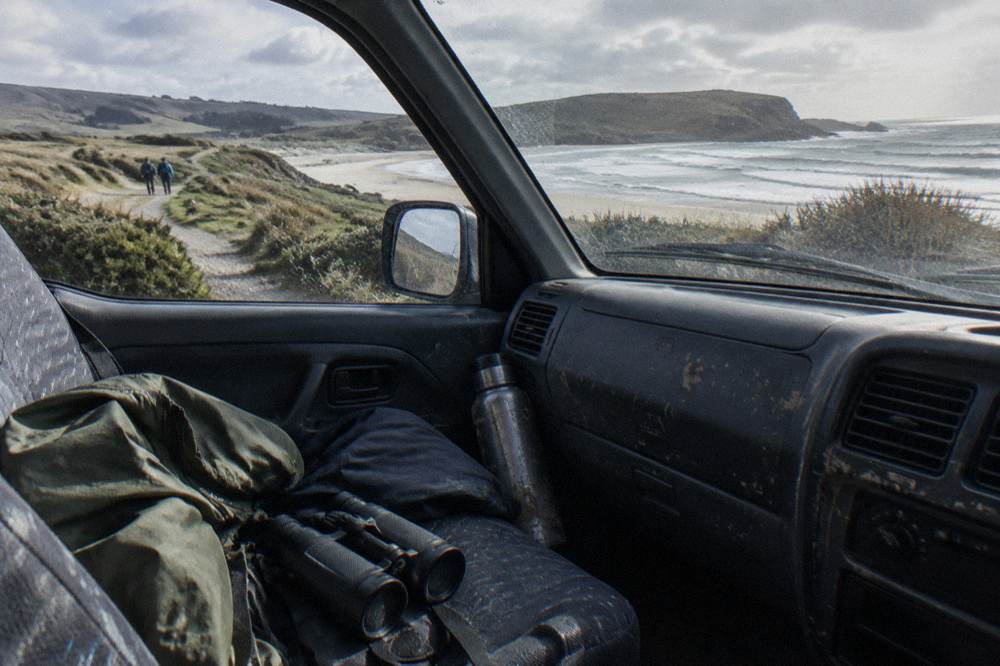
Yes, with planning: the peninsula is a single loop, so a morning Clearwater or Fantail tour from The Octagon can be followed by a self-drive Sandfly Bay walk in the afternoon, or an evening penguin viewing at Pukekura after a day tour. Tours that bundle more into one ticket include the City Highlights Plus Albatross trip and the Iconic full-day tour.
The geography makes the combination work. Everything on this page sits on one harbour-and-ocean circuit: Portobello Road out, Harington Point Road to the Royal Albatross Centre at the very tip, then back along Highcliff Road, which is also the route to Sandfly Bay via Seal Point Road. The Centre warns against driving via State Highway 88 and Port Chalmers, which is the other side of the harbour with no road to the tip, so plan the loop, not the out-and-back.
For a one-ticket day, the options widen. City Highlights Plus Albatross, from $190.08 per person, includes the Royal Albatross Centre guided tour, and the Iconic Full-Day Wildlife Tour, from $224.13 per person, includes both the Centre tour and The OPERA entry, though it is the one tour here that is stated non-refundable, so check the cancellation terms. Evening penguin viewing at Pilots Beach, where DOC says around 600 pairs of little penguins live on the headland with over 350 at Pilots Beach, slots neatly after any daytime tour; the standalone Pukekura visit is from $34.04 per person, self-drive, rated 5.0 across 578 reviews. More on that evening is in where to see blue penguins in Dunedin on a tour.
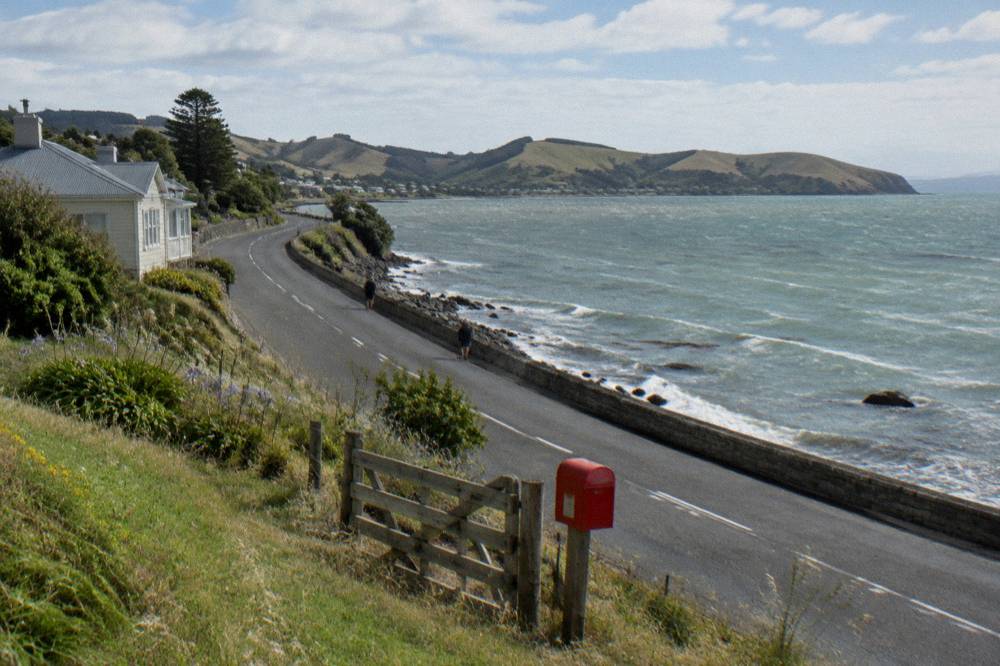
The Skyline small-group tour above is the itinerary that names Sandfly Bay directly, running 7 hours from Port Chalmers with Larnach Castle garden entry included and the albatross guided tour excluded. With 14 reviews it is a newer page, so read the itinerary rather than leaning on a rating. Whatever the mix, the pattern that works is simple: one guided anchor, one free stop, and an evening at Pukekura if your energy holds.
Common Questions About Sandfly Bay And Otago Peninsula Wildlife Tours
Is Sandfly Bay Free To Visit?
Yes. Sandfly Bay is a DOC wildlife refuge with free access via a 560 m return track, about 15 minutes one way, reached by Highcliff Road then Seal Point Road. There are no facilities, no dogs allowed, and part of the refuge closes from 1 November to 28 February inclusive.
Can You See Sea Lions At Sandfly Bay?
DOC says fur seals and New Zealand sea lions haul out on the rocks and beach at Sandfly Bay, and the odd penguin can appear. Sightings are never guaranteed because the animals are wild; keep at least 20 m away on land and use the viewing platform on the dune.
How Hard Is The Walk Down To Sandfly Bay?
The track is 560 m return, about 15 minutes each way, over a steep sand dune. The descent is loose underfoot and the climb back up is demanding for anyone with knee trouble. Sturdy shoes, water and warm layers are the practical kit.
Do Any Guided Tours Go To Sandfly Bay?
One itinerary names it directly: the Skyline Dunedin small-group shore excursion includes a Sandfly Bay track stop in its itinerary, alongside Larnach Castle garden entry, from $139.02 per person. Other guided tours visit private beaches and reserves nearby, which public visitors cannot enter.
What Is The Cheapest Guided Wildlife Tour Near Sandfly Bay?
Among the peninsula tours that pair with a Sandfly Bay day, the Clearwater Farm Beach Access, 4WD trip is from $131.00 per person and the Clearwater Small Group, Max 10 trip is from $133.34 per person, both 4 hours from The Octagon with a group cap of 10.
When Is Sandfly Bay Closed?
Part of the Sandfly Bay Wildlife Refuge is closed from 1 November to 28 February inclusive to protect wildlife, with signs marking the route to the beach. The track was also closed from 8am to 4:30pm on 17 and 18 November 2026 for track construction, so check the DOC page before travelling.