Free Things To Do Around Your Dunedin Wildlife Tour
A guided tour buys you access, guides and equipment. Around it, Dunedin and the Otago Peninsula hand out a surprising amount for nothing: DOC tracks where sea lions haul out, a live albatross nest camera, harbour-side walks and city meeting points worth lingering in.
Short answer
Yes, Sandfly Bay and Allans Beach are free DOC tracks on the Otago Peninsula, the Royal Cam albatross stream is free online, and the Octagon and Port Chalmers walks cost nothing. Guided tours start from $34.04 per person for the Pukekura penguin visit, with peninsula tours from $130.51 per person.
Dunedin is one of the few cities in the world where a genuinely rare wildlife experience sits at the end of a suburban road, and some of the best of it costs nothing at all. The Department of Conservation maintains free tracks onto beaches where New Zealand sea lions haul out and fur seals rest on the rocks. A 24-hour live camera trained on the world's only mainland albatross colony in the Southern Hemisphere streams for free to anyone with an internet connection. The city's own meeting square, The Octagon, is where most guided tours on this site begin, and the cruise port at Port Chalmers sits beside a walkable waterfront.
None of that replaces a guided tour. The nesting albatross at Taiaroa Head can only be seen from the Richdale Observatory on a Royal Albatross Centre tour, as DOC makes plain, and the peninsula's private conservation reserves are accessible only with an operator. What the free options do is fill the hours before an evening penguin viewing, stretch a port day, or turn a single booked tour into a full wildlife weekend. This guide walks through each free option with the verified rules and closures attached, then sets them beside the paid tours covered on Dunedin Wildlife Tours so the budget can be split sensibly.
What Free Things Can You Do In Dunedin Around A Wildlife Tour?
The main free options are the Sandfly Bay and Allans Beach DOC tracks on the Otago Peninsula, the Royal Cam live albatross stream from Taiaroa Head, the Octagon and its surrounds in the city centre, and the waterfront at Port Chalmers near the cruise terminal. All cost nothing to visit, and each one sits within easy reach of the guided tours covered on this site, so a paid morning and a free afternoon combine naturally.
The pattern that works for most visitors is simple. Book one anchor experience, then use the free tracks and viewpoints to fill the rest of the day. A 90-minute penguin viewing at Pukekura, from $34.04 per person, leaves an entire day open on either side. A one-hour harbour cruise from $39.00 per person is over by lunchtime. Even the longest tour covered here, the 7-hour Iconic Full-Day Wildlife Tour from $224.13 per person, still leaves a Dunedin evening, and evenings on the peninsula in the warmer months are when little penguins come ashore at Pilots Beach, which DOC notes can be watched from a paid viewing operation run by the Pukekura Trust.
| Free activity | Where | What the verified sources say |
|---|---|---|
| Sandfly Bay track | Highcliff Road then Seal Point Road | 560 m return, fur seals and sea lions haul out on rocks and beach, part of the wildlife refuge closed 1 November to 28 February |
| Allans Beach track | Gravel road from Hoopers Inlet, about 25 km from the city | 500 m return, sea lions, fur seals and the odd penguin, dogs on a lead on the track only |
| Royal Cam live stream | Online, from Taiaroa Head | Free 24-hour camera on the albatross colony, run with the Cornell Lab of Ornithology |
| The Octagon | Dunedin city centre | City square and meeting point, the i-SITE visitor centre at 50 The Octagon |
| Port Chalmers waterfront | 14 km from the city | Working port town, 15 to 20 minutes from the city by shuttle, departure point for several cruises |
A word on expectations before the detail. Wildlife is wild. DOC describes Sandfly Bay and Allans Beach as places where sea lions and fur seals haul out, not places where they will be waiting on arrival. The albatross camera shows a nest, and a nest sometimes holds an incubating adult doing very little for hours. That is the honest deal with free wildlife watching: the price is zero, and so is the guarantee. The paid tours covered here make sightings more likely, mostly through access and local knowledge, but no operator on this site promises an animal. For a fuller comparison of the paid side, the Dunedin wildlife tour options compared guide lays out all four categories side by side.
Is Sandfly Bay Free To Visit On The Otago Peninsula?
Sandfly Bay is free to visit, with a 560 m return DOC track that takes about 15 minutes each way down a steep sand dune, and it is one of the few places on the peninsula where fur seals and New Zealand sea lions regularly haul out on a public beach with no entry fee, though part of the wildlife refuge closes from 1 November to 28 February each year to protect nesting wildlife. If weighing a free self-guided visit against a tour with access to private beaches and reserves, the guide to self-guided viewing versus a guided Sandfly Bay wildlife tour compares both approaches.
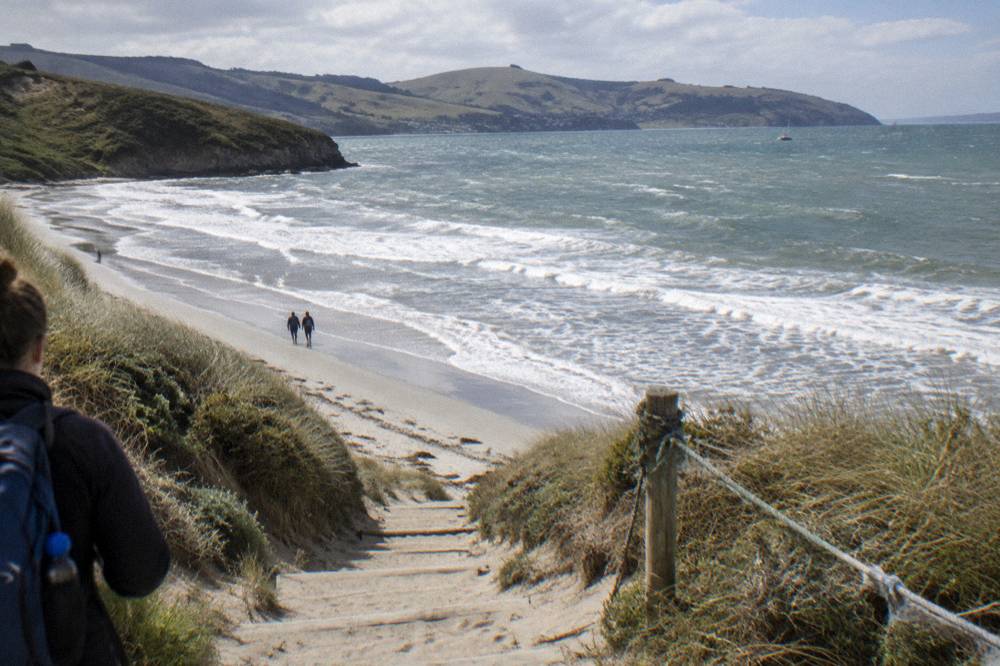
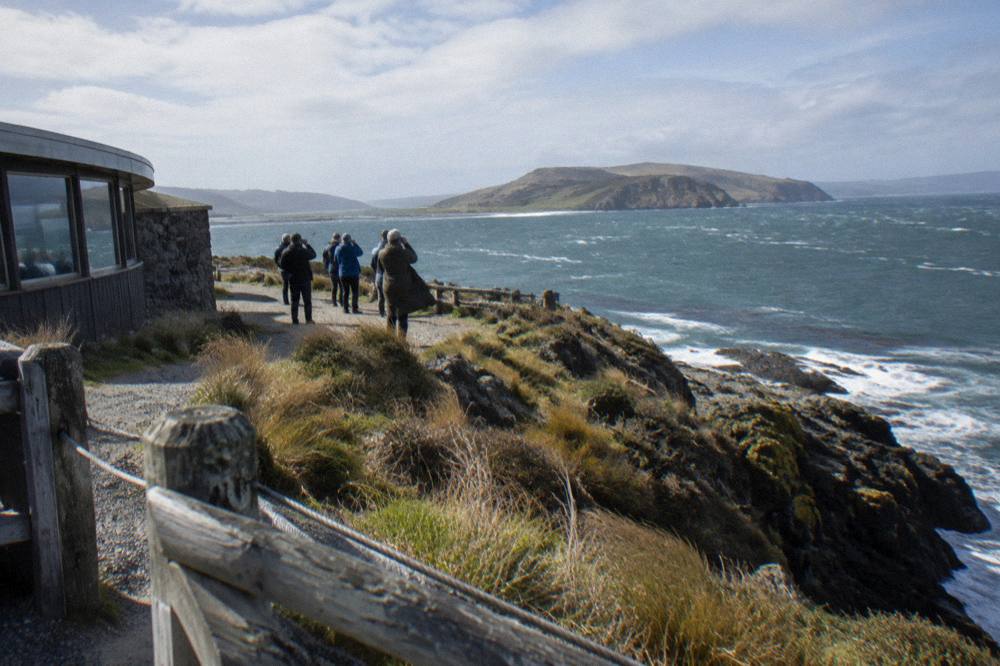
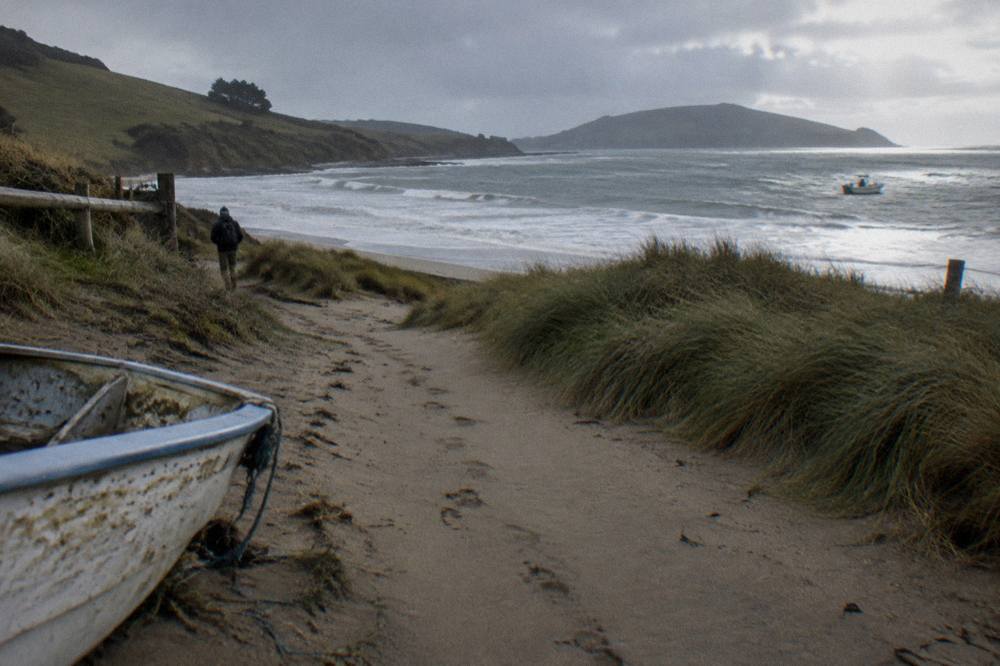
The track starts off Highcliff Road, then Seal Point Road, on the ocean side of the peninsula. DOC describes it as steep sand dune walking past a viewing platform, and the department is explicit that no dogs are allowed, unlike nearby Allans Beach where dogs are permitted on a lead along the track itself. The reward for the climb back up is a long wild beach with headlands at either end, and DOC says fur seals and sea lions haul out on the rocks and the sand. Sea lions in particular are mobile, curious and entirely capable of lying across the track, so the distance rules in the next section matter here more than anywhere else on this list.
The closure is the detail most visitors miss. Part of the Sandfly Bay Wildlife Refuge, which covers sections of the beach and dunes, is closed from 1 November to 28 February inclusive every summer to protect wildlife, and DOC asks visitors to follow the signs to reach the open part of the beach. There is also a short-term track closure on 17 and 18 November 2026, from 8am to 4:30pm each day, for track construction. Neither closure closes the whole beach, but both shape what a visit looks like, so it is worth checking the DOC page before driving out. That page is the DOC Taiaroa Head and peninsula information, which carries the current track notices for the headland end of the peninsula too.
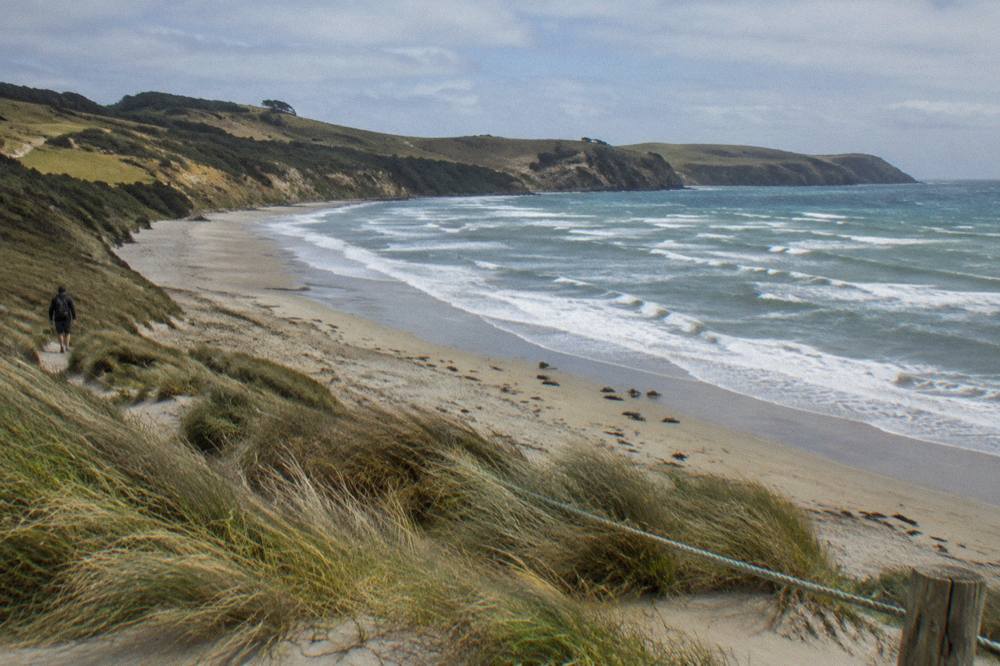
Sandfly Bay pairs naturally with a guided morning, because most tours finish in the early afternoon and the bay is a short drive from the Highcliff Road route back to town. The Clearwater Small Group, Max 10 tour runs 4 hours from The Octagon, from $133.34 per person, rated 4.9 across 709 reviews, the most reviewed tour covered on this site, and it returns to the city centre with the whole afternoon free. Its sister booking page, the Farm Beach Access, 4WD tour, covers similar ground from $131.00 per person with 168 reviews of its own; the two pages have separate review pools, so read them separately rather than as one combined score.
A guided day and a free beach also differ in what they demand of you. The tours provide binoculars, jackets and a guide who reads the landscape; the free tracks provide a car park, a sign and your own judgement. Families with children under 5 should note that the Clearwater small-group tour sets a minimum age of 5, which makes a free beach visit the natural alternative for younger children, dune climb and all.
Can You See Wildlife Free At Allans Beach?
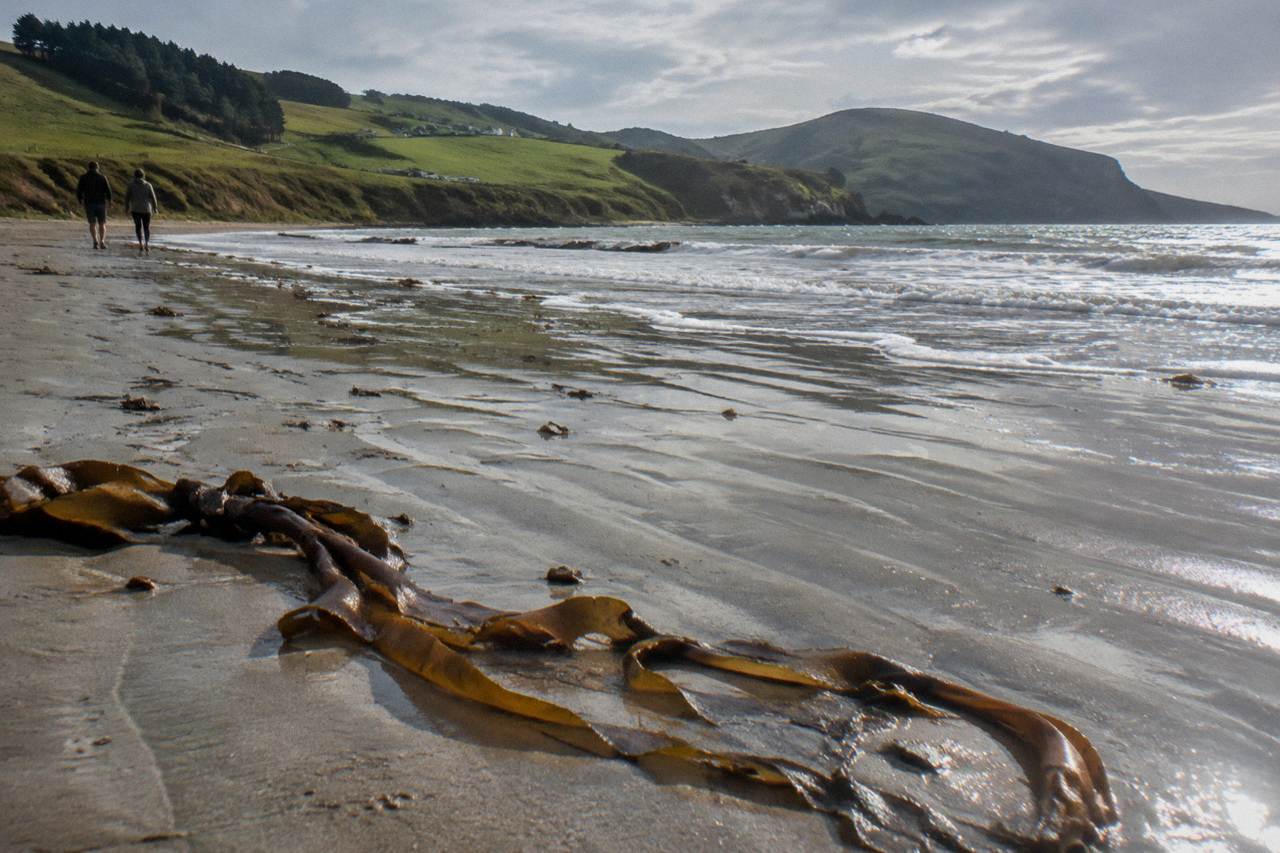
Allans Beach is free, reached by a 500 m return DOC track off a gravel road from Hoopers Inlet, about 25 km from the city, and DOC says sea lions, fur seals and the odd penguin can be found there, with dogs allowed on a lead on the track but not on the beach, and sea lions sometimes lying on the road itself, so drive the last stretch slowly.
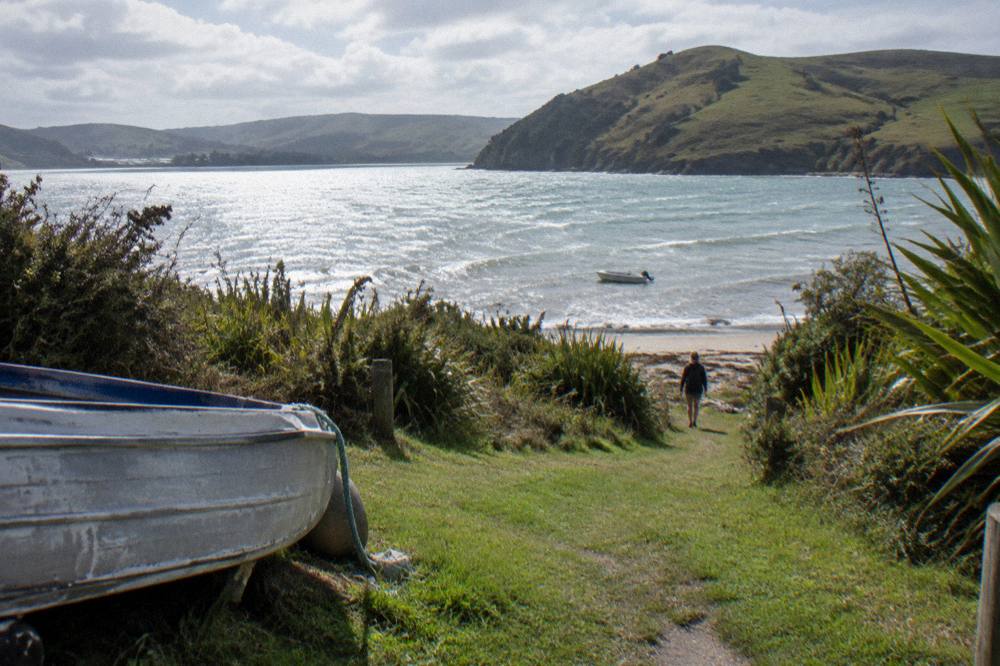
Of the two free beaches, Allans Beach is the easier walk and the more exposed ocean beach. The track is short and mostly flat compared with the Sandfly Bay dune, and the setting is a broad sweep of sand backed by farmland at the mouth of Hoopers Inlet. The route out is either Portobello Road or Highcliff Road from the city, both about 25 km, and the final approach is a gravel road. DOC's warning that sea lions can lie on the road is not decorative: New Zealand sea lions are a native species that treats tarmac, boat ramps and picnic lawns as perfectly acceptable resting spots, and a vehicle is a bigger threat to them than a walker.
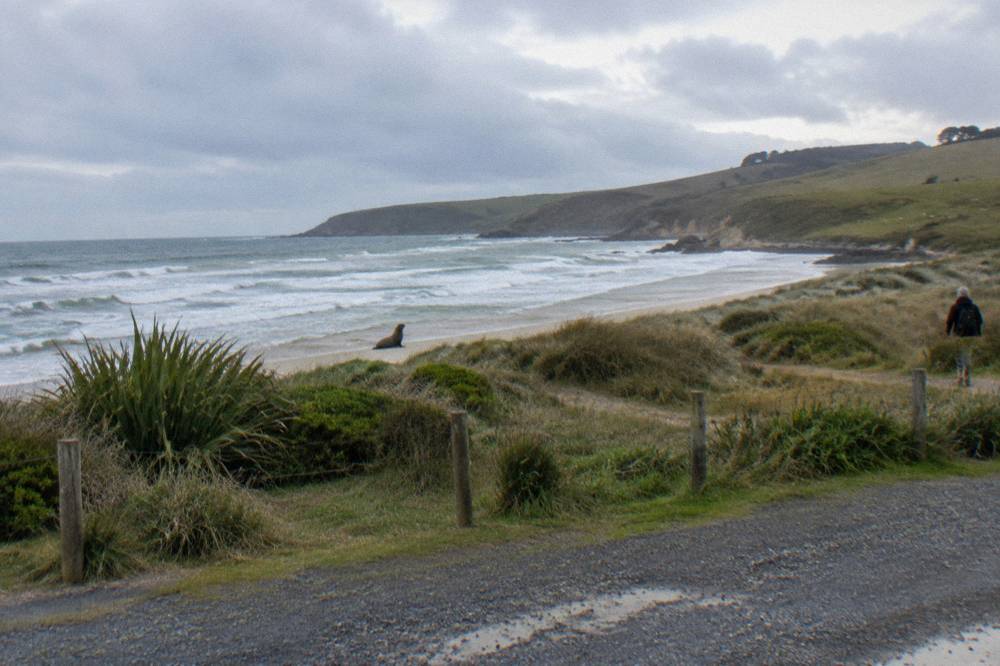
The wildlife rules at both free beaches come from DOC and carry real penalties. On land, keep at least 20 m from seals and sea lions where possible, never come between a fur seal and the sea, and never touch them, as they can be aggressive and carry disease. For penguins, the distance is greater: at least 50 m, never blocking their path in or out of the water, no flash photography, and no lingering on beaches where hoiho come ashore. On the water, boats must travel no faster than idle within 300 m of marine mammals, and drones must stay more than 150 m away, with a permanent drone restriction over Taiaroa Head. DOC lists the penalties for disturbing protected marine mammals at up to two years' imprisonment or a fine up to NZD 250,000. The full rules are on DOC's guide to sharing the coasts with wildlife.
| Rule | Distance or condition | Applies to |
|---|---|---|
| Seals and sea lions on land | At least 20 m | Sandfly Bay, Allans Beach, any haul-out |
| Penguins on land | At least 50 m, no flash, never block access | Any beach where penguins come ashore |
| Vessels near marine mammals | Idle or no-wake within 300 m | Harbour and coastal cruises |
| Drones and aircraft | More than 150 m away | Everywhere, permanent ban at Taiaroa Head |
| Dogs | None at Sandfly Bay, lead on the Allans Beach track only | Both free beaches |
A guided tour handles these rules for you, which is part of what the ticket buys. The Small-Group Wildlife and Penguin Tour run by The Otago Peninsula Eco Restoration Alliance, from $42.56 per person and rated 4.7 across 47 reviews, moves visitors through a private reserve by trench and hide, keeping people out of the animals' sightlines entirely. The free beaches ask you to manage your own distance, quietly and without a guide's cue.
For readers weighing a free beach against a paid penguin experience, the Otago Peninsula penguin tour guide covers the guided options in detail, and the honest summary is this: the free beaches are magnificent and free, but the reserve systems exist precisely because unmanaged foot traffic on penguin beaches does real harm. Paying for one guided visit and walking the free beaches under the DOC rules is the combination conservation bodies actually want.
Can You Watch The Albatross Royal Cam For Free?
The Royal Cam is a free 24-hour live stream from the northern royal albatross colony at Taiaroa Head, run by DOC with the Cornell Lab of Ornithology and now in its tenth year, and it costs nothing to watch from anywhere in the world, making it the only way to see the nesting colony up close without booking a Royal Albatross Centre tour.
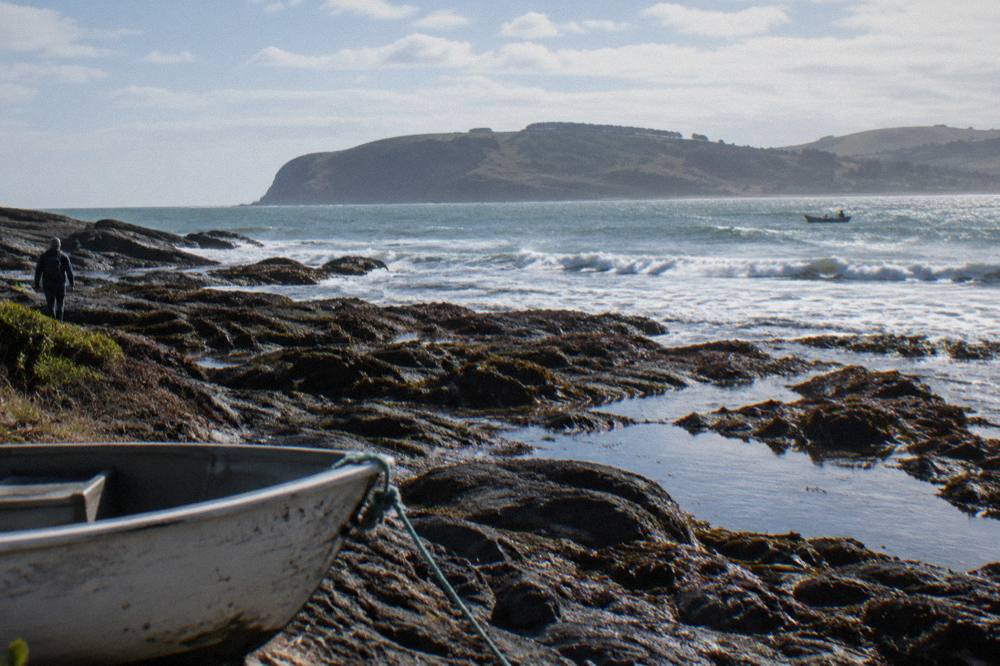
The stream matters more than it might first appear. Taiaroa Head hosts the only mainland breeding colony of albatross in the Southern Hemisphere, managed by Te Poari a Pukekura, a joint trust of Te Runanga o Otakou members, the Korako Karetai Trust, Dunedin City Council and DOC. The nature reserve itself cannot be entered: DOC states that a visit to the Richdale Observatory, on a Centre tour, is required to see the nesting and courtship activity. The camera is the free exception. It sits beside a nest and follows one breeding pair through the season, and in the current 2026-27 season DOC recorded the first egg laid on 2 November 2026 by adult female "L", who returned to the colony on 13 October, with four more eggs following within days across the colony. Rangers check fertility 10 to 12 days after laying.
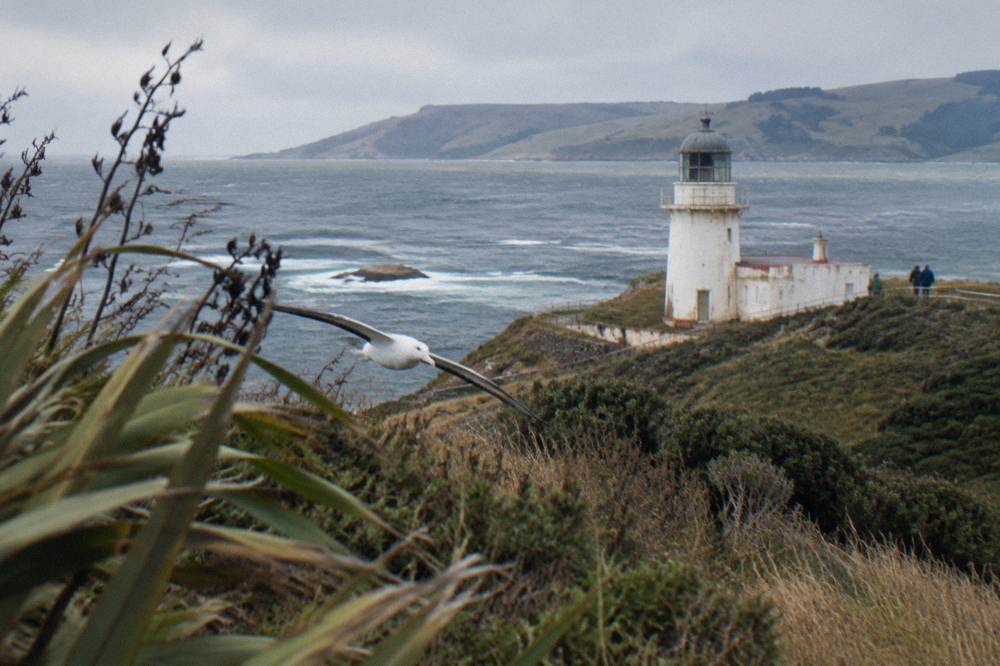
The numbers behind the camera explain why it exists. DOC says about 200 toroa live at Taiaroa Head with about half making landfall each year, while the Royal Albatross Centre puts the figure at approximately 250 albatross with an estimated 70 breeding pairs, about 1% of a world population DOC places at roughly 17,000 mature individuals. The species is classed Threatened, Nationally Vulnerable. Viewing is, in DOC's words, almost a year round event thanks to an 11-month breeding cycle: birds return in September, eggs come in the first three weeks of November, chicks hatch late January to early February, and first flight happens about eight months later in September. There is no single best month, only different stages. More background on the species is in the northern royal albatross overview, and the best time for an albatross tour guide on this site walks the cycle month by month.
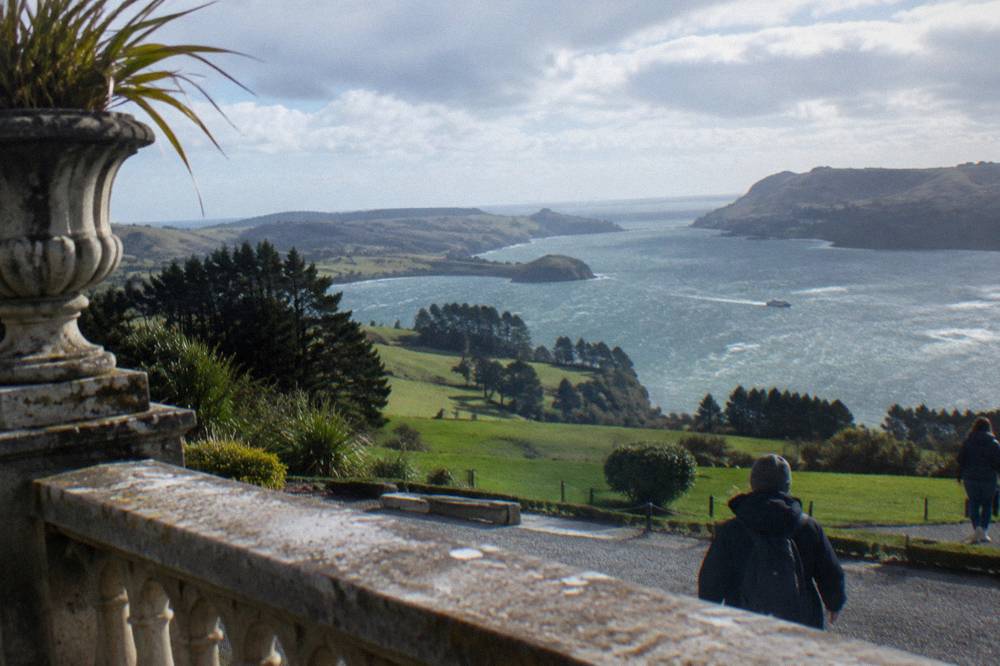
The free stream and the paid tour are complements, not substitutes. On windy days DOC notes albatross can be seen gliding over the headland even from the visitor centre, but the nesting birds are visible only from the observatory on a tour. For travellers who want the guided version, two of the tours covered here include the Centre's guided tour in the ticket: the City Highlights Plus Albatross tour from Fantail Tours, 6 hours from $190.08 per person and rated 4.8 across 55 reviews, and the Albatross Centre Tour With Pickup, 6 hours from $178.00 per person with central Dunedin pickup and drop-off organised at booking, rated 4.7 across 39 reviews. The albatross tours in Dunedin guide compares all of them.
What Can You Do Free Around The Octagon And Port Chalmers?
The Octagon is Dunedin's central square and the meeting point for most tours covered on this site, holding the city i-SITE at 50 The Octagon, and it costs nothing to explore, while Port Chalmers, 14 km away and 15 to 20 minutes by shuttle, is a walkable working port town where several cruise tours depart, so both ends of a tour day offer free time well spent.
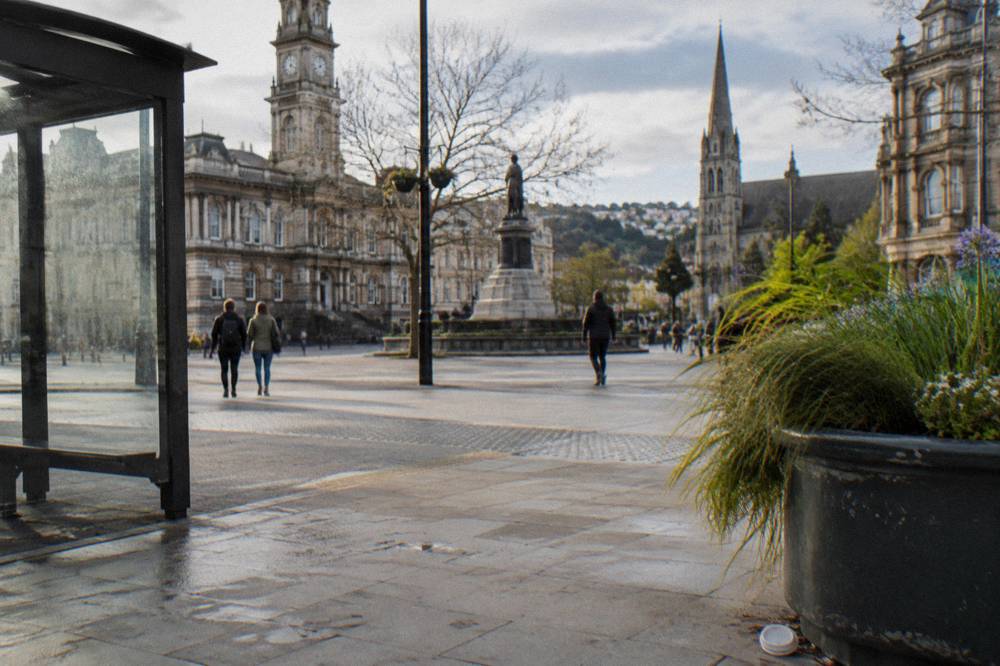
The Octagon earns its place on this list for a practical reason: it is where the tour day starts. The Clearwater Small Group, Max 10 tour meets outside the Dunedin i-SITE at 50 The Octagon, and the Pukekura Combo, 5 Hours tour picks up from the same visitor centre before heading out to Harington Point. Arriving early turns waiting time into free sightseeing. The Octagon is the city's civic heart, framed by the town hall and the public art gallery, with the historic church at its edge, and it sits at the centre of a compact Victorian city centre whose street plan was copied from Edinburgh. There are no entry fees anywhere in the square, and the surrounding blocks of heritage commercial buildings are a free architecture walk in themselves.
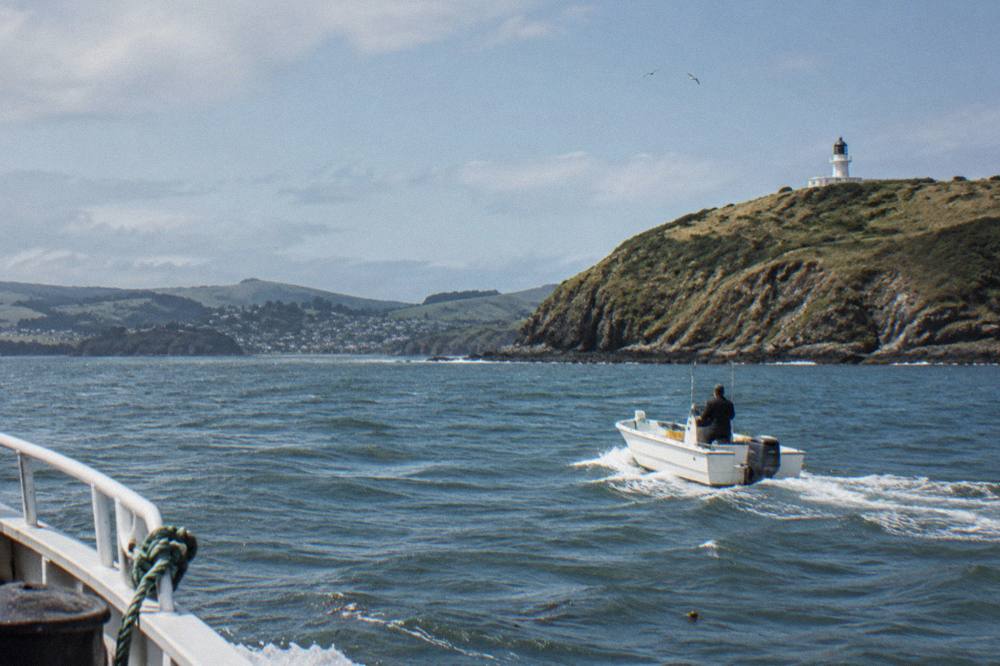
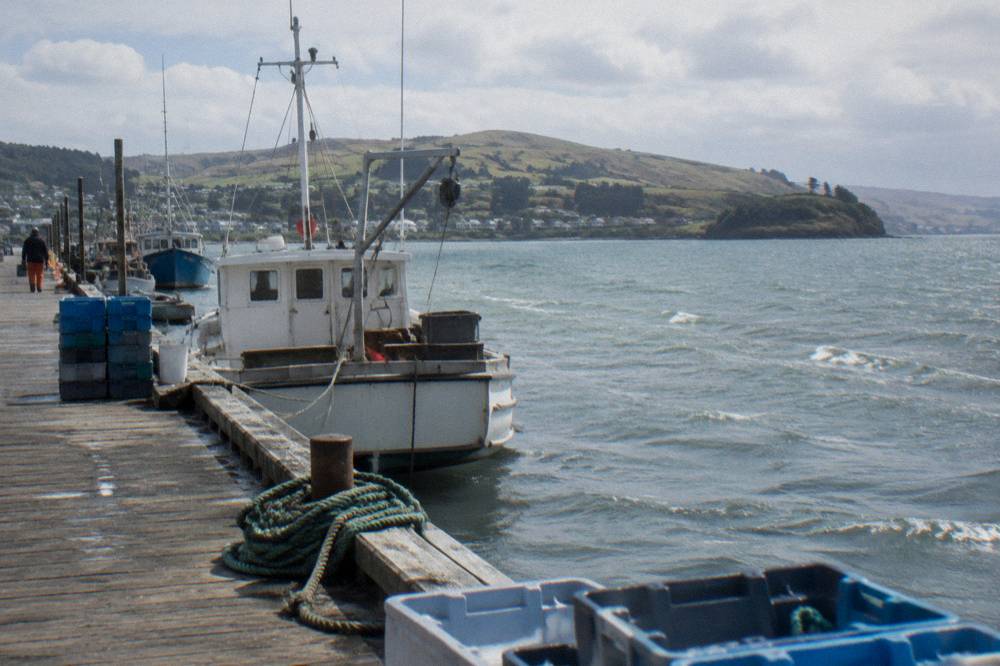
Port Chalmers plays the same role for cruise arrivals. Most ships in the Dunedin season, which runs 21 October 2026 to 16 April 2027 according to Orbus and the Otago Regional Council, dock at Port Chalmers rather than the city wharf, and the town is 14 km from central Dunedin, 15 to 20 minutes by shuttle. Several tours covered here start right at the terminal so the shuttle becomes optional: the Shore Excursion Cruise With Pickup from Monarch, 2 hours 30 minutes from $79.44 per person, collects passengers from the Private Tours Area inside the terminal, and the Port To Port cruises leave a 5 to 10 minute flat walk from the terminal building. A cruise day with a tour at each end leaves gaps, and Port Chalmers fills them for free: a small harbour town of heritage buildings, working docks and waterfront views across the harbour to the peninsula. The Port Chalmers wildlife cruise guide covers the departure options in detail.
Weather, which shapes every one of these free plans, is worth one honest note: no temperature or rainfall figure belongs in a wildlife guide, because the number that matters is the wind on the day. The MetService Dunedin forecast is the local reference for deciding which half of the day gets the beach and which gets the museum.
How Do Free Beach Visits Compare With A Guided Tour?
Free beach visits cost nothing but offer no guide, no equipment, no private reserve access and no albatross observatory entry, while guided tours from $34.04 per person for the Pukekura penguin visit up to $224.13 per person for the Iconic full-day tour add binoculars, jackets, expert commentary and access to places the public cannot enter, so the strongest itinerary usually books one guided anchor and surrounds it with the free DOC tracks and viewpoints.
The honest comparison is not free versus paid but self-guided versus accompanied. A visitor standing on Allans Beach with a sea lion 25 m away is having the same encounter a tour delivers, at zero cost, provided they know the distance rules and read the animal themselves. What the ticket buys is the higher-probability version: a guide who tracks the colony, hides and trenches that keep people invisible to the wildlife, and access to the observatory at Taiaroa Head, which DOC states is the only route to seeing nesting albatross. The operator of The OPERA reserve describes its 90-minute tour as giving the best chance of seeing hoiho and promises nothing, and that phrasing is a useful baseline when you compare other tours' claims.
| Option | Price from | Duration | What it adds over the free beaches |
|---|---|---|---|
| Sandfly Bay or Allans Beach, self-guided | Free | Your choice | Nothing but the walk itself |
| Pukekura Penguins Standalone Visit | $34.04 per person | 1 hour 30 minutes | Purpose-built viewing platform, guides, 578 reviews |
| Monarch One-Hour Cruise | $42.56 per person | 1 hour | Boat approach to Taiaroa Head, binoculars, live commentary, 257 reviews |
| Rehabilitation Centre and Reserve Walk at The OPERA | $42.00 per person | 1 hour 30 minutes | Reserve walk, hides, rehabilitation centre, 301 reviews |
| Clearwater Small Group, Max 10 | $133.34 per person | 4 hours | Private farm beach and reserve access, guide, binoculars, 709 reviews |
| Iconic Full-Day Wildlife Tour | $224.13 per person | 7 hours | OPERA entry, albatross Centre tour, port pickup, 37 reviews |
For anyone weighing whether the free beaches are enough on their own, the guide to spotting penguins in Dunedin without a tour compares self-guided visits with the guided upgrades side by side.
Two caveats belong beside that table. The Iconic Full-Day Wildlife Tour is the one tour covered here that is stated as non-refundable in its booking terms, so check the cancellation terms before booking; the other 25 all state a full refund when cancelled at least 24 hours before the start. And the group sizes differ widely, from 10 on the Clearwater tours to 75 at the Pukekura penguin viewing platform, which is a free-standing evening event rather than a bus tour. The Dunedin wildlife tour prices guide carries the full price picture across all four categories.
The strongest realistic plan for a two-day visit, built entirely from verified facts: day one, a morning peninsula tour from The Octagon, Sandfly Bay or Allans Beach in the afternoon under the DOC rules, and the Royal Cam on the laptop that evening to see what the season holds. Day two, the Pukekura penguin evening from $34.04 per person with the Octagon and its free surrounds through the day, or a harbour cruise if the weather turns. Weather decides which day gets which half.
Where Does The Free Time Best Fit Around Each Tour Type?
The short tours, the one-hour cruises and 90-minute penguin viewings, leave most of the day free and pair best with a DOC beach track; the 4-hour peninsula tours free the afternoon for Sandfly Bay or Allans Beach; and the 6 to 7-hour tours leave only an evening, which suits the Royal Cam, the Octagon or a Port Chalmers stroll, so the free options slot in differently depending on which tour is booked.
Starting points matter as much as durations. A tour that starts at The Octagon, like the Clearwater small-group tour or the Pukekura Combo, 5 Hours from $93.62 per person, begins and ends in the free zone of the city centre. A tour that starts at Wellers Rock Wharf at Otakou, like the Monarch One-Hour Cruise from $42.56 per person, asks for the 45 to 60 minute drive from central Dunedin first, but drops you at the harbour's edge with free parking at the wharf, close to the peninsula's eastern beaches. Self-drive penguin evenings at Pukekura, Harington Point, reverse the logic: the drive out is the cost, and the Octagon is where the free waiting time happens before departure times, which vary by date and are shown on the booking calendar for each tour.
| Tour type | Duration | Free time it leaves | Best free pairing |
|---|---|---|---|
| One-hour cruises | 1 hour | Most of the day | Allans Beach or Sandfly Bay, Octagon |
| Penguin evening viewings | 1 hour 30 minutes | The whole day | Octagon, Port Chalmers, Royal Cam |
| Peninsula half-days | 4 hours | The afternoon | Sandfly Bay via Highcliff Road |
| Full-day combos | 6 to 7 hours | The evening | Royal Cam, waterfront at Port Chalmers |
One last practical note for cruise passengers. The Dunedin cruise ship season runs 21 October 2026 to 16 April 2027, Port Chalmers is the usual dock, and the shuttle into town takes 15 to 20 minutes. A shore day with a 3 hours 30 minutes tour, such as the Small-Group Shore Excursion from Back to Nature Tours at $90.22 per person with pickup from designated meeting points, leaves several free hours that divide naturally between the Octagon in town and the waterfront at the port. The Dunedin shore excursions wildlife guide works through those options in full.
Common Questions About Free Things To Do In Dunedin
Is Sandfly Bay Free To Visit?
Yes. The Sandfly Bay track on the Otago Peninsula is a free DOC track, 560 m return, about 15 minutes each way, off Highcliff Road then Seal Point Road. Part of the Sandfly Bay Wildlife Refuge is closed from 1 November to 28 February to protect wildlife, and the track is closed 8am to 4:30pm on 17 and 18 November 2026 for track construction. No dogs are allowed.
Can You See Sea Lions For Free In Dunedin?
Yes, you may. DOC says fur seals and New Zealand sea lions haul out on the rocks and beach at Sandfly Bay, and sea lions, fur seals and the odd penguin can be found at Allans Beach, both free to visit. Sightings are never certain: keep at least 20 m away, never come between a seal and the sea, and never touch them.
Is The Albatross Royal Cam Free To Watch?
Yes. The Royal Cam is a free 24-hour live stream from the northern royal albatross colony at Taiaroa Head, run by DOC with the Cornell Lab of Ornithology and now in its tenth year. In the 2026-27 season the first egg was laid on 2 November 2026. Seeing the nesting birds in person requires a Royal Albatross Centre tour, which no tour ticket on this site sells directly; several tours include the Centre's guided tour in the price.
Can You See Penguins In Dunedin Without Paying?
Wild penguins come ashore at dusk in places DOC identifies, including Pilots Beach at Taiaroa Head, where the Pukekura Trust runs a paid night-time viewing operation, and DOC says the odd penguin can appear at Allans Beach. Free viewing is possible but unmanaged and never certain. For the full picture, the guide can I see penguins in Dunedin without a tour covers what is realistic, and the paid evening viewing at Pukekura starts from $34.04 per person.
What Is Free At The Octagon In Dunedin?
The Octagon is the city's central square and costs nothing to explore. It holds the Dunedin i-SITE visitor centre at 50 The Octagon, which is the meeting point for tours including the Clearwater Small Group tour, and it is surrounded by heritage civic buildings and a compact Victorian city centre. It is the natural place to spend free time before or after a tour that starts there.
Do Free Beaches Replace A Guided Wildlife Tour?
No. The free DOC beaches offer no guide, no equipment and no access to private reserves or the albatross observatory. Guided tours from $34.04 per person add binoculars, jackets, expert commentary and access to places the public cannot enter, including the Richdale Observatory at Taiaroa Head, which DOC says is required to see nesting albatross. Most visitors do best with one guided anchor and the free tracks around it.