Is There An Albatross Colony In Dunedin That Tours Visit?
Yes, Dunedin has the only mainland albatross breeding colony in the Southern Hemisphere, at Taiaroa Head on the Otago Peninsula, and several guided tours visit it.
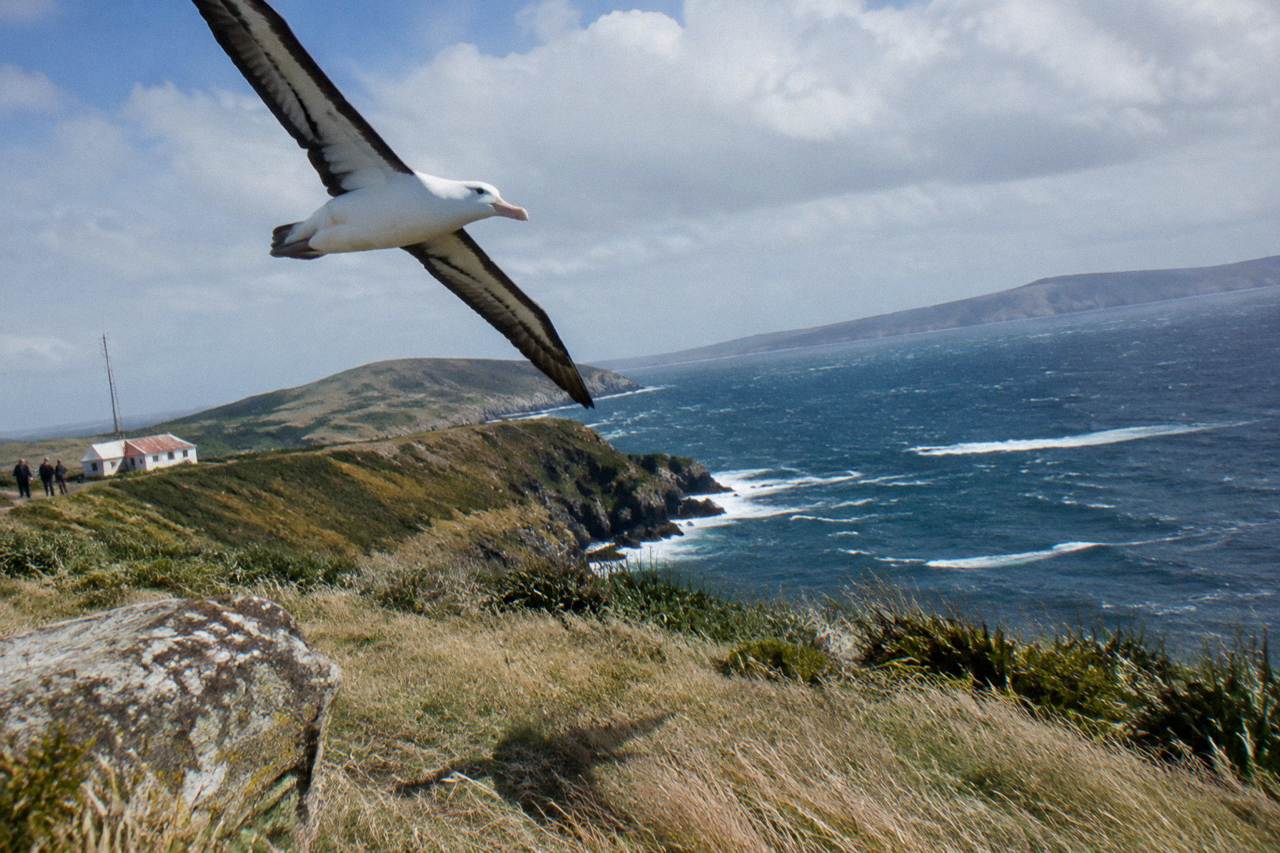
Yes. Taiaroa Head, on the tip of the Otago Peninsula at the mouth of Otago Harbour, holds the only mainland breeding colony of albatross in the Southern Hemisphere, according to the Department of Conservation. The birds are northern royal albatross, and the site is managed by Te Poari a Pukekura, a joint trust. Several Dunedin tours visit the colony through the Royal Albatross Centre, and harbour cruises pass below it.
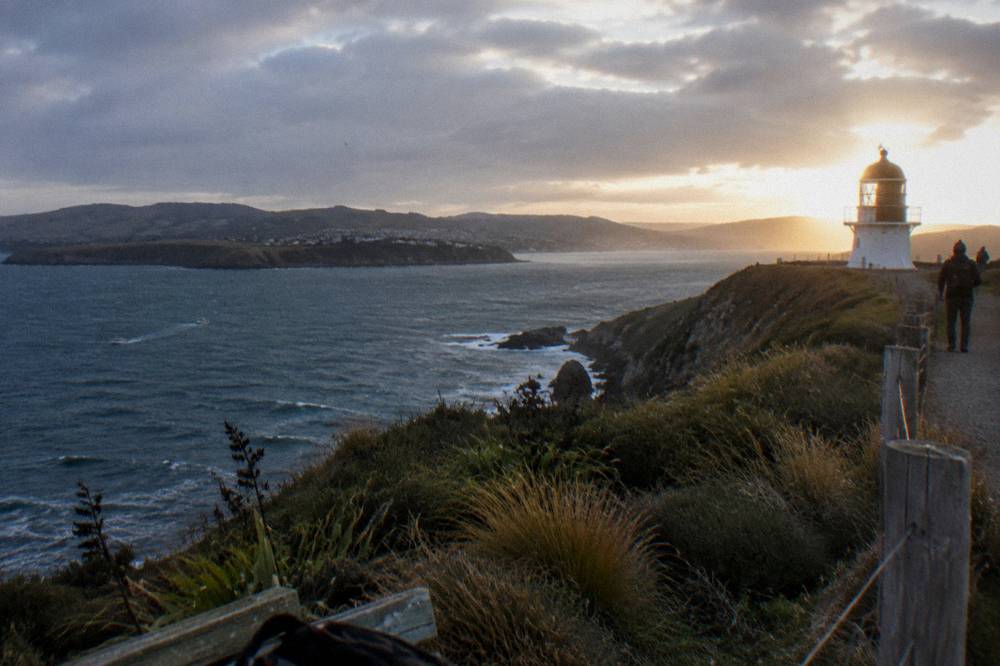
The colony sits about as close to a city as albatross breeding gets anywhere on Earth. The headland is at the far end of the Otago Peninsula, roughly an hour's drive from central Dunedin along Portobello Road and then Harington Point Road to the very end. DOC says around 10,000 seabirds live on the headland, and the northern royal albatross are the reason most visitors make the trip. The nature reserve itself cannot be entered: nesting and courtship are seen from the Richdale Observatory, and DOC is explicit that a visit to the observatory is required to see the nesting and courtship activity. That is why tours matter here, and why the question of which tours actually include the Centre's guided tour, rather than just driving or sailing past, is worth answering carefully.
The answer to the headline question splits into three practical parts. Some tours include the guided Royal Albatross Centre tour, which is the only way to see the nesting birds from the observatory. Some tours reach the headland by boat and pass the lighthouse, the fur seal colony and the cliffs without going inside the Centre. And a self-drive option lets you visit the Centre on your own. The pages on Dunedin Wildlife Tours separate those three routes, and this article does the same below. A good starting point for the wider picture is the guide to Dunedin albatross tour options.
For readers ready to compare the three most useful ways to build an albatross day out of Dunedin, the selection below covers a tour with the Centre guided tour included, a tour that pairs a peninsula drive with a wildlife cruise, and a small-group shore excursion.
Where Is The Colony And Why Can You Not Walk In?
The colony is at Taiaroa Head, at the northeastern tip of the Otago Peninsula, at the end of Harington Point Road. The headland is a protected nature reserve and entry is not permitted to the public: the nesting area can only be viewed from the Richdale Observatory on a guided tour run through the Royal Albatross Centre at 1259 Harington Point Road.
The reserve status exists for a straightforward reason. Northern royal albatross are ground nesters, and DOC classes them Threatened, Nationally Vulnerable in the Centre's own wording. A stray dog, a person walking through the nesting area, or a drone overhead can do real damage, so access is controlled and the headland carries a permanent drone restriction. Penalties for disturbing protected marine wildlife are severe: DOC lists up to two years' imprisonment or a fine up to NZD 250,000 for offences. Commercial operators working the headland and the surrounding waters need permits, which is part of why going with a licensed tour is the practical route rather than an optional extra.
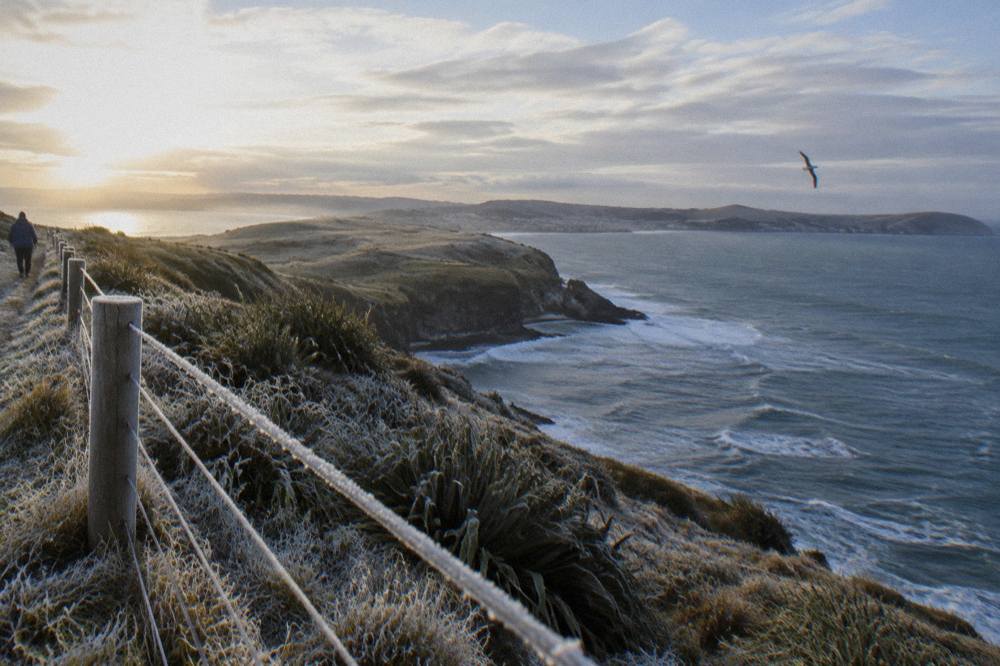
Getting there under your own steam is possible but demands attention to the route. The Centre's own directions say to follow Portobello Road to Portobello, then Harington Point Road to the very end, and they warn specifically against routing through State Highway 88 and Port Chalmers, which is on the other side of the harbour with no road to the tip. The Centre opens every day from 10:15am and closes only on Christmas Day. On windy days DOC notes that albatross can be seen gliding over the headland even from the visitor centre area, though nothing about wind or weather can be promised in advance. The deeper background on the venue is in the guide to the Royal Albatross Centre guided tour, and the drive itself is covered in getting from Dunedin to the Royal Albatross Centre by tour.
One nuance first-time visitors often miss: the headland serves two different wildlife experiences. The albatross colony is the headline, but Pilots Beach on the western side of Taiaroa Head is home to little penguins, and DOC says around 600 penguin pairs live on the headland with over 350 at Pilots Beach itself. Several evening tours built around those penguins depart from the same end of the peninsula. The two experiences share a car park at the end of a long drive, which is why a tour that strings them together, or a day that pairs a Centre visit with a cruise, is a common plan.
“Fantastic tour! Rachel was a great guide with really interesting commentary covering not only wildlife but also the industry and history of the area. We were lucky enough to see 3 albatross up close (rare apparently) plus seals, a sea lion and loads of other birds. The scenery was stunning too so even without the wildlife it stillwould have been amazing.”
Which Dunedin Tours Include The Albatross Centre Guided Tour?
Only three tours covered on this site state that the Royal Albatross Centre guided tour is included: City Highlights Plus Albatross (from $190.08, 6 hours), Albatross Centre Tour With Pickup (from $178.00, 6 hours), and the Iconic Full-Day Wildlife Tour (from $224.13, 7 hours). Other tours state the Centre tour is not included or make no claim about it.
That short list matters because the difference between a tour that includes the observatory visit and one that merely drives to the headland is the difference between seeing nesting albatross up close and seeing the outside of a building. DOC is direct about this: albatross tours are the only way to see the nesting birds. The table below sets out the tours that include the Centre guided tour, with the figures each booking page states.
| Tour | Duration | From (USD, per person) | Rating and reviews | Start point |
|---|---|---|---|---|
| City Highlights Plus Albatross | 6 hours | $190.08 | 4.8, 55 reviews | Check the booking page |
| Albatross Centre Tour With Pickup | 6 hours | $178.00 | 4.7, 39 reviews | Check the booking page |
| Iconic Full-Day Wildlife Tour | 7 hours | $224.13 | 4.8, 37 reviews | Port Chalmers Cruise Terminal |
The Albatross Centre Tour With Pickup states pick-up and drop-off from central Dunedin, organised at the time of booking, plus a 1-hour guided tour of the Centre and bottled water. The Iconic Full-Day Wildlife Tour collects from the cruise port, includes entry fees to both the Royal Albatross guided tour and The OPERA reserve, and is the only tour here whose booking terms state it is non-refundable, so check the cancellation terms before booking. It is also the highest per-person from-price on the whole site at $224.13.
The City Highlights Plus Albatross tour is the one this page features, and for a clear reason: it is the only six-hour option that pairs a Dunedin city highlights loop with the peninsula drive and the included Centre guided tour. Rated 4.8 across 55 reviews and from $190.08 per person, it suits a visitor who wants Larnach Castle views, city landmarks and the observatory in a single day without self-driving the peninsula. A full refund applies when cancelled at least 24 hours before the start.
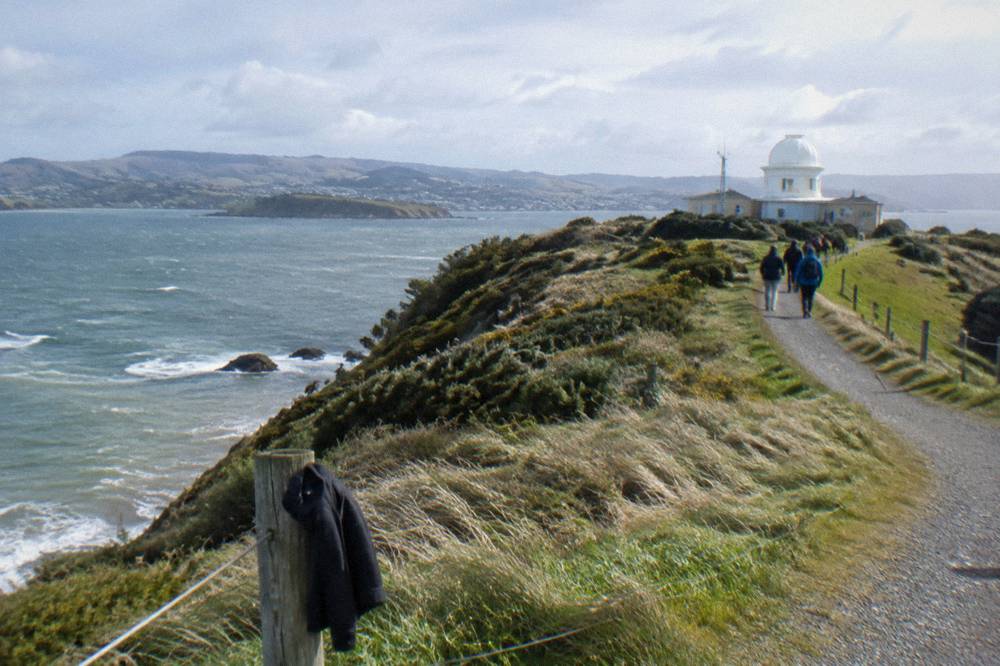
Is a guided day the right call for your dates?
The City Highlights Plus Albatross tour carries a full-refund policy when cancelled at least 24 hours before the start, so the date can be locked in early and adjusted if the itinerary shifts.
Three tours state plainly that the Centre guided tour is not included, and honesty about that saves disappointment. The Small Group, Larnach Garden Entry tour lists the Royal Albatross Centre guided tours under its exclusions, and the Private Tour, Up to 4 People lists the 1-hour albatross guided tour as an optional extra to be booked in advance. On the Albatross Centre Free Time, Penguins tour, the name says it: you get free time at the Centre rather than the guided observatory visit, plus the evening penguin experience at Pukekura. For every other tour, the itinerary text is the source of truth about what happens at the headland.
Which Cruises Pass Taiaroa Head Without A Centre Tour?
Several harbour cruises pass Taiaroa Head by sea, close under the lighthouse and the fur seal colony, without any Centre visit: the Monarch one-hour cruise (from $42.56), the Port To Port albatross cruises (from $107.81) and the Monarch full-day peninsula tour with its one-hour cruise leg (from $130.51). The operator describes blue penguins, dolphins and sea lions as sometimes seen.
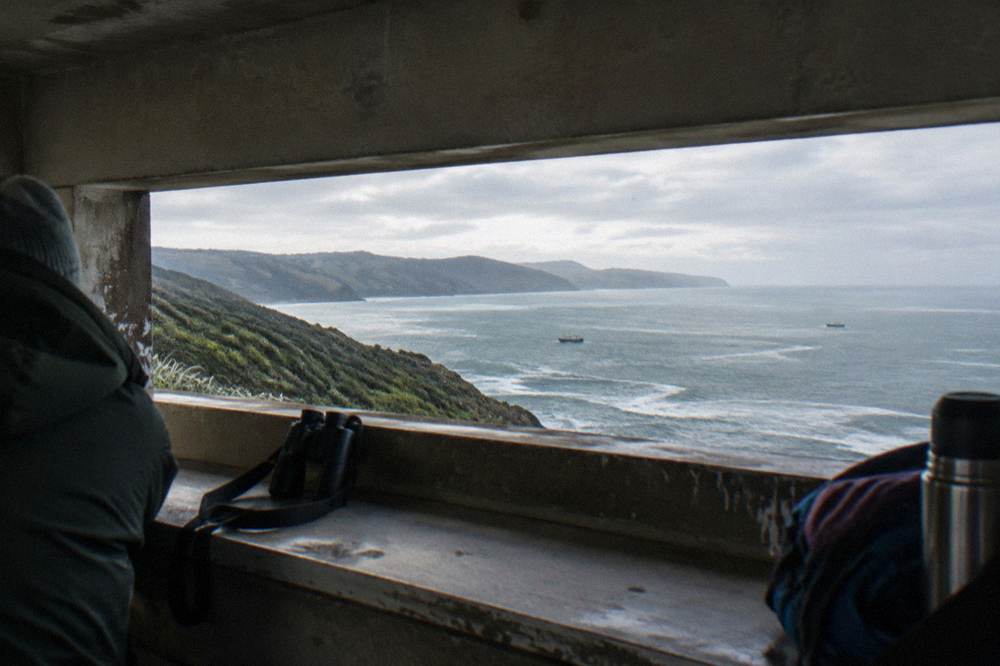
Seeing the colony from the water is a genuinely different experience from the observatory. From a boat you look up at the cliffs, the lighthouse and the fur seals hauled out on the rocks, and albatross can be seen gliding overhead or sitting on the water. What a cruise cannot do is show you a nest, an egg or a downy chick close up, because that view belongs to the observatory. Many visitors do both across two days, or choose one and accept the trade-off. The comparison is worked through in Dunedin wildlife cruise options.
| Cruise | Duration | From (USD, per person) | Rating and reviews | Departs from |
|---|---|---|---|---|
| Monarch One-Hour Cruise | 1 hour | $42.56 | 4.6, 257 reviews | Wellers Rock Wharf, Otakou |
| Monarch Cruise, Geology Commentary | 1 hour | $39.00 | 4.3, 78 reviews | Wellers Rock Wharf, Otakou |
| Port To Port Albatross Cruise | 1 hour 30 minutes | $107.81 | 4.8, 209 reviews | Port Chalmers |
| Coastal Adventures Harbour Cruise | 1 hour 30 minutes | $73.76 | 4.5, 26 reviews | Back Beach, Port Chalmers |
| Shore Excursion Cruise With Pickup | 2 hours 30 minutes | $79.44 | 4.5, 17 reviews | Port Chalmers Cruise Terminal |
The Monarch cruise leaves Wellers Rock Wharf at 813 Harington Point Road, Otakou, and the operator suggests allowing 45 to 60 minutes to drive from central Dunedin, with free parking at the wharf. Jackets and binoculars are provided, the cruise passes Aramoana and Taiaroa Head with its lighthouse and fur seal colony, and it goes a short way out to sea. One practical note for anyone with limited mobility: Monarch has a ramp for collapsible wheelchairs only.
The tour that best bridges the two ways of seeing the colony is the Wildlife Tour Plus Cruise Combo, a 6 hours 30 minutes day from $130.51 per person, rated 4.8 across 68 reviews, with a maximum of 20 guests. It combines a guided peninsula tour by air-conditioned vehicle with a one-hour Monarch wildlife cruise, includes a visit to The OPERA reserve, and provides binoculars and warm waterproof jackets on the water.
A note on booking pages that look similar. The one-hour Monarch cruise appears on two separate pages with separate review pools, 4.6 across 257 reviews on one and 4.3 across 78 reviews on the other, and slightly different from-prices of $42.56 and $39.00. These are the same trip seen through two pages, not two different cruises, and the review counts are never added together. The same applies to the Fantail tours that appear twice. Compare by name and open the page whose inclusions match what you need.
“Really great cruise, we saw lots of Albatrosses, other birds and seals. Really knowledgeable skipper and helpful staff. The skipper knew exactly where to go and took time to allow the birds to come to us. They were especially good at identifying and explaining the wildlife we saw. We left wishing it were longer!”
How Many Albatross Live At Taiaroa Head?
DOC says about 200 toroa, northern royal albatross, live at Taiaroa Head and about half make landfall each year. The Royal Albatross Centre says approximately 250 albatross and an estimated 70 breeding pairs, which it puts at 1 percent of the world population. DOC puts the world population at about 17,000 mature individuals, with 99 percent breeding on the Chatham Islands.
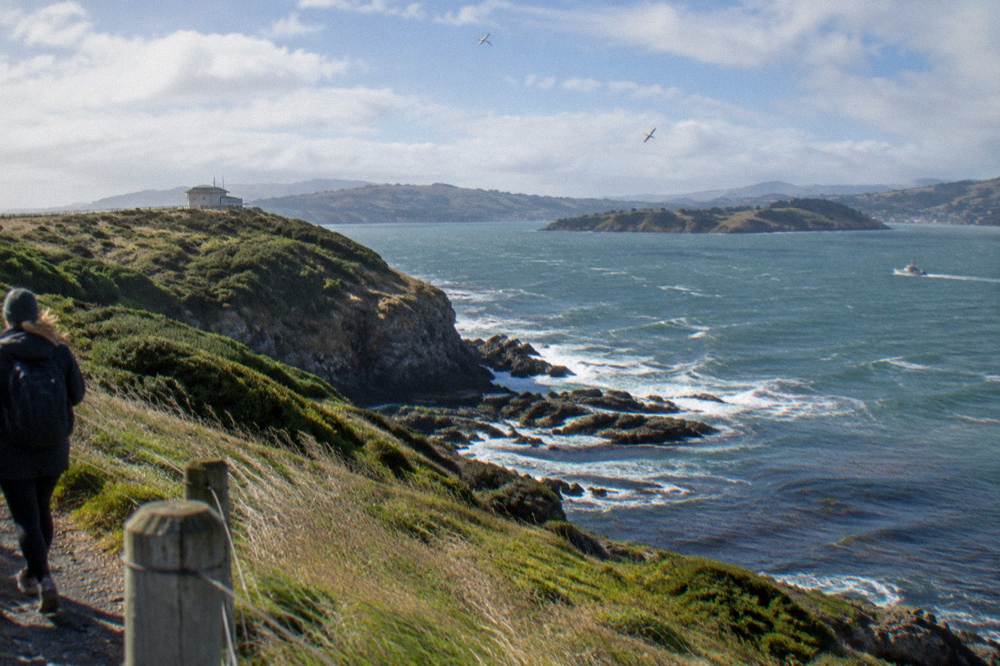
The honest way to print those numbers is side by side, because two careful organisations count slightly differently. About 200 to 250 northern royal albatross is the fair range, attributed to DOC and the Centre, and the breeding-pair estimate of about 70 belongs to the Centre. For context, the species is classed Threatened, Nationally Vulnerable, and the Otago colony is a small but significant piece of a bird that breeds overwhelmingly on distant island groups. The species background is summarised at Wikipedia's northern royal albatross page, and the official protection story is on DOC's Taiaroa Head page.
The colony's productivity record is public and worth reading before a visit. The Centre's season-by-season chick count runs from 26 chicks in 2013-14 up to 33 in 2022-23 and 2023-24, then 38 in 2024-25, and DOC records 2025-26 as ending with a record-equal 38 chicks. For the 2026-27 season, DOC reports the first egg was laid on 2 November 2026 by adult female "L", who returned to the colony on 13 October, with four more eggs following within days. Rangers check fertility 10 to 12 days after laying. None of this guarantees what any single visitor will see on any single day, but it explains why the colony has a live, moving story rather than a static exhibit.
The site's own guide to the best time for an albatross tour unpacks the cycle in detail, and there is a way to watch from home too: Royal Cam, a 24-hour live camera run with the Cornell Lab of Ornithology, now in its tenth year.
What Can You See At Different Stages Of The Breeding Cycle?
The Centre describes an 11-month cycle: birds return in September, nest-building follows in October, a single egg is laid in the first three weeks of November, incubation runs about 80 days, and chicks hatch late January to early February. A chick takes about eight months to fledge, first flying in September, and pairs raise a chick once every two years.
DOC's phrase for all this is that viewing albatross is "almost a year round event": there is no single best month, no peak season to name and no quiet period to avoid. What changes through the year is the stage you witness. A November visit may coincide with freshly laid eggs and incubating adults. A February visit may show downy chicks. A midwinter visit falls in the long chick-rearing stretch, with parents coming and going from the sea. A September visit can catch newly returned adults and, in some years, first flights of the previous season's chicks.
“Wonderful guide who took us to see some of the sights before dropping us at OPERA to see the Penguins. Good day.”
Incubation is shared between both parents, and DOC's own figure for the incubation stretch is roughly 79 days, a shade under the Centre's rounded 80. Because pairs raise a chick only once every two years, roughly half the breeding adults sit out any given season, which is part of why the headland's count of birds on land varies year to year. None of this is a viewing promise: weather, sea state and the birds' own schedules decide what any tour sees. Operators describe what a given stage typically looks like, and the observatory is the only place from which the nesting activity can be watched.
Visitors often pair the albatross cycle with the penguin calendar at the other end of the headland. The Blue Penguins Pukekura experience at 1245 Harington Point Road runs a 1.5-hour evening viewing from a purpose-built platform, and the operator says typically 50 to 300 penguins a night from September to February and 10 to 80 from March to August. Those figures belong to the operator and are descriptions, not promises. The site's Pukekura penguin tour guide covers that evening option in full.
How Much Do Albatross Tours From Dunedin Cost?
Per-person from-prices for tours touching the albatross story range from $39.00 for a one-hour Monarch cruise page to $224.13 for the Iconic Full-Day Wildlife Tour, the highest per-person price on this site. The featured City Highlights Plus Albatross tour is from $190.08. The median per-person from-price across all 26 tours here is $107.81, and the private tour is priced per group, never compared per person.
The cheapest way to engage the colony at any price is from the water: the Monarch Cruise, Geology Commentary page lists from $39.00 per person for the one-hour cruise, though it carries the smaller review pool of the two Monarch pages. The cheapest way inside the observatory with a tour is the Albatross Centre Tour With Pickup at from $178.00, which undercuts the featured six-hour option by about twelve dollars while dropping the city highlights leg. The trade is simple: pay less and go straight to the headland, or pay a little more and fold the city and peninsula scenery into the same day.
Cruise ship passengers have their own arithmetic to do. Port Chalmers sits 14 km from the city, 15 to 20 minutes by shuttle, and most ships dock there while smaller ones use the Dunedin city wharf. The Iconic Full-Day Wildlife Tour meets inside the Visitor Building on the ship's wharf and includes port pickup and drop-off, entry to the Royal Albatross guided tour and entry to The OPERA. The Small-Group Shore Excursion from Back to Nature Tours, from $90.22 per person and rated 4.6 across 291 reviews, picks up from designated meeting points and carries a worry-free shore excursion guarantee, but its page makes no claim about a Centre visit. The full port-side picture is in the Dunedin shore excursions wildlife guide.
Cancellation terms deserve one careful read before any booking. Twenty-five of the 26 tours covered here state a full refund when cancelled at least 24 hours before the start. The exception is the Iconic Full-Day Wildlife Tour, whose booking terms state it is non-refundable, so check the cancellation terms on that one with particular care. Departure times vary by date on every tour mentioned here, and the booking calendar shows the slots for the date you have in mind.
What Are The Viewing Rules At The Colony?
Visitors must keep at least 50 m from penguins, 20 m from seals and sea lions on land, and boats must stay at idle or no-wake speed within 300 m of marine mammals, with drones more than 150 m away. The Taiaroa Head headland has a permanent drone restriction, flash photography near penguins is prohibited, and sick or dead birds should be reported to the DOC hotline 0800 362 468.
Guided tours handle most of these rules automatically, which is a quiet argument for taking one. The trench and hide systems at The OPERA, the observatory at the Centre and the commentary on a licensed boat all exist to put visitors in the right place at a legal distance. Independent travellers need the rules in their own heads. DOC's guidance on sharing the coast, summarised at DOC's sharing our coasts page, asks people never to approach penguins, not to block their way in or out of the water, not to enter nesting areas, and not to linger on beaches where hoiho come ashore. The yellow-eyed penguin is Threatened, Nationally Endangered, and RNZ reported in October 2026 that fewer than 115 breeding pairs remain on mainland New Zealand and Rakiura.
The rules extend to how vessels behave near the colony. Within 300 m of marine mammals a boat must travel no faster than idle or no-wake, no more than three vessels or aircraft may be within 300 m at once, approaches must be parallel and slightly to the rear, and operators must never circle or cut through groups. Vessels stay at least 20 m from the water's edge at a seal colony. These are conditions on the commercial permits held by the cruise and tour operators here, so a passenger on a licensed trip is already compliant. Independent walkers at places like Sandfly Beach should also know that part of the Sandfly Bay Wildlife Refuge closes from 1 November to 28 February inclusive to protect wildlife, and the Allans Beach track asks dogs on a lead on the track and none on the beach.
None of this makes the colony fragile to visit, only fragile to visit badly. The tours covered on this site are built around exactly these distances, and the operators provide binoculars and jackets precisely so guests can watch comfortably from where the rules say they should be. For a broader look at the whole peninsula wildlife scene, the Otago Peninsula wildlife tour guide rounds up the land-based options, and The OPERA's own wildlife tour page describes the reserve's trench and hide system.
For a final side-by-side comparison of the three tours best suited to an albatross-focused day out of Dunedin, whether from a hotel or a cruise ship, the selection below pulls together the featured albatross day tour, the cruise-combo alternative and the small-group shore excursion.
Common Questions About Albatross Colony Tours In Dunedin
Is There An Albatross Colony In Dunedin That Tours Visit?
Yes. Taiaroa Head on the Otago Peninsula holds the only mainland breeding colony of albatross in the Southern Hemisphere. Tours visit it through the Royal Albatross Centre's guided observatory tour, and harbour cruises pass the headland by sea.
Can You See The Albatross Colony Without A Guided Tour?
The nesting and courtship activity can only be seen from the Richdale Observatory on a Centre guided tour, which DOC states plainly. Without a tour you can visit the headland area and, on windy days, albatross can sometimes be seen gliding overhead from near the visitor centre, but the nesting birds themselves need the observatory visit.
How Many Albatross Are At Taiaroa Head?
DOC says about 200 northern royal albatross live there, with about half making landfall each year, and the Royal Albatross Centre says approximately 250 with an estimated 70 breeding pairs. The fair printed range is about 200 to 250 birds, attributed to both organisations.
Which Tours Include The Royal Albatross Centre Guided Tour?
Three tours covered on this site state the Centre guided tour is included: City Highlights Plus Albatross from $190.08, Albatross Centre Tour With Pickup from $178.00 and the Iconic Full-Day Wildlife Tour from $224.13. Others either state it is not included or make no claim.
Do The Harbour Cruises Stop At The Colony?
No. The Monarch, Port To Port and Coastal Adventures cruises pass Taiaroa Head, the lighthouse and the fur seal colony by sea without landing. Vessels keep to idle speed within 300 m of marine mammals, so the view is from the water at a legal distance.
When Is The Best Month To See The Albatross?
There is no single best month. DOC describes viewing as almost a year round event because the breeding cycle runs about 11 months: eggs in November, chicks hatching late January to early February, and fledging around September. What you see depends on the stage of the cycle, not on a peak season.