Is The Royal Albatross Centre Free, Or Do You Pay For A Guided Tour?
The headland reserve at Taiaroa Head is not free to walk into: nesting albatross are seen only on a guided Royal Albatross Centre tour. Here is what costs what, and which Dunedin tours include the guided visit.
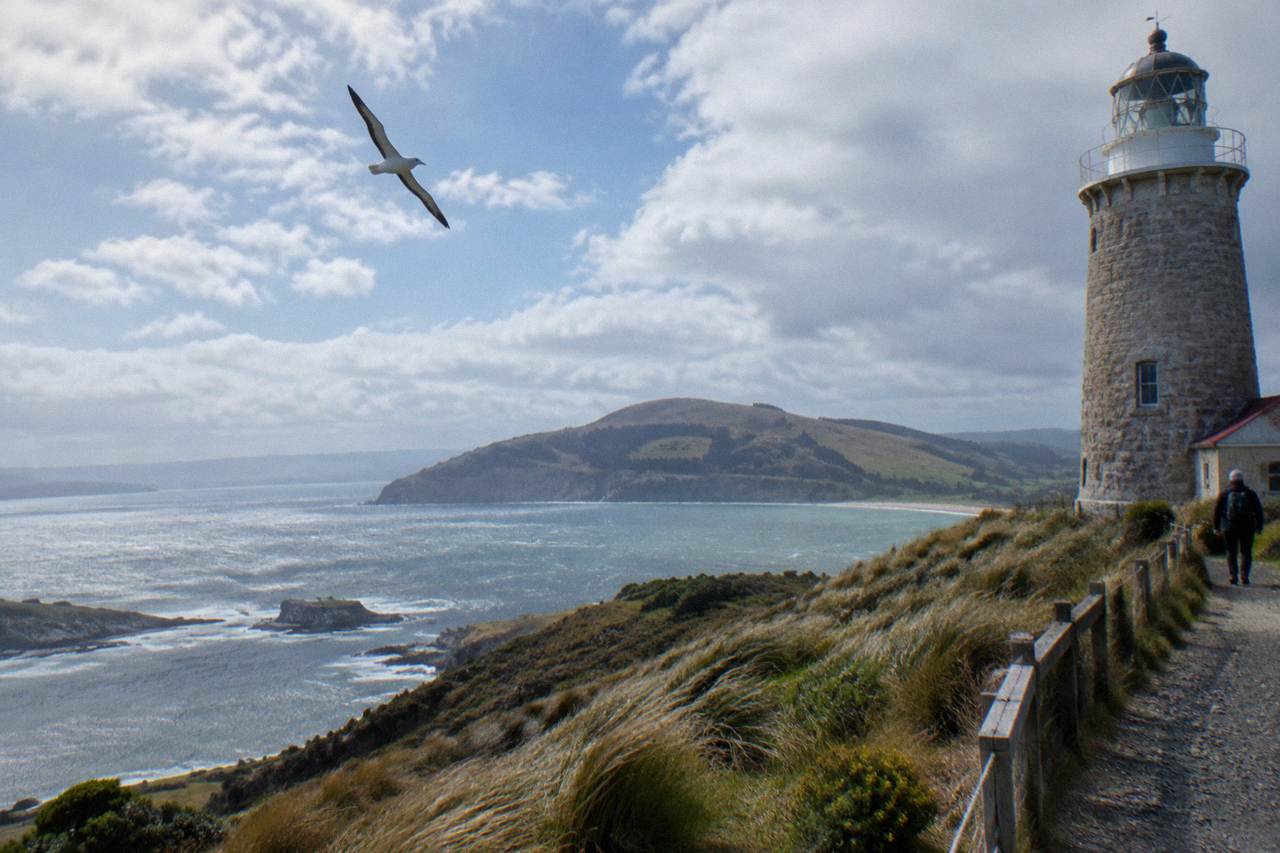
The northern royal albatross colony at Taiaroa Head is the only mainland breeding colony of albatross in the Southern Hemisphere, and it sits at the very tip of the Otago Peninsula, roughly an hour's scenic drive from central Dunedin by either Portobello Road or Highcliff Road. The question of whether it is free comes up constantly, and the honest answer surprises people: the nature reserve itself cannot be entered at all. DOC is explicit that the headland reserve is not open to walk in, and that seeing the nesting and courtship activity requires a visit to the observatory on a Centre tour. There is no gate price for the colony because there is no gate for the public, only guided access run by the Dunedin Wildlife Tours partner operators and the Centre itself.
You pay for a guided tour. The nature reserve at Taiaroa Head is closed to walk-in visitors, and the Royal Albatross Centre says its albatross tours are the only way to see the nesting birds. DOC states that a visit to the observatory is required to see the nesting and courtship activity. There are free ways to watch albatross from a distance, covered below, but none of them includes the colony itself.
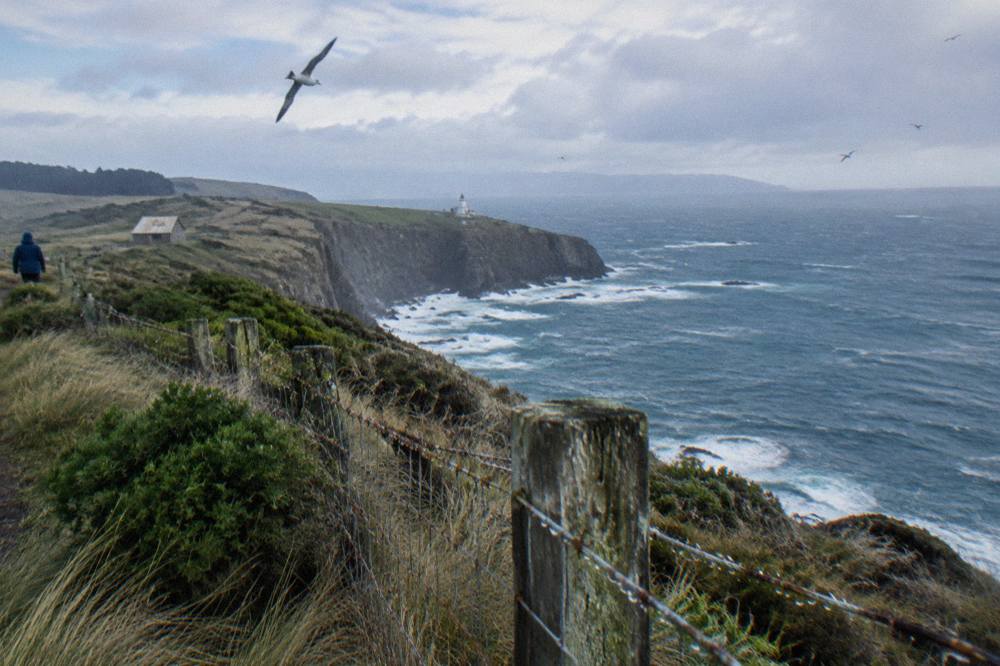
The split matters because visitors often picture a wildlife reserve with a walking track and a donation box. Taiaroa Head is not that. The headland is a managed nature reserve with a breeding colony of about 200 to 250 northern royal albatross according to DOC and the Centre, an estimated 70 breeding pairs, which is roughly 1% of a world population DOC puts at about 17,000 mature individuals. Nearly all the rest, 99%, breed on the Chatham Islands. Because the birds nest on the ground and are highly sensitive to disturbance, the reserve is closed and the public sees them from the Richdale Observatory, a glassed viewing room reached only with a Centre guide. The observatory opened in 1983, the visitor centre in 1989, and both are run by the Otago Peninsula Trust, founded 1967. If you're wondering which tours from town actually reach the headland, the guide to Dunedin tours that visit the albatross colony lays out the options.
“Our driver Ross shared so many interesting facts along the way. He shared the history of the Larnach family as we toured which brought the rooms to life. We saw black swans on the way to the cruise. The highlights were albatross and a dolphin swimming beside the boat.”
So the practical question is not "what is the entry fee" but "which guided option do I buy". There are three routes. Buy a ticket directly from the Centre at 1259 Harington Point Road and drive yourself. Buy a Dunedin or Otago Peninsula day tour that bundles the Centre guided tour with transport and other stops. Or skip the observatory entirely and watch from a boat, or from the visitor centre grounds on a windy day, or online. Each has a different price and a very different experience.
The three tours above are the ones covered here that either include the Royal Albatross Centre guided tour or pair naturally with a visit to the headland. The rest of this page walks through what each option costs, what it includes, and where the free viewing genuinely works.
What Does A Royal Albatross Centre Ticket Include?
A Centre ticket is a guided experience, not an entry pass. The operator's own options at Harington Point range from a 30-minute Fort Taiaroa visit to a 2-hour combo that adds a Monarch cruise, with albatross viewing from the glassed observatory. The Centre opens every day from 10:15am and closes only on Christmas Day, and times for each option are shown on the booking calendar.
The Centre sells several options, priced in New Zealand dollars on the operator's own site. These are the operator's prices, not the Dunedin tour prices printed elsewhere on this page, and they are shown in NZD exactly as the operator lists them.
| Centre option | Duration | Price (NZD, from) | What it covers |
|---|---|---|---|
| Albatross Classic | 1 hour | NZD 71.55 | Presentation and short film, then about 30 minutes viewing from the glassed observatory |
| Unique Taiaroa | 1.5 hours | NZD 82.07 | Classic plus Fort Taiaroa |
| Fort Taiaroa | 30 minutes | NZD 39.98 | Underground fort from the 1880s with the Armstrong Disappearing Gun |
| Double Albatross Combo | 2 hours | from NZD 131.52 | Self-drive, a Centre tour plus a Monarch cruise |
Two things to weigh before buying direct. First, the Centre is a self-drive destination at the end of Harington Point Road; the Centre itself warns not to route via State Highway 88 and Port Chalmers, which is the other side of the harbour with no road to the tip. Second, the observatory visit is weather and season dependent in what it shows: the colony's breeding cycle runs about 11 months, birds return in September, a single egg is laid in the first three weeks of November, chicks hatch late January to early February, and a chick takes about eight months to fledge. DOC describes albatross viewing as "almost a year round event", and there is no single best month; what you see simply changes with the stage of the cycle. More background on the colony and the observatory is on the Taiaroa Head albatross tour guide.
Readers comparing a direct ticket against a full Dunedin tour often land on the City Highlights Plus Albatross option, a 6-hour Fantail Tours day that includes the Royal Albatross Centre guided tour alongside city and peninsula sightseeing. It rates 4.8 across 55 reviews, from $190.08 per person, and a full refund applies when cancelled at least 24 hours before the start. For a closer look at how that rating compares across other operators, the breakdown of Royal Albatross Centre visitor reviews covers what to check before booking.
Which Dunedin Tours Include The Guided Albatross Tour?
Three tours covered on this site include the Royal Albatross Centre guided tour in the fare: the City Highlights Plus Albatross day (6 hours, from $190.08), the Albatross Centre Tour With Pickup (6 hours, from $178.00) and the Iconic full-day wildlife tour (7 hours, from $224.13). Several other tours pass Taiaroa Head by boat or stop nearby without including the Centre visit, so the itinerary wording is worth reading closely before booking.
The bundled options matter for a simple reason: they fold the observatory ticket, the long drive to Harington Point, and a guide into one price. The Iconic full-day tour from Iconic Tours NZ runs 7 hours from the Port Chalmers cruise terminal with port pickup and drop-off listed, includes entry to The OPERA as well as the albatross guided tour, rates 4.8 across 37 reviews, and is priced from $224.13 per person, the highest per-person from-price on this site. Its cancellation terms differ from the norm: it is stated non-refundable in its booking terms, so check the cancellation terms before booking.
On the other side of the ledger, be careful with tours that mention Taiaroa Head or the albatross colony without including the Centre. Several harbour cruises pass the headland and its fur seal colony from the water, which is a genuine way to see the cliffs and sometimes albatross overhead, but it is not the observatory. The Skyline small-group tour explicitly states the Royal Albatross Centre guided tour is not included, and the private up-to-4-people tour lists it as an optional extra that must be booked in advance. When the itinerary says free time at the Centre, that means the grounds and cafe, not the colony.
Still weighing a direct Centre ticket against a bundled day tour that includes the guided albatross visit?
Can You See Albatross At Taiaroa Head Without Paying?
Yes, within limits. DOC says that on windy days albatross can be seen gliding over the headland from around the visitor centre, and Royal Cam, a 24-hour live camera run with the Cornell Lab of Ornithology, streams the colony free online. Neither replaces the observatory view of nesting birds, and the reserve itself stays closed.
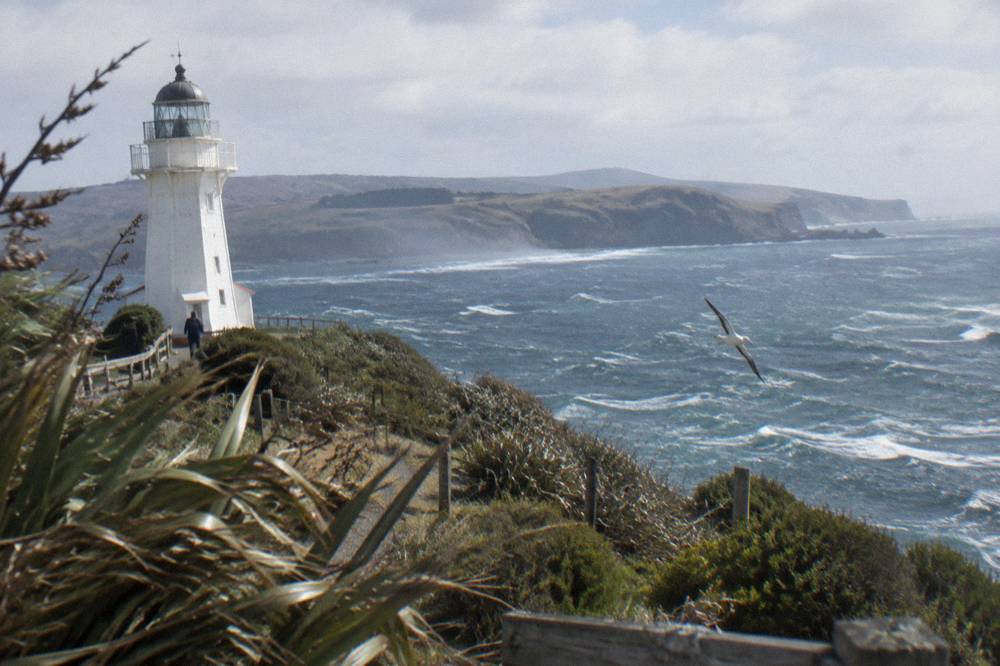
The free viewing is real but conditional. Northern royal albatross have roughly an 11-month presence at the colony, and when the wind is up, birds that are not sitting on eggs glide along the headland, sometimes at eye level above the car park. DOC's own Taiaroa Head page makes the point plainly, and it is a view many birders rate highly. On still days, or when most birds are incubating, the sky can be empty. The Royal Albatross Centre site adds the practical detail: the first egg of the 2026-27 season was laid on 2 November 2026 by adult female "L", who returned to the colony on 13 October, with more eggs following within days, and Royal Cam, now in its tenth year, follows the nest live.
The other free route is the sea. Any cruise that rounds Taiaroa Head passes the lighthouse and the fur seal breeding site on the rocks below, and albatross can be overhead at any time of year. It costs money to be on the boat, but nothing extra for the birds. The rules on the water are strict and worth knowing: vessels idle within 300 m of marine mammals, stay at least 20 m from the water's edge at a seal colony, and drones are banned more than 150 m away, with Taiaroa Head under a permanent drone restriction. Penalties run to two years' imprisonment or a fine up to NZD 250,000.
“Best small group tour! Rachel was very informative & had binoculars for all. Wildlife tours aren’t guaranteed to see wildlife but we were lucky- saw multiple albatross, fur seals, a small blue penguin, it was wonderful!”
None of this needs much beyond wind awareness and patience. The free headland viewing rewards a flexible plan: check the forecast, arrive when a breeze is blowing, and give it time, because what you see from around the visitor centre and the car park shifts as conditions change. The closed reserve boundary remains the line you do not cross.
The two free routes also fail differently, which is worth knowing before you commit. On a still day the headland can go quiet while Royal Cam keeps streaming the nest either way, and from the water the season matters less: any cruise rounding Taiaroa Head can put birds overhead, with the lighthouse and the fur seals thrown in. That makes the sea the steadier choice for a short stay, while the camera is the honest answer if it is the nest you want and a ticket is not in the plan.
How Much Does A Centre Visit Cost Compared With A Full Dunedin Tour?
The direct Centre ticket is the cheapest route to the observatory, but it leaves you driving yourself. The Dunedin tours that include the guided albatross visit run from $190.08 to $224.13 per person for 6 to 7 hours with transport, and mid-priced options bundle a harbour cruise with the headland drive instead of the observatory.
| Option | Duration | From price (USD) | Centre guided tour | Starts |
|---|---|---|---|---|
| Pukekura penguins standalone visit | 1.5 hours | $34.04 | not part of this trip | Pukekura, Harington Point |
| Monarch one-hour cruise | 1 hour | $42.56 | passes Taiaroa Head from the water | Wellers Rock Wharf, Otakou |
| Small-group shore excursion | 3 hours 30 minutes | $90.22 | not included in the itinerary | pickup from designated meeting points |
| City Highlights Plus Albatross | 6 hours | $190.08 | included | Check the booking page |
| Iconic full-day wildlife tour | 7 hours | $224.13 | included | Port Chalmers cruise terminal |
The pattern to notice is that the observatory is the expensive ingredient. A one-hour Monarch cruise from Wellers Rock Wharf, from $42.56, rounds Taiaroa Head and passes the lighthouse and fur seal colony, with blue penguins, dolphins and sea lions described by the operator as sometimes seen. It is a superb hour on the water and it touches the same headland, but the nesting albatross stay behind the reserve boundary. To stand in the Richdale Observatory you either buy a Centre ticket and drive, or buy one of the three tours that bundle it.
Cruise passengers have a third arithmetic. Most ships dock at Port Chalmers, 14 km and 15 to 20 minutes by shuttle from the city, and the shore excursion versions are built around that. The Small-Group Shore Excursion from Back to Nature Tours runs 3 hours 30 minutes, from $90.22 per person, rates 4.6 across 291 reviews, and lists pickup and drop-off from designated meeting points, but the albatross observatory is not in its itinerary. For passengers who want both colony and commentary, the full decision framework is in the Dunedin shore excursions wildlife guide.
What Can You Actually See On The Guided Tour?
The guided tour gives you the Richdale Observatory, a glassed room above the colony where nesting, incubating or brooding albatross are viewed at close range, plus the interpretation in the visitor centre. DOC notes that koau, the Otago shag, are also best seen from the observatory. Longer Centre options add Fort Taiaroa, an underground 1880s gun fort.
The observatory is the reason the tour exists. Because the birds raise a single chick once every two years and incubate for roughly 79 to 80 days, what is visible changes month by month: courtship in October, an egg from early November, a chick from late January, a growing juvenile through winter, first flight in September. In the 2024-25 season the Centre recorded 38 chicks fledged, and DOC says 2025-26 ended with a record-equal 38. None of this is visible from outside the reserve, which is the entire logic of paying for the guide.
The species is worth the ticket on its own terms. The northern royal albatross is classed by the Centre as Threatened, Nationally Vulnerable, and Taiaroa Head's roughly 70 breeding pairs represent the only mainland foothold of a bird whose population otherwise concentrates on the Chatham Islands. More on the bird itself is in the northern royal albatross reference and in the site's albatross tours guide for Dunedin.
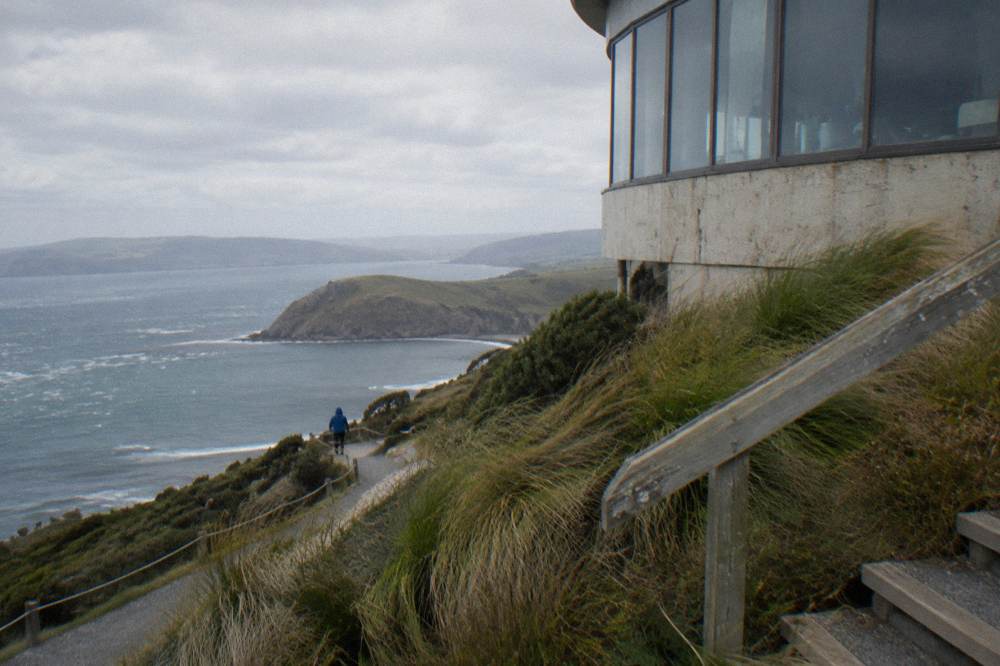
Photography is allowed from the observatory through the glass, and the guides are the ones who can tell you which nest is active. Around 10,000 seabirds live on the headland in total by DOC's count, so the hour is rarely quiet even when the albatross are sitting tight.
Is The Guided Albatross Tour Worth It For A Dunedin Visit?
For most visitors with one day and an interest in wildlife, yes, because the observatory is the only place the colony can be seen, and the two tours that bundle it also cover the peninsula drive. For travellers on a tight budget or a short port call, the free headland viewing, Royal Cam, and a harbour cruise that passes Taiaroa Head are honest alternatives that cost far less.
The value question comes down to how much the nesting view matters. If seeing a chick beside its parent at close range is the point of the trip, no cruise or roadside viewpoint substitutes for it, and the bundled tours remove the driving question entirely. The City Highlights Plus Albatross day folds the Centre guided tour into a 6-hour city and peninsula itinerary from $190.08 per person, 4.8 across 55 reviews, with a full refund available when cancelled at least 24 hours before the start. Families and independent drivers may prefer a direct Centre ticket and their own timetable, accepting the Harington Point Road drive and the need to book the observatory time.
“Really great cruise, we saw lots of Albatrosses, other birds and seals. Really knowledgeable skipper and helpful staff. The skipper knew exactly where to go and took time to allow the birds to come to us. They were especially good at identifying and explaining the wildlife we saw. We left wishing it were longer!”
For everyone else, the honest cheap version of the day exists: drive or bus toward the headland, watch the sky from the visitor centre grounds when the wind is up, and put the savings into a Monarch cruise from Wellers Rock, where jackets, binoculars and live commentary are provided and the boat idles past the seal colony below the lighthouse. The free options ask for patience and luck; the guided tour asks for money and gives structure. What no option can give is a promise, because these are wild birds on an 11-month cycle, and the operator's wording, the best chance, is the most anyone should claim.
Common Questions About The Royal Albatross Centre
Is The Royal Albatross Centre Free, Or Do You Pay For A Guided Tour?
You pay for a guided tour. The headland nature reserve is closed to walk-in visitors, and the Centre says its tours are the only way to see the nesting birds, viewed from the Richdale Observatory. Free alternatives include watching gliding albatross from the visitor centre on windy days and the Royal Cam live stream, but neither shows the colony up close.
Can You Walk Into The Taiaroa Head Reserve Yourself?
No. DOC states the nature reserve cannot be entered, and the nesting and courtship activity is seen only from the observatory on a Centre tour. The tracks around the headland, such as the Pilots Beach penguin viewing area, are separate from the colony.
Which Dunedin Tours Include The Albatross Centre Guided Tour?
Three tours covered on this site include it: the City Highlights Plus Albatross day, 6 hours from $190.08 per person, rated 4.8 across 55 reviews, the Albatross Centre Tour With Pickup, 6 hours from $178.00 per person, rated 4.7 across 39 reviews, and the Iconic full-day wildlife tour, 7 hours from $224.13 per person, rated 4.8 across 37 reviews and stated non-refundable, so check the cancellation terms.
What Is The Cheapest Way To See Albatross At Taiaroa Head?
The cheapest paid option among the tours here is a harbour cruise that rounds the headland, from $39.00 per person for a one-hour Monarch cruise, where albatross can be seen overhead. The genuinely free options are the Royal Cam live camera online and watching gliding birds from the visitor centre grounds on windy days, which DOC notes can be rewarding but is never promised.
Is There A Best Month To Visit The Colony?
No single month wins. DOC describes albatross viewing at Taiaroa Head as "almost a year round event" because the breeding cycle runs about 11 months from September returns to September fledging. Eggs are laid in the first three weeks of November and chicks hatch late January to early February, so what you see depends on the stage, not the season.
Do Harbour Cruises Visit The Albatross Colony Itself?
No. Cruises from Wellers Rock and Port Chalmers pass Taiaroa Head, its lighthouse and the fur seal breeding site from the water, and albatross can be seen gliding nearby, but the boats do not land and the reserve stays closed. Only a Centre guided tour reaches the observatory above the nests.