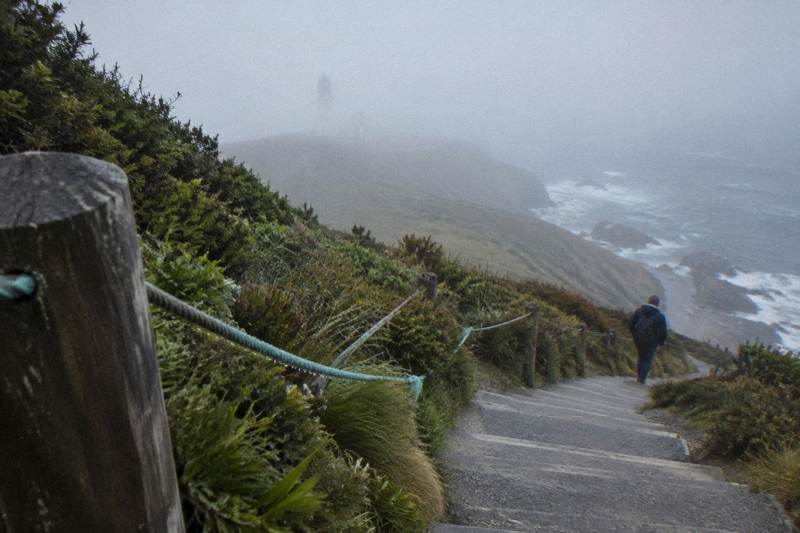
Taiaroa Head Albatross Tour: Guided Ways To See The Colony
Taiaroa Head at the tip of the Otago Peninsula holds the only mainland albatross breeding colony in the Southern Hemisphere, and a guided tour is the only way to see the nesting birds.
Short answer
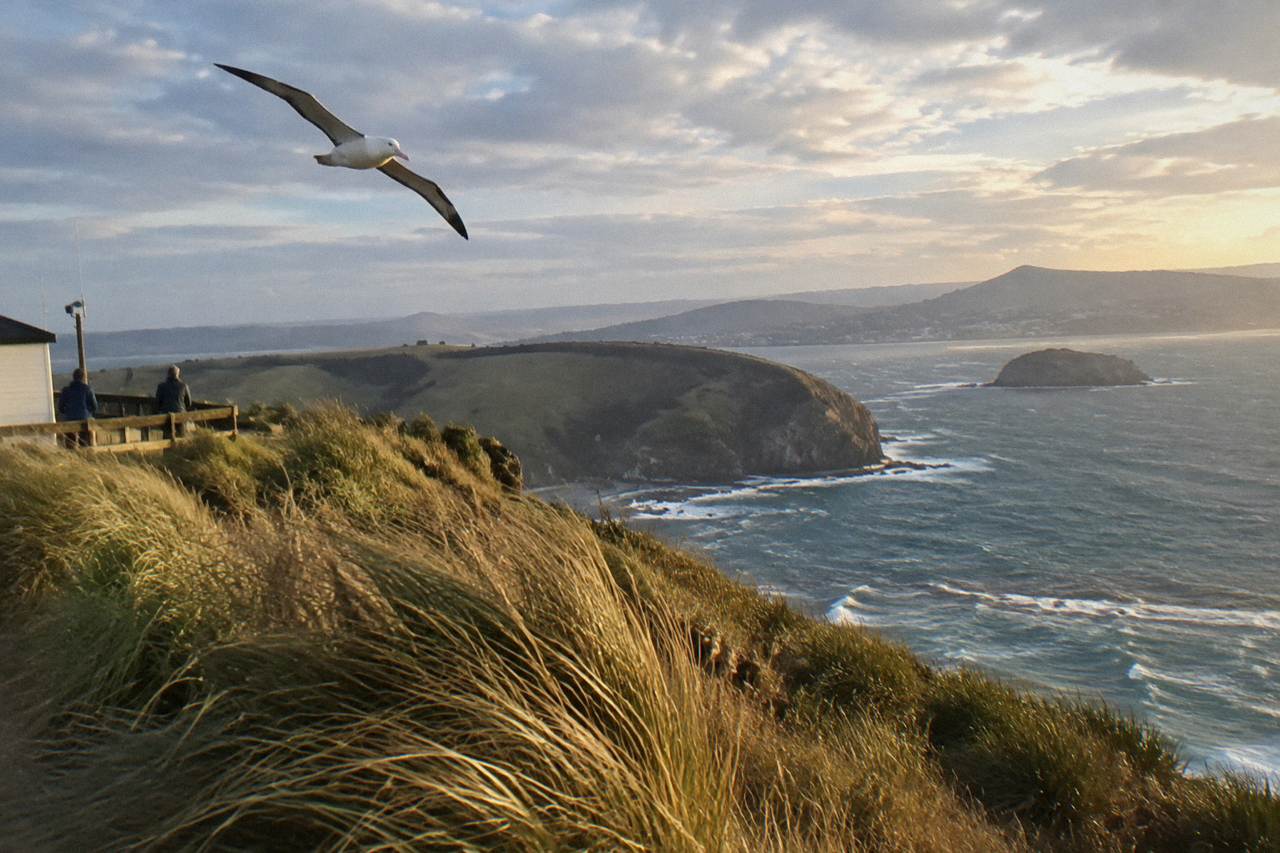
The only mainland breeding colony of albatross in the Southern Hemisphere sits at Taiaroa Head on the Otago Peninsula. Nesting birds are seen from the Richdale Observatory on a Royal Albatross Centre guided tour; tours from Dunedin that include it start from $178.00 per person. Harbour cruises from $39.00 pass the headland but cannot show the nests.
Taiaroa Head, at the very tip of the Otago Peninsula, is the only place in the Southern Hemisphere where albatross breed on the mainland. DOC says around 10,000 seabirds live on the headland, and about 200 to 250 northern royal albatross are associated with the colony, counting DOC's figure of about 200 toroa and the Royal Albatross Centre's estimate of approximately 250 birds. That concentration, an hour or so from central Dunedin by road, is why the headland anchors so many wildlife itineraries in the region. For travellers who want to keep wildlife watching going after dark, the guide to seeing blue penguins in Dunedin on a guided tour covers the evening viewings at Pukekura, nearby peninsula itineraries, and harbour cruises.
But "seeing the albatross" means two different things at Taiaroa Head, and the difference decides which tour to book. The nesting colony itself sits inside a nature reserve that cannot be entered: DOC is explicit that "a visit to the observatory is required to see the nesting and courtship activity", and the observatory is reached only on a Royal Albatross Centre guided tour. A harbour cruise, by contrast, passes the headland and its lighthouse and can show albatross gliding overhead, but it cannot show a nest, an egg or a chick. This guide lays out both routes, the tours from Dunedin that take each one, what they cost and what each can and cannot show. For the fullest picture of the region's options, Dunedin Wildlife Tours covers every category of trip around the city. Before booking, it helps to see how the observatory ticket prices stack up against the Dunedin day tours that bundle the guided visit in, and the full cost breakdown for Taiaroa Head albatross tours does exactly that.
What Is Taiaroa Head And Why Do Albatross Tours Go There?
Taiaroa Head is a wildlife reserve at the tip of the Otago Peninsula, about an hour's drive from central Dunedin, and it hosts the only mainland breeding colony of albatross in the Southern Hemisphere. It is jointly managed by Te Poari a Pukekura, a trust of Te Runanga o Otakou members, the Korako Karetai Trust, Dunedin City Council and DOC, so access is controlled and the nesting reserve itself is closed to visitors.
The colony exists because of the headland's geography: steep cliffs facing the Pacific, wind that suits long-winged seabirds, and a human presence that has, unusually, protected rather than displaced the birds. The Royal Albatross Centre, run by the Otago Peninsula Trust at 1259 Harington Point Road, opened in 1989, and the Richdale Observatory that overlooks the colony opened in 1983. Albatross tours are the only way to see the nesting birds, the Centre says plainly.
The birds themselves are the draw. The Centre estimates about 70 breeding pairs at the colony, roughly 1% of the world population, with 99% of the species breeding on the Chatham Islands. DOC puts the world population at about 17,000 mature individuals and classifies the northern royal albatross as Threatened, Nationally Vulnerable in the Centre's wording. A pair raises a single chick once every two years, which makes every breeding season at Taiaroa Head a slow, high-stakes story that locals follow closely. Since each stage of the breeding cycle offers something different from the viewing deck, the guide to choosing the best time to see albatross in Dunedin helps match a visit to whatever moment of the chick-raising story you hope to catch.
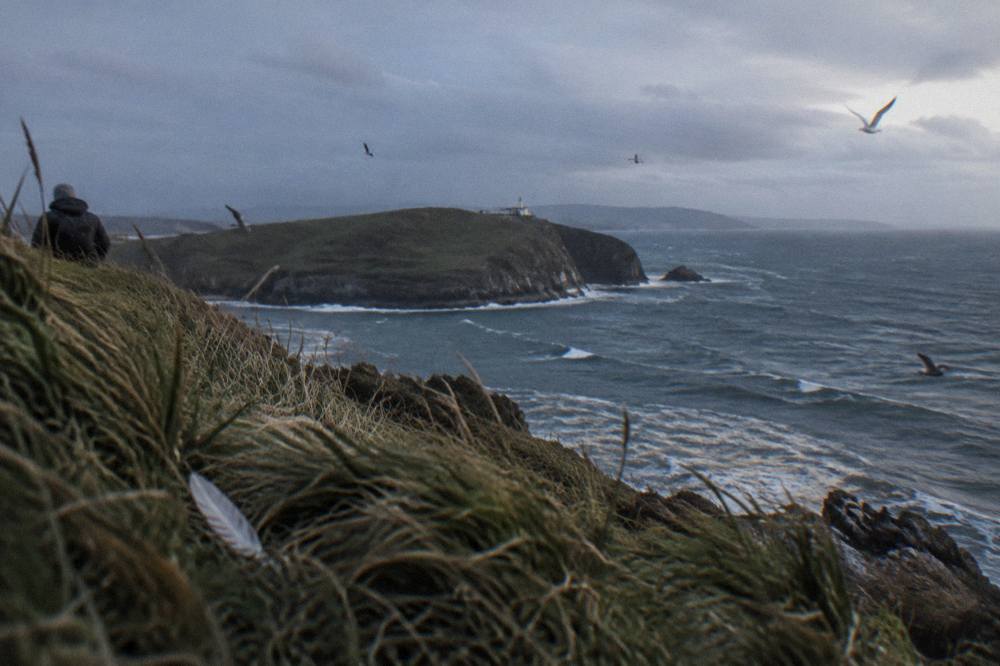
The headland carries other wildlife too. Taiaroa Head is a fur seal breeding site and a sea lion haul-out, DOC says, and koau, the Otago shag, are best seen from the observatory. Around 600 little penguin pairs live on the headland, with over 350 of them at Pilots Beach on the western side, where the Pukekura Trust runs night-time viewing. A reader deciding on an albatross tour is often, in practice, choosing a day that touches several of these species at once. For the wider picture of the region's trips, the Dunedin wildlife tour options compared guide maps every category side by side.
How Do You Actually See The Albatross Colony At Taiaroa Head?
The nesting albatross are visible only from the Richdale Observatory, on a guided tour run by the Royal Albatross Centre, because the nature reserve around the colony cannot be entered. From the visitor centre itself, DOC says albatross can on windy days be seen gliding over the headland, but seeing nesting and courtship activity requires the observatory visit, so a cruise or a roadside stop is never a substitute for the guided tour.
The mechanics matter for planning. The Centre is open every day from 10:15am and closed on Christmas Day only, and it sits at the end of Harington Point Road, reached via Portobello Road to Portobello and then Harington Point Road to the very end. The Centre warns drivers not to route via State Highway 88 and Port Chalmers: that road is on the other side of Otago Harbour and there is no road from it to the tip of the peninsula. Anyone self-driving should plan the harbour-side route.
For visitors who want the observatory experience without driving themselves, several tours from Dunedin include the Centre's guided tour in their fare. The tour pages below cover the three most useful angles: a city-and-peninsula tour with the Centre included, a cruise-and-bus combination, and a full-day option that pairs the colony with a penguin reserve.
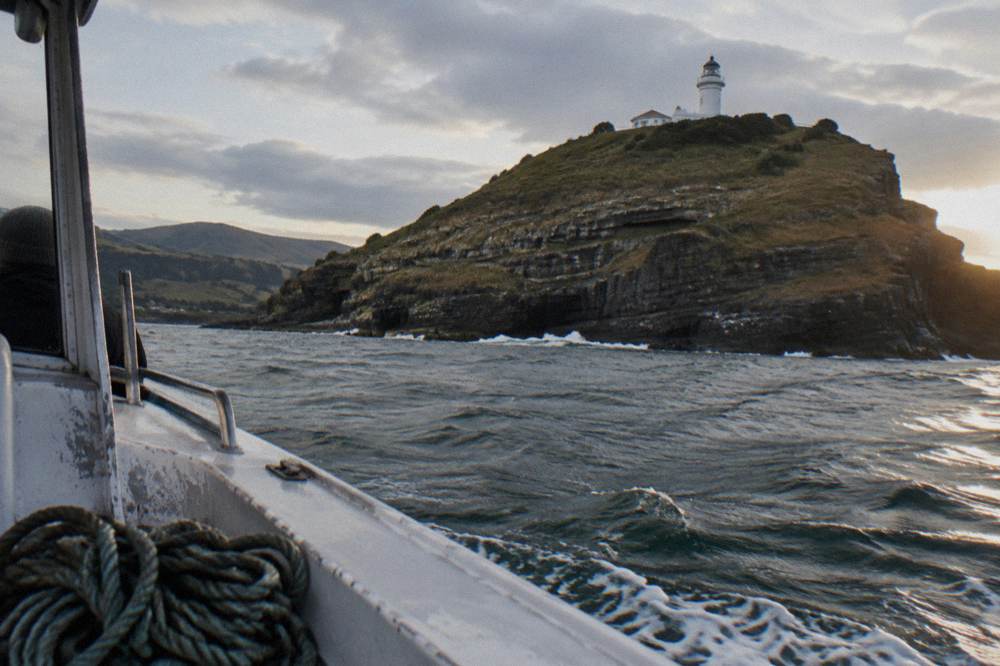
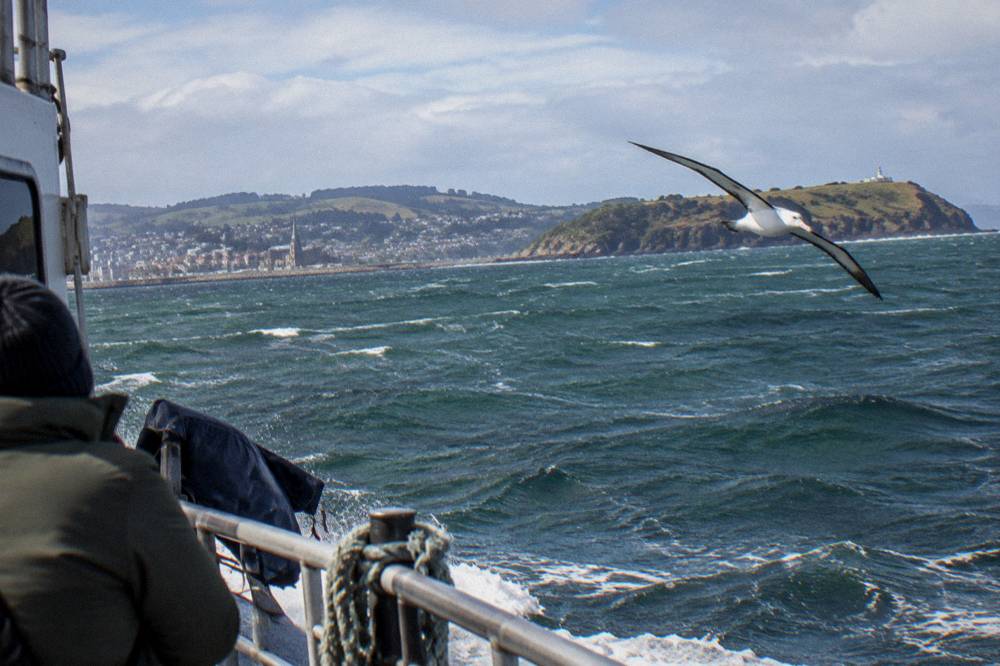
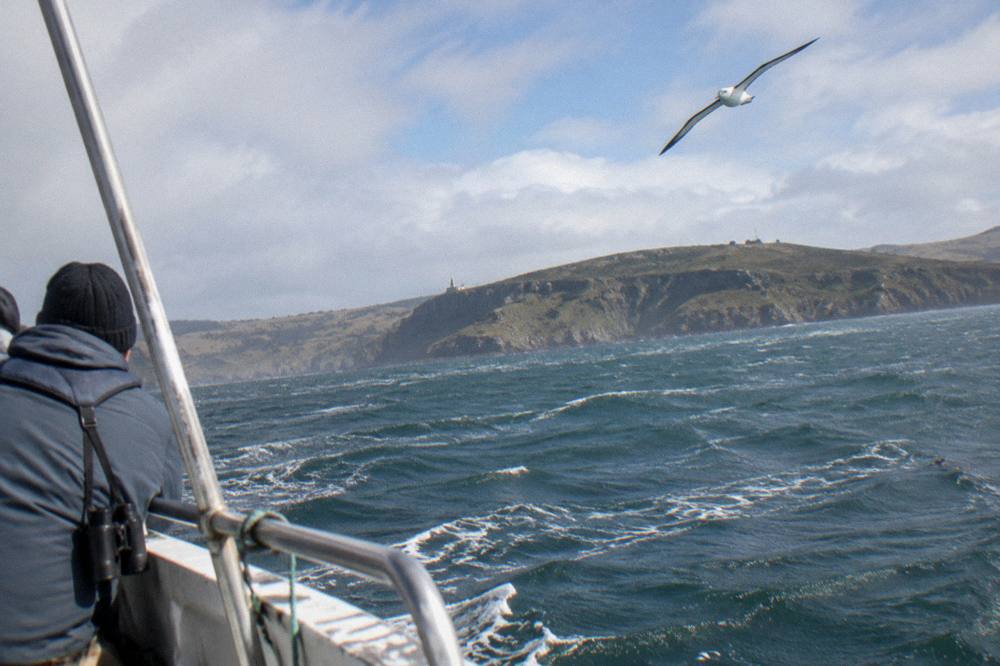
The alternative is the sea. A harbour cruise passes Aramoana and Taiaroa Head, taking in the lighthouse and the fur seal colony, and goes a short way out to sea, Monarch Wildlife Cruises says. From the water, albatross can be seen flying, and blue penguins, dolphins and sea lions are, in the operator's own word, "sometimes" seen. It is a different experience from the observatory, and for many travellers a better one: motion, wind and birds at eye level rather than a glassed viewing room above a nest. Neither is the wrong choice, but they are not interchangeable, and the sections below set out exactly what each can show.
For the specific question of what the Centre's own tours cost and how they are booked, the Royal Albatross Centre tickets and tours guide covers that venue in detail.
Which Dunedin Tours Include The Royal Albatross Centre Guided Tour?
Only a small number of the tours bookable here include the Royal Albatross Centre guided tour: the Albatross Centre Tour With Pickup, the City Highlights Plus Albatross tour and the Iconic Full-Day Wildlife Tour. Several other peninsula tours state that the Centre tour is not included, and for the rest the itinerary simply does not mention it, so read the inclusions before assuming.
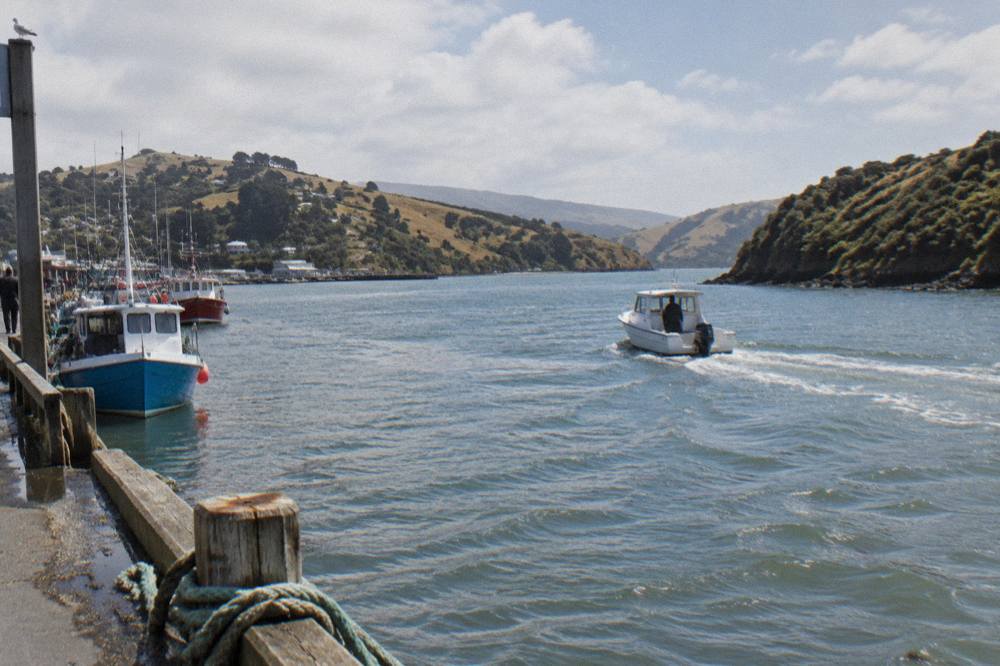
Counting the inclusions matters because the difference is a real line item. The City Highlights Plus Albatross tour, a 6-hour Fantail Tours trip rated 4.8 across 55 reviews from $190.08 per person, includes the Centre guided tour alongside city sightseeing. The Albatross Centre Tour With Pickup, rated 4.7 across 39 reviews from $178.00 per person, is built around a 1-hour guided tour of the Centre with central Dunedin pickup and drop-off organised at the time of booking. The Iconic Full-Day Wildlife Tour from $224.13 per person includes entry to the Centre guided tour and entry to The OPERA penguin reserve, though its booking terms state it is non-refundable, so check the cancellation terms before booking. On the other side of the ledger, the Skyline Small Group tour and the private NZ South Island Tours day both state the Centre tour is not included, and the private tour notes the albatross tour can be added as an optional extra booked in advance.
The table below separates the four ways to reach the observatory experience from Dunedin or Port Chalmers.
| Tour | Duration | From (USD) | Rating and reviews | Centre guided tour |
|---|---|---|---|---|
| City Highlights Plus Albatross | 6 hours | $190.08 per person | 4.8, 55 reviews | included |
| Albatross Centre Tour With Pickup | 6 hours | $178.00 per person | 4.7, 39 reviews | included |
| Iconic Full-Day Wildlife Tour | 7 hours | $224.13 per person | 4.8, 37 reviews | included |
| Small Group, Larnach Garden Entry | 7 hours | $139.02 per person | 14 reviews, too few for a star claim | stated not included |
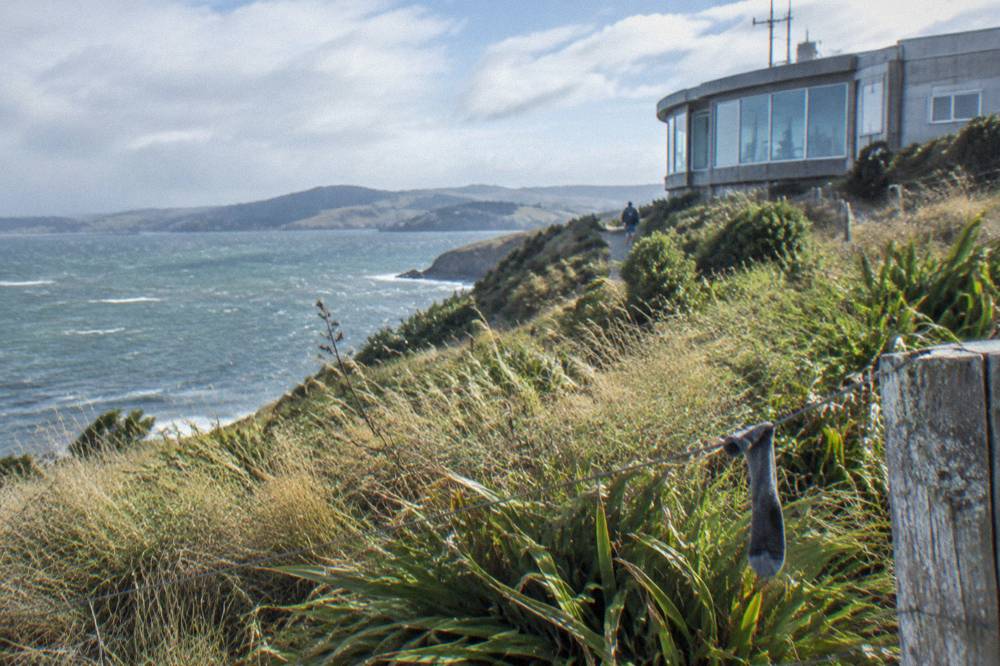
One caution for readers booking the Fantail City, Peninsula and Albatross tour: it appears on two booking pages with separate review pools, so compare them by name before choosing which to open, and do not add their review counts together. The same twin-page situation applies to a handful of other trips in the region, and it never means two different tours.
The Albatross Centre Tour With Pickup is worth a closer look for anyone based in the city without a car: pickup and drop-off from central Dunedin is included if organised at the time of booking, bottled water is provided, and the day runs 6 hours with a guide throughout.
Which Harbour Cruises Pass Taiaroa Head?
Several harbour cruises pass Taiaroa Head and its fur seal colony: the Monarch one-hour cruise from Wellers Rock Wharf from $42.56 per person, its twin booking page from $39.00, the Port To Port albatross cruises from Port Chalmers from $107.81, and the Coastal Adventures cruise from Back Beach from $73.76. None of them enters the reserve or shows the nesting colony, but all can show albatross in flight over the headland.
The Monarch one-hour cruise is the established option, rated 4.6 across 257 reviews on one booking page, with a second page carrying its own separate reviews. It departs Wellers Rock Wharf at Otakou, 813 Harington Point Road, with free parking at the wharf; allow 45 to 60 minutes to drive from central Dunedin, the operator says. Warm jackets and binoculars are provided, along with live commentary from the crew and onboard Wi-Fi. Transport to the wharf is not included: the operator points drivers and cruise passengers to its other options if they have no car.
From Port Chalmers, on the harbour's northern side, Port To Port Cruises runs two small-group trips, both capped at 14 passengers and both from $107.81 per person: a 90-minute cruise rated 4.8 across 209 reviews and a 2-hour cruise rated 4.8 across 140 reviews. Both depart a 5 to 10 minute flat walk from the cruise terminal building, which makes them a natural fit for ship days. Port Chalmers is 14 km from the city, 15 to 20 minutes by shuttle. Binoculars and jackets are provided, and the longer boat has a restroom on board. A third, cheaper option is the Coastal Adventures harbour cruise from Back Beach at Port Chalmers, from $73.76 per person, rated 4.5 across 26 reviews with a group cap of 18.
| Cruise | Departs from | Duration | From (USD) | Rating and reviews | Group max |
|---|---|---|---|---|---|
| Monarch One-Hour Cruise | Wellers Rock Wharf, Otakou | 1 hour | $42.56 per person | 4.6, 257 reviews | 45 |
| Port To Port Albatross Cruise | Port Chalmers, near the cruise terminal | 1 hour 30 minutes | $107.81 per person | 4.8, 209 reviews | 14 |
| Albatross Cruise, 2 Hours | Port Chalmers, near the cruise terminal | 2 hours | $107.81 per person | 4.8, 140 reviews | 14 |
| Coastal Adventures Harbour Cruise | Back Beach, Port Chalmers | 1 hour 30 minutes | $73.76 per person | 4.5, 26 reviews | 18 |
For a deeper comparison of the boat side of the region, the Dunedin wildlife cruise guide works through every harbour option, including the shore-excursion cruises with terminal pickup. The Monarch one-hour cruise also has its own twin booking pages with separate review pools; compare them by name and price, not by adding stars.
Cruise Or Observatory: What Can Each Taiaroa Head Option Show?
An observatory tour can show nesting, courtship, eggs and chicks through glass, because it is the only permitted view into the reserve; a cruise can show albatross flying at eye level, seals on the rocks and the headland from the sea, but it cannot show a nest. DOC's rule is blunt: the reserve cannot be entered, and the observatory visit is required to see nesting and courtship activity, so no boat substitutes for it.
The distinction sounds abstract until you picture the two scenes. From the Richdale Observatory, a glassed room reached on a Centre tour, the view is of birds on the ground: a bird incubating, a chick waiting for a feed, the slow domestic business of a colony where each pair raises one chick every two years. From a boat below the headland, the view is of birds built for flight: glides past the wheelhouse, more of them on windy days, sometimes far fewer. Neither view is promised. Wildlife is wild, weather changes what is visible, and the honest operators here say so in writing: the Larnach Castle and Cruise tour, for instance, states plainly on its booking page that wildlife viewing is not guaranteed.
A practical middle path exists for readers who want both without two separate bookings. The Wildlife Tour Plus Cruise Combo from Monarch, from $130.51 per person, pairs a guided peninsula tour by vehicle, including a visit to The OPERA, with the one-hour Monarch cruise, in 6 hours 30 minutes. The Double Albatross Combo the Centre itself sells pairs a Centre tour with a Monarch cruise for self-drivers. And the Iconic full-day tour stacks the Centre tour and The OPERA in one 7-hour day. The albatross and penguin tour guide on this site works through those combined itineraries in more detail.
| Option | Nesting colony view | Albatross in flight | Seals at the headland | Boat leg |
|---|---|---|---|---|
| Royal Albatross Centre guided tour | from the observatory | can be seen from the visitor centre on windy days, DOC says | not part of the tour | no |
| Monarch one-hour cruise | no | may be seen over the headland | passes the fur seal colony | yes |
| Port To Port albatross cruises | no | may be seen over the headland | may be seen on the rocks | yes |
| Wildlife Tour Plus Cruise Combo | no, the itinerary does not include the Centre tour | may be seen on the cruise leg | may be seen on the cruise leg | yes |
Read the "no" entries in that table carefully: they describe what a cruise cannot do, not a defect. Plenty of travellers prefer the boat, and on a windy day the flight show over the headland can be the stronger memory. The choice is about what you want to see, not about quality.
When Is The Best Time Of Year For Albatross At Taiaroa Head?
There is no single best month, because the colony runs on an 11-month breeding cycle in which something is always happening: birds return in September, eggs are laid in the first three weeks of November, chicks hatch late January to early February, and first flights happen in September. DOC calls viewing "almost a year round event" for exactly this reason, and what changes through the year is the stage you witness, not whether birds are there.
The cycle, in the Centre's own description: pairs return to the headland in September, nest-build through October, and lay a single egg in the first three weeks of November. Incubation runs about 80 days, DOC says roughly 79, with chicks hatching late January to early February. A chick then takes about eight months to fledge, first flying in September, which carries the season straight into the next one. Because pairs breed once every two years, the colony in any given month holds birds at different stages.
The fledging record tells a quietly encouraging conservation story. The Centre's counts run from 13 chicks in 2017-18 to 38 in 2024-25, and DOC reports the 2025-26 season ended with a record-equal 38. The current season is already under way: DOC recorded the first egg laid on 2 November 2026 by adult female "L", who returned to the colony on 13 October, with more eggs following within days, and rangers check fertility 10 to 12 days after laying. Anyone who wants to watch from home can follow Royal Cam, the 24-hour live camera run with the Cornell Lab of Ornithology, now in its tenth year.
For planning purposes, the honest answer to "when should I go" is to pick the stage that interests you: courtship in spring, eggs and incubation over summer, growing chicks through autumn and winter, fledging toward the following spring. Weather is the other variable, and Otago's is changeable year round; check the forecast for your date rather than the season. The best time for an albatross tour guide unpacks the cycle month by month.
How Close Do Tours Get To Seals And Sea Lions At Taiaroa Head?
On land the rule is at least 20 m from seals and sea lions. On the water, vessels must stay at idle or no-wake speed within 300 m of marine mammals, with no more than three vessels inside 300 m, and at least 20 m from the water's edge at a seal colony. No lawful tour gets closer, and no operator here claims to.
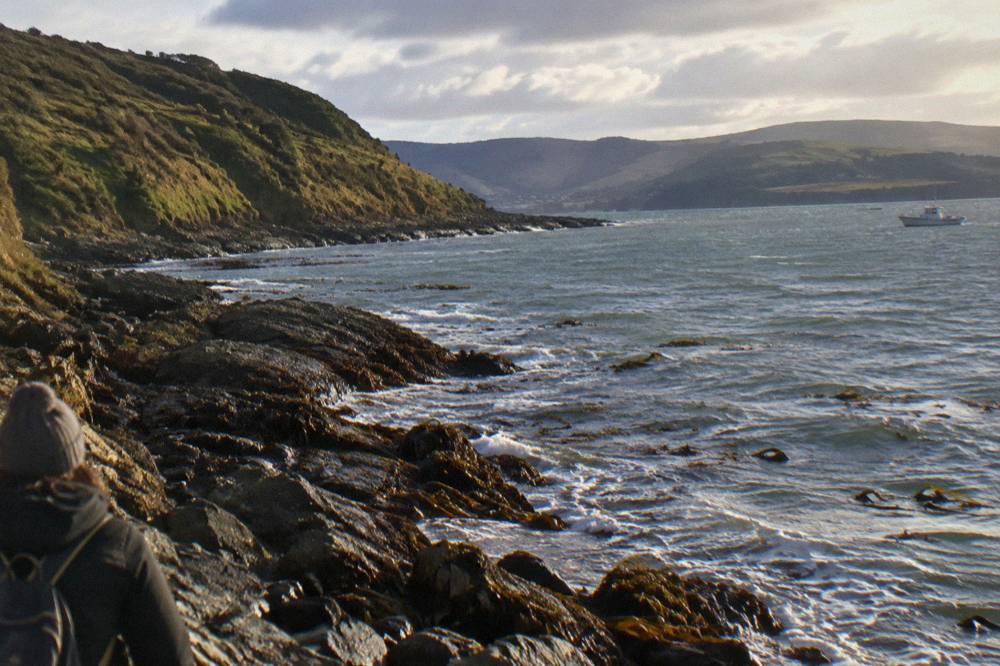
Those distance rules come from DOC's marine mammal protections, and commercial operators need permits to run wildlife trips at all. Taiaroa Head is a fur seal breeding site and a sea lion haul-out, DOC says, and Pilots Beach is often the best place to see them hauled out on the sand. The Monarch cruise passes the headland's fur seal colony from the water, inside those vessel rules; the observatory tour views the headland from above, not the colony at beach level. DOC sets real penalties for disturbing protected marine mammals: up to two years' imprisonment or a fine up to NZD 250,000.
A few everyday rules matter for self-drivers who add free stops around a tour day. Never come between a fur seal and the sea, never touch the animals, DOC warns, as they can be aggressive and carry diseases, and keep dogs on a leash and well away. Drones are more than 150 m away at all times, and Taiaroa Head carries a permanent drone restriction of its own. Anyone finding a sick or dead seabird should call the DOC hotline, 0800 DOC HOT (0800 362 468). Readers whose interest in these species runs beyond the headland will find the sea lion and fur seal tours covered elsewhere on this site.
What Does A Taiaroa Head Albatross Tour Cost From Dunedin?
Per-person prices for tours that include the Centre's guided albatross tour start at $178.00 and reach $224.13, while cruises that pass the headland run from $39.00 to $107.81 per person; the cheapest way to reach the headland area at all is a one-hour cruise, and the cheapest way into the observatory is a tour with the Centre visit included. All figures are "from" prices in USD, per person, as shown on each booking page.
The full spread, using every relevant tour price, shows the shape of the market. Note that the private NZ South Island Tours day is priced per group, up to 4 people, at from $510.67, and is never comparable with per-person fares; it states the albatross guided tour is an optional extra booked in advance. Among the cruises, the Monarch twin pages differ slightly in from-price, $42.56 and $39.00, for the same one-hour trip.
| Tour | What it does at Taiaroa Head | Duration | From (USD) | Free cancellation 24 hours |
|---|---|---|---|---|
| Albatross Centre Tour With Pickup | 1-hour Centre guided tour included | 6 hours | $178.00 per person | full refund stated |
| City Highlights Plus Albatross | Centre guided tour plus city sights | 6 hours | $190.08 per person | full refund stated |
| Iconic Full-Day Wildlife Tour | Centre tour plus The OPERA entry | 7 hours | $224.13 per person | stated non-refundable, check terms |
| Monarch One-Hour Cruise | passes the headland and seal colony | 1 hour | $42.56 per person | full refund stated |
| Port To Port Albatross Cruise | passes the headland from Port Chalmers | 1 hour 30 minutes | $107.81 per person | full refund stated |
Value, as always, depends on what the fare carries. The higher-priced tours bundle transport, a guide and entries; the Monarch combo at $130.51 bundles a vehicle tour, The OPERA visit and the cruise; the bare cruises carry binoculars, jackets and commentary but no transport to the wharf. Every tour on this page offers a full refund if you cancel at least 24 hours before the start, except the Iconic full-day tour, which is non-refundable, so check the booking page for its cancellation terms. For the widest price picture across all 26 tours, the Dunedin wildlife tour prices guide lists every category.
What Should You Know Before Booking A Taiaroa Head Albatross Tour?
Four practical points decide most bookings: where the tour starts, since start points range from The Octagon to Port Chalmers and Wellers Rock; whether the Centre tour is included, which only some itineraries state; whether you need transport, since several cruises exclude it entirely; and the cancellation window, which is 24 hours on nearly every tour here but not on the Iconic full-day tour. Checking those four against your own day avoids nearly every common mismatch.
Start points are the most frequent surprise. Tours from the city typically meet at 50 The Octagon, the Dunedin i-SITE, as the Clearwater tours do. Cruise passengers meet at Port Chalmers, 14 km from the city and 15 to 20 minutes by shuttle: the Port To Port boats, the Iconic full-day tour and the shore-excursion versions of Monarch all work from there. Self-drivers heading to the Monarch wharf or the Centre itself follow Portobello Road to Portobello and then Harington Point Road to the end, and the Centre repeats its warning not to route via Port Chalmers, where no road reaches the tip. Dunedin's cruise ship season runs 21 October 2026 to 16 April 2027, with most ships at Port Chalmers and smaller ones at the city wharf, so shore-side plans should start from wherever the ship berths.
Departure times vary by date, and the booking calendar for each tour shows the slots for your specific day; no fixed timetable applies year round. Group sizes also differ widely, from a cap of 10 on several small-group tours to 45 on the Monarch one-hour cruise, and that difference shapes the day as much as the itinerary does. Binoculars are stated as provided on some tours and not others: count the inclusion rows rather than assuming, since binoculars appear as provided on fewer than half the tours in the region. Monarch notes a ramp for collapsible wheelchairs only, worth confirming directly for anyone with mobility equipment.
Departure dates, current availability and the cancellation window for each are on the operator's page.
Common Questions About Taiaroa Head Albatross Tours
Can You See The Albatross Colony From A Cruise?
A cruise can show albatross flying over and around Taiaroa Head, but it cannot show the nesting colony. DOC is explicit that the nature reserve cannot be entered and that the observatory visit on a Royal Albatross Centre guided tour is required to see nesting and courtship activity.
Which Tours From Dunedin Include The Royal Albatross Centre Guided Tour?
Four tours state it as included: City Highlights Plus Albatross, Albatross Centre Tour With Pickup, the Fantail City, Peninsula and Albatross tour and the Iconic Full-Day Wildlife Tour. Several others state it is not included, and the rest do not mention the Centre tour at all.
What Is The Cheapest Way To See Albatross At Taiaroa Head?
The cheapest tour here that reaches the headland is the Monarch one-hour cruise from $39.00 per person on its lower-priced booking page, which passes the headland from the water. The cheapest tour that includes the observatory experience is the Albatross Centre Tour With Pickup from $178.00 per person.
When Is The Best Month To Visit Taiaroa Head?
There is no single best month. The colony runs on an 11-month cycle: eggs in the first three weeks of November, chicks hatching late January to early February, and first flights in September. DOC calls viewing almost a year round event, and what changes is the stage you see, not whether birds are present.
How Close Can You Get To Seals And Sea Lions At Taiaroa Head?
On land, keep at least 20 m from seals and sea lions. On the water, vessels travel no faster than idle within 300 m of marine mammals and stay at least 20 m from the water's edge at a seal colony. No tour operates closer than these DOC rules allow.
Do Taiaroa Head Albatross Tours Guarantee Sightings?
No tour can guarantee a sighting and none on this page claims to. The wildlife is wild: operators describe what may be seen, some booking pages state outright that wildlife viewing is not guaranteed, and weather changes what is visible on any given day.