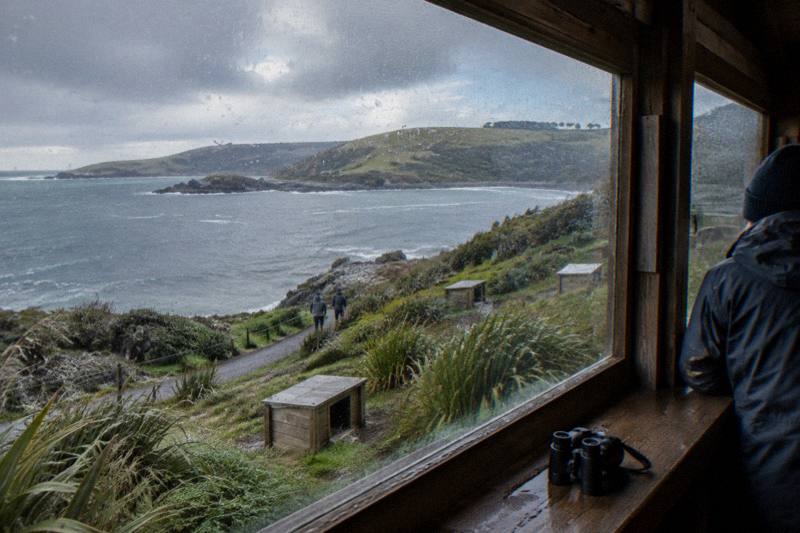
Where Can I See Blue Penguins In Dunedin On A Guided Tour?
Blue penguins in Dunedin are seen on guided evening tours at Pukekura near Taiaroa Head, on Otago Peninsula tours that stop at penguin venues, and on harbour cruises where they are sometimes seen. Here is where each option starts, what it costs, and how it works.
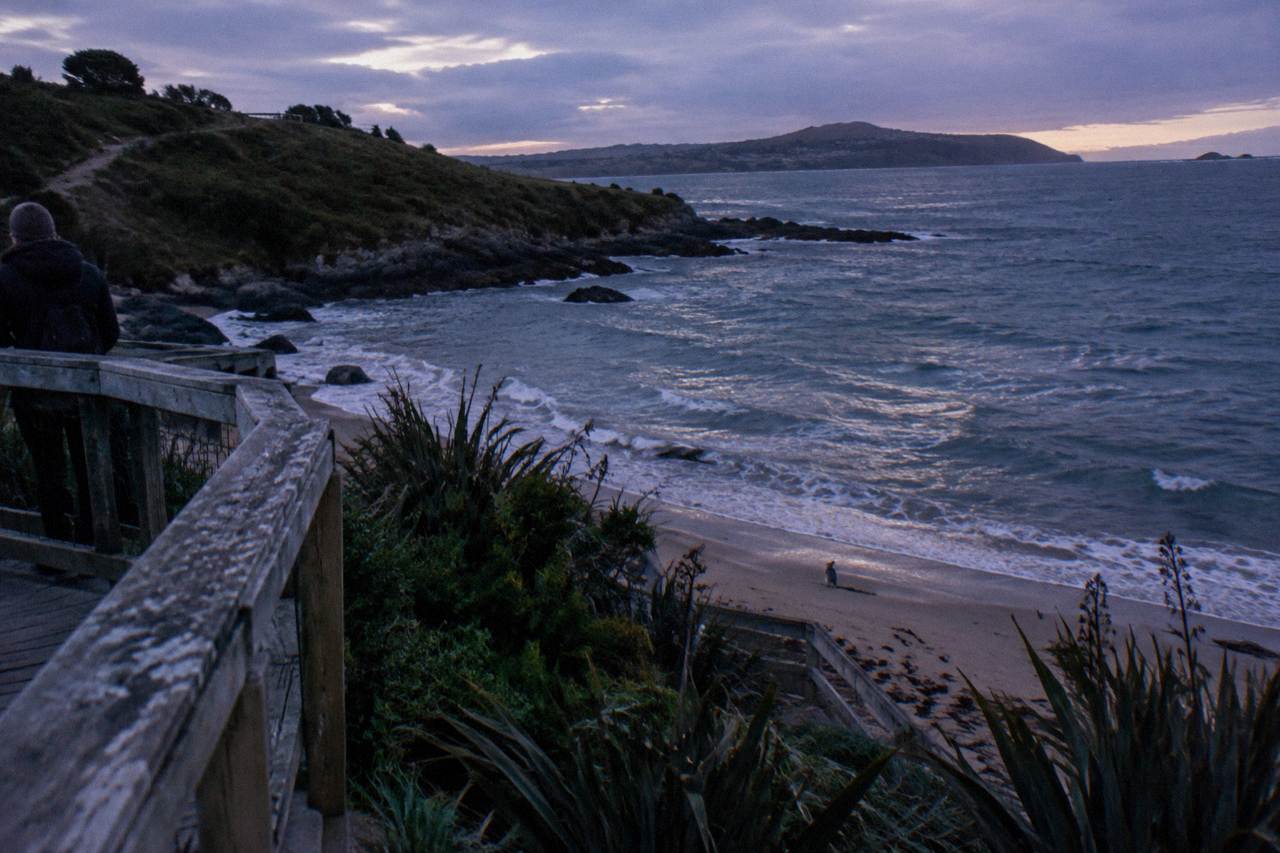
Blue penguins, kororā in te reo Māori, come ashore at dusk, and the Otago Peninsula carries one of the most accessible places to watch them. DOC says around 600 pairs live on the Taiaroa Head area of the peninsula, with more than 350 of those at Pilots Beach, the small cove on the western side of the headland where the Pukekura Trust runs night-time viewing. The birds return at dusk throughout the year, which makes them a different proposition from the seasonal albatross colony at the tip: an evening question rather than a day-trip gamble. Penguins and albatross are only part of the picture, and a guide to the animals Dunedin wildlife tours encounter covers the rest, from hoiho to sea lions on the same peninsula.
For visitors staying in Dunedin, the practical question is which guided option fits. This page walks through the places a tour can take you, what each one costs, where it starts, and what the operators themselves say about how many penguins you may see.
The main place guided tours show blue penguins in Dunedin is Pukekura at Harington Point, at the far end of the Otago Peninsula, where the Blue Penguins Pukekura experience runs a 1.5 hour evening viewing from a purpose-built platform, from $34.04 per person. Other options are peninsula day tours that stop at a penguin venue, and harbour cruises where blue penguins are sometimes seen from the water. Since sightings shift with breeding and moult cycles, the month by month guide to penguin seasons on Dunedin tours helps you pick the best time to visit.
The Blue Penguins Pukekura experience is the dedicated product. It runs from the reserve at 1245 Harington Point Road, and the operator is clear that no transport is provided: guests drive themselves. The tour is rated 5.0 across 578 reviews, the second largest review pool of any wildlife trip covered on this site, and the group cap is 75 people. Guides come from conservation backgrounds, non-flash photography is welcome, and tripods are not.
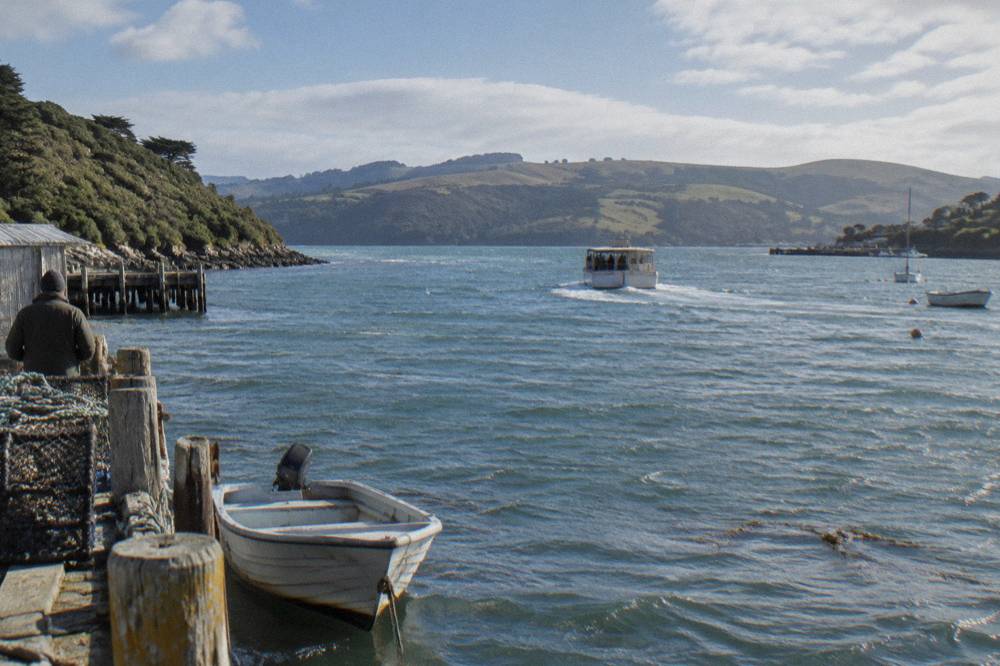
DOC describes the biology behind the spectacle plainly: the penguins are seen at dusk throughout the year at Pilots Beach, which sits on the western side of Taiaroa Head, and over summer more than 200 birds can arrive in an evening. The birds spend daylight hours fishing at sea and return to their burrows after dark, which is why every genuine viewing option here is an evening one or a boat-based one.
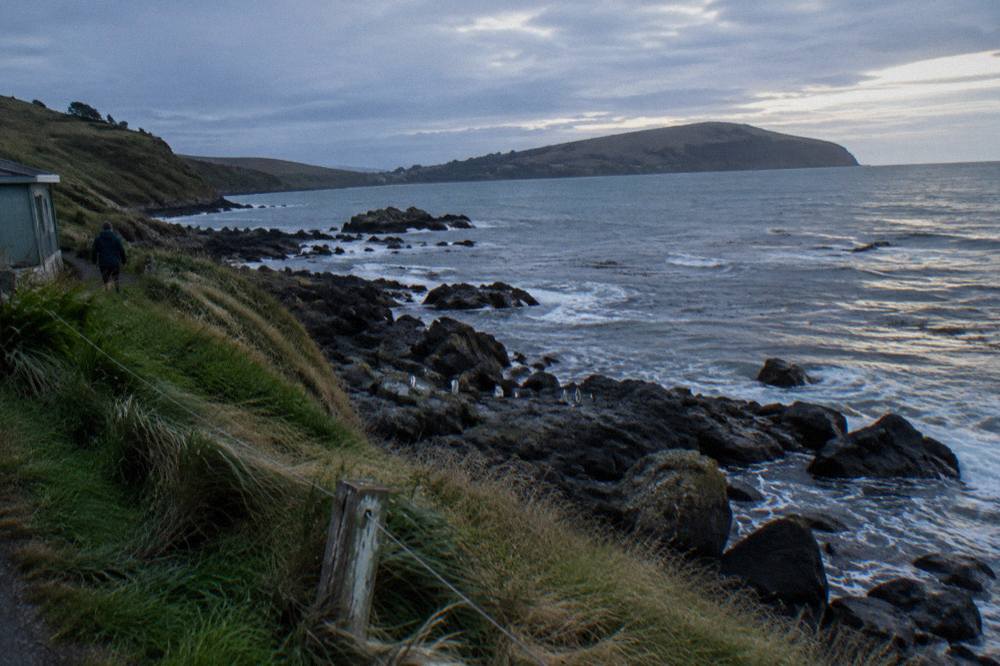
Two other places appear on guided itineraries in Dunedin. The OPERA, the eco reserve at 45 Pakihau Road on the Otago Peninsula formerly known as Penguin Place, includes little penguins among its resident wildlife alongside hoiho, fur seals and sea lions. And harbour cruise operators report blue penguins on the water, with Monarch Wildlife Cruises describing them as sometimes seen rather than expected. Neither is a penguin-specific product the way the Pukekura platform is. Since fur seals and sea lions keep appearing alongside the penguins, the guide to seeing seals on a Dunedin wildlife tour explains which cruises and peninsula beaches give you the best chance of spotting them.
For readers comparing the three dedicated penguin options side by side, this is the short list:
The three differ mainly in length and in whether you drive. The standalone Pukekura visit is the evening platform experience on its own. The in-depth version adds a five hour peninsula journey with pickup in the city. The OPERA tour is a daytime reserve walk where penguins are one part of a wider wildlife picture.
What Is The Blue Penguins Pukekura Evening Tour Actually Like?
The Blue Penguins Pukekura tour is a 1.5 hour guided experience at the reserve near Harington Point, from $34.04 per person, self-drive only, in which guides lead you to a viewing platform above the beach and narrate the penguins' return at dusk. The operator promises an informative evening, not a count of birds.
The operator describes a tour built around the biology rather than around a show. Penguins arrive in groups called rafts, hop ashore, and cross the sand to their burrows in the dunes and rocks behind the beach. Watching happens from the platform overlooking the beach, and the guides explain what is happening as it happens. The operator says the typical range is 50 to 300 penguins a night from September to February and 10 to 80 from March to August, and those figures are the operator's own description of typical nights, not a guarantee of any particular evening.
Practical details matter here. The tour starts at Pukekura, Harington Point, and the drive from central Dunedin is along Portobello Road to Portobello and then Harington Point Road to the end of the peninsula. There is no pickup, and the operator says so directly. The Royal Albatross Centre, which shares the headland, warns drivers not to route via State Highway 88 and Port Chalmers, since that is the far side of the harbour with no road to the tip. A full refund applies when the booking is cancelled at least 24 hours before the start.
Reading the experience well means arriving with the right expectations. The viewing is at dusk, the light fades quickly, and non-flash photography rules keep the birds calm. DOC's wider guidance on penguin viewing, set out in its sharing-the-coast advice, is to keep distance, never block a penguin's path in or out of the water, and avoid flash, and the platform arrangement at Pukekura is built to do exactly that for 75 people at a time. The little penguin is found across southern Australia and New Zealand, but Pilots Beach is one of the few places where a managed, guided viewing exists on this coast.
Is an evening on the platform the right way to spend your dusk on the peninsula?
The evening slot also shapes the day. Because the penguins return after sunset, the tour pairs naturally with a late afternoon spent elsewhere on the peninsula, and several of the day tours covered below are timed to finish where an evening viewing can follow.
Which Dunedin Tours Include A Penguin Venue In The Itinerary?
Several guided tours in Dunedin include a penguin venue as part of a longer itinerary: the Pukekura Combo (5 hours, from $93.62, city pickup), the Fantail evening tour (from $161.71, entry included), the Albatross Centre Free Time tour (from $164.00) and two OPERA-based tours (from $42.00 and $42.56). Each suits a different kind of traveller.
The table below compares the options that put a penguin venue inside a bigger day. All prices are from-prices in USD per person.
| Tour | Duration | From price | Rating and reviews | How you get there |
|---|---|---|---|---|
| Pukekura Combo, 5 Hours | 5 hours | $93.62 | 5.0, 213 reviews | Pickup from the i-SITE at 50 The Octagon |
| Sunset Penguins, Entry Included | 4.5 hours | $161.71 | 4 reviews, a new option | Starts at The Octagon, Dunedin |
| Albatross Centre Free Time, Penguins | 4.5 hours | $164.00 | 5.0, 20 reviews | Starts at The Octagon, Dunedin |
| Rehabilitation Centre and Reserve Walk | 1.5 hours | $42.00 | 4.6, 301 reviews | Starts at The OPERA, Pakihau Road |
| Small-Group Wildlife and Penguin Tour | 1.5 hours | $42.56 | 4.7, 47 reviews | Starts at The OPERA, Pakihau Road |
The Pukekura Combo deserves its own paragraph because it answers the self-drive problem directly. It runs five hours, starts with pickup from the Dunedin Visitor Centre at 50 The Octagon, and can drop guests at central Dunedin accommodation afterwards. It is capped at 11 people, and it carries an 18 year minimum age, so it suits adults travelling without children. Rated 5.0 across 213 reviews, it is the strongest-reviewed way to combine the evening platform with someone else doing the driving.
The Fantail Tours evening option, Sunset Penguins, Entry Included, is a 4.5 hour trip from The Octagon with the 1.5 hour evening viewing already in the price. It is a new option with 4 reviews, so there is not enough review history to characterise it beyond what the operator describes. Its sibling booking page, Albatross Centre Free Time, Penguins, runs the same duration from The Octagon, adds free time at the albatross centre and bottled water, and states that the albatross guided tour itself is not included; it is rated 5.0 across 20 reviews.
The OPERA pair are the daytime choice. The Rehabilitation Centre and Reserve Walk is a 90 minute guided tour at 45 Pakihau Road that includes the rehabilitation centre visit, a nature walk in the reserve, and rain jackets; the operator describes an opportunity to see yellow-eyed penguins and other wildlife, and little penguins are among the reserve's residents. The Small-Group Wildlife and Penguin Tour, run by the Otago Peninsula Eco Restoration Alliance itself, adds high quality binoculars and waterproof jackets and caps groups at 15. More detail on both is in the guide to penguin viewing tours on the peninsula.
Can You See Blue Penguins On A Boat Instead Of At A Platform?
Yes, but as a possibility rather than a focus. Harbour cruise operators describe blue penguins as sometimes seen from the water, and no cruise in Dunedin is sold as a penguin trip. The one-hour Monarch cruise from Wellers Rock Wharf is the closest fit at from $42.56, since it passes Taiaroa Head and the waters the penguins fish in.
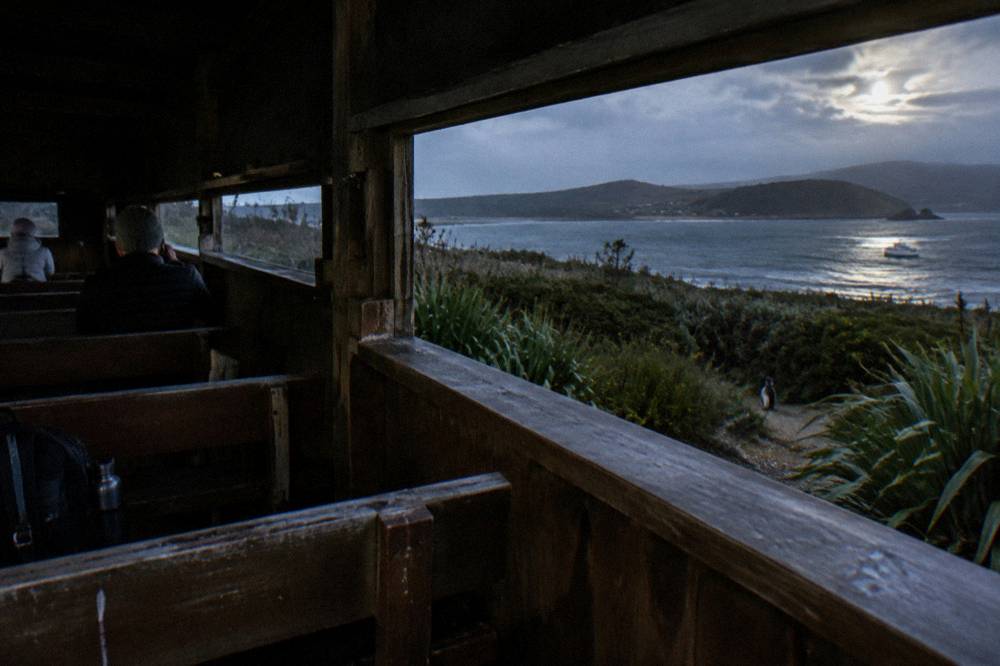
Monarch Wildlife Cruises runs its one-hour cruise from Wellers Rock Wharf at Otakou, and the operator's own description of the route names Aramoana, the Taiaroa Head lighthouse and the fur seal colony, with a short run out to sea. Blue penguins, dolphins and sea lions are, in the operator's wording, sometimes seen. The cruise provides warm jackets, binoculars and live commentary, and is rated 4.6 across 257 reviews. Allow 45 to 60 minutes to drive from central Dunedin. Transport to the wharf is not included.
The boat option makes sense for a different reason than the platform does. Penguins at sea are swimming, low in the water and quick, so a sighting is a bonus rather than the point; what a cruise offers is the headland's scale, the fur seal colony at Taiaroa Head, and nesting seabirds on the cliffs. DOC calls Taiaroa Head a fur seal breeding site and sea lion haul-out, and the headland is home to around 10,000 seabirds, which is why DOC's Taiaroa Head page is the reference for what lives there.
For readers weighing platform against boat, the choice is simple. If penguins are the reason for the evening, the platform at Pukekura exists precisely for that. If penguins would be a pleasant surprise inside a wider wildlife hour, the cruise is the better spend. The comparison piece on Dunedin penguin tours versus wildlife cruises works through that trade-off in detail.
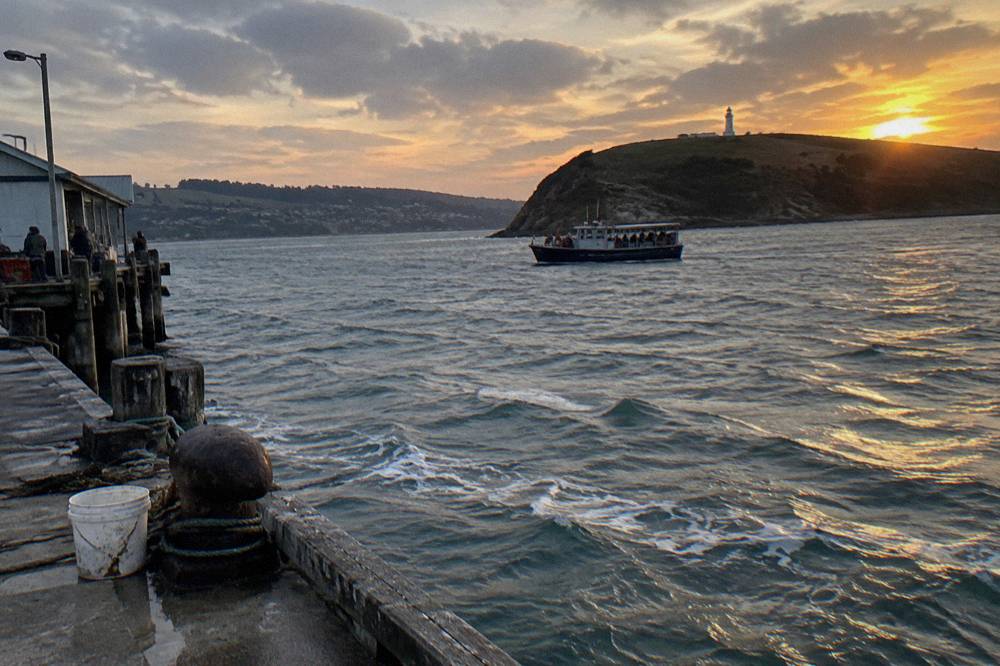
Two Port Chalmers operators, Port To Port Cruises and Dunedin Coastal Adventures, also run wildlife cruises on the harbour, from $107.81 and $73.76 respectively. Neither is described as a penguin product, and both are better understood as albatross and seal cruises that pass through waters where penguins may appear.
How Many Blue Penguins Might You Actually See?
At Pukekura the operator says typical nights bring 50 to 300 penguins ashore from September to February and 10 to 80 from March to August, and DOC says more than 200 birds can be seen arriving over summer. No operator in Dunedin guarantees a number on any given night, and the birds are wild.
Those two statements, the operator's typical-night range and DOC's summer figure, are the honest ceiling of what can be said. Weather, food supply and the phase of the breeding cycle all move the nightly count, and the operator presents its figures as what typically happens rather than what will happen. DOC's own framing, that kororā are seen at dusk throughout the year at Pilots Beach, is the closest thing to a constant in this topic, and even that is a description of behaviour, not a promise of birds on the sand in front of you.
The breeding cycle gives some structure to the variation. Little penguins on this coast nest in burrows around the headland, and the summer months carry the combination of breeding adults returning to feed chicks and young birds coming ashore, which is why the operator's higher range sits in September to February. Later in the season the rafts thin out. None of this changes what a visitor should book, but it explains why two people can describe the same tour very differently a month apart.
For context on how rare managed penguin viewing is, it helps to know the species' wider situation. The little penguin population is declining in parts of its range, and the Pukekura Trust's night viewing at Pilots Beach exists partly to channel hundreds of evening visitors into one managed spot instead of scattered feet on a beach full of burrows. That is also why the platform, the guides and the no-flash rules are not incidental: they are the reason the colony tolerates the audience.
Should You Drive Yourself Or Book A Tour With Pickup?
Drive yourself if you want the cheapest entry, from $34.04 at Pukekura, and you have a car; book pickup if you do not, with the Pukekura Combo at from $93.62 collecting from the i-SITE at 50 The Octagon, or, from Port Chalmers, the Penguin Tour With Pickup at from $189.00, which includes hotel and port pickup and drop-off.
The money difference is real. The standalone platform visit is the cheapest per-person wildlife tour covered on this site, at $34.04, and the five hour combo more than doubles that outlay in exchange for transport, a guide for the whole afternoon and evening, and a group capped at 11. The Port Chalmers option costs more again and is aimed squarely at cruise passengers: it runs six hours, includes hotel pickup and drop-off as well as Port Chalmers pickup and drop-off, includes a visit to The OPERA, and is rated 4.8 across 74 reviews.
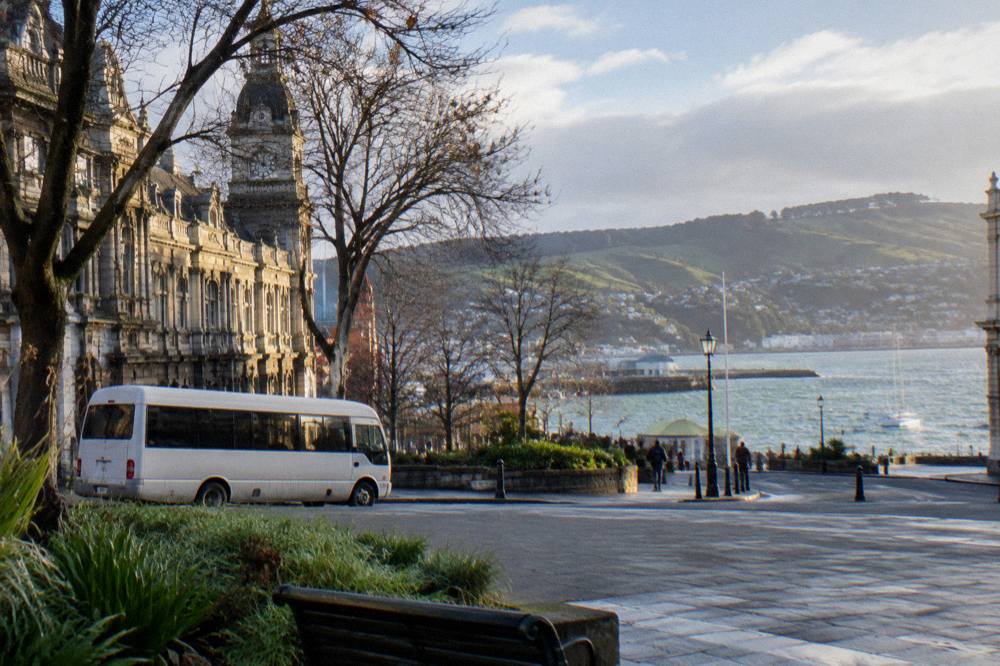
Cruise passengers have timing to think about as well as transport. The Dunedin cruise ship season runs 21 October 2026 to 16 April 2027, most ships berth at Port Chalmers, and the port is 14 km from the city, 15 to 20 minutes by shuttle. An evening penguin viewing is a hard fit for a ship that sails at dinner time, which is why the daytime OPERA tours at $42.00 and $42.56, both starting at Pakihau Road, matter: they are 90 minutes, run in daylight, and still put you in front of penguin habitat. The shore excursion guide at Dunedin shore excursions with wildlife compares those timing trade-offs tour by tour.
One more pairing is worth naming for independent travellers. The Royal Albatross Centre at 1259 Harington Point Road sits on the same headland as the Pukekura reserve, opens every day from 10:15am, and a Centre tour is the only way to see the nesting albatross from the Richdale Observatory. Self-driving to the peninsula for the day, visiting the Centre, then staying for the evening penguins is the classic full day at the tip, and the guide to a day at Taiaroa Head lays out how it fits together.
What Should You Know Before Booking Any Blue Penguin Tour?
Know the start point, the refund window and the group cap before you book: 25 of the 26 tours covered here offer a full refund when cancelled at least 24 hours before the start, the Iconic full-day tour does not, and group caps range from 75 at the Pukekura platform down to 10 on several small-group peninsula tours. Departure times vary by date, and the booking calendar shows the slots for your date.
Dress is the other recurring theme. Monarch hands out jackets and binoculars on its one-hour wildlife cruise; for the other peninsula operators, what they provide is not mentioned, so check the booking page. The evening viewing at Pukekura happens in fading light and oncoming dark, with sea air, so a warm jacket and flat shoes matter more than a camera with a flash, which you will be asked not to use. The blog post on what to wear on a Dunedin wildlife tour covers the layering question in detail.
Age limits are narrower than many visitors expect. The Pukekura Combo carries an 18 year minimum, and the Clearwater small-group peninsula tour sets its minimum at 5. The standalone Pukekura evening visit prints no minimum age on its booking page, so families should check there before assuming children can attend. The site behind this article, Dunedin Wildlife Tours, carries the full tour pages with durations, start points and what each trip includes.
Finally, keep expectations calibrated to what the operators themselves say. Blue penguins are wild birds returning from a day at sea, and every honest description of them in Dunedin, from DOC down to the cruise crew, uses words like can, may and sometimes. The platform at Pukekura gives the best odds of a good evening because it sits directly above the beach the birds use, but the birds write the script. That is also, for many visitors, part of what makes the dusk worth standing around for.
For a final side-by-side of the three penguin-focused options, from the self-drive evening to the five hour combo with city pickup:
Common Questions About Blue Penguin Tours In Dunedin
Where Can I See Blue Penguins In Dunedin On A Guided Tour?
At Pukekura near Harington Point, on the evening Blue Penguins Pukekura viewing from $34.04, on the five hour Pukekura Combo with city pickup from $93.62, or on daytime tours to The OPERA at 45 Pakihau Road from $42.00. Harbour cruises sometimes pass blue penguins on the water.
Can You See Penguins In Dunedin Without A Tour?
Wild penguins come ashore on peninsula beaches, but DOC asks people to keep at least 50 m away, avoid flash and not linger on beaches where hoiho come ashore, and managed viewing at Pilots Beach exists to protect the colony while letting people watch.
How Many Blue Penguins Might You See At Pukekura?
The operator says typical nights bring 50 to 300 penguins ashore from September to February and 10 to 80 from March to August. DOC says more than 200 birds can be seen arriving over summer. No count is guaranteed on any night.
Is Transport Included In The Blue Penguins Pukekura Tour?
No. The operator states that no transport is provided and guests drive themselves to the reserve at 1245 Harington Point Road. The five hour in-depth version is the one that includes pickup from the i-SITE at 50 The Octagon.
What Is The Cheapest Guided Penguin Tour In Dunedin?
The standalone Blue Penguins Pukekura experience at from $34.04 per person, which is also the cheapest per-person wildlife tour covered on this site. The OPERA daytime tours are close behind at from $42.00 and $42.56.
Can You Take Photos On A Blue Penguin Tour?
Yes, non-flash photography is welcome at Pukekura and tripods are not. The viewing happens at dusk, so expect low light rather than bright portraits, and follow the guides' directions on the platform.